



ISLAMABAD: The International Cricket Council (ICC) is weighing the possibility of relocating major future tournaments from India to Australia amid deepening geopolitical tensions between Pakistan and India, according to a report published by The Sydney Morning Herald. The potential shift — involving the ICC Champions Trophy 2029 and the ICC Men’s Cricket World Cup 2031 — underscores how political spillover into cricket is now threatening India’s long-term dominance as the sport’s commercial epicentre.
The report suggests that Australia could emerge as a serious alternative host for the 2029 Champions Trophy and the 2031 World Cup, both currently allocated to India, with Bangladesh designated as a co-host for the latter. While no formal decision has been announced, the very consideration signals unease within global cricket’s governing corridors about the sustainability of hosting high-stakes tournaments in an environment marked by recurring political friction.
The backdrop to this development lies in the turbulence surrounding the ICC Men’s T20 World Cup 2026, co-hosted by India and Sri Lanka. Pakistan had initially declared a boycott of its high-profile February 15 group-stage clash against India, citing solidarity with Bangladesh after Dhaka declined to travel to India on security grounds and was subsequently removed from the tournament schedule.
The prospect of Pakistan’s withdrawal triggered alarm within the ICC and among global broadcasters. Industry estimates indicated that a Pakistan boycott could have resulted in revenue losses approaching $250 million, largely due to diminished broadcast rights value, sponsor clauses tied to marquee India–Pakistan fixtures, and global advertising commitments.
Following diplomatic interventions by friendly countries and intensive consultations involving the Pakistan Cricket Board, ICC officials, and the Bangladesh Cricket Board, Islamabad ultimately cleared the national team’s participation. The reversal was widely viewed as a pragmatic move to avert substantial financial fallout for all stakeholders.
Yet the episode reinforced a broader structural vulnerability in India’s hosting model: the heavy financial reliance on Pakistan’s participation. Matches between the two rivals consistently rank among the most-watched sporting events globally, generating peak advertising rates and driving digital viewership records. The absence of Pakistan from any India-hosted ICC event would significantly erode commercial value.
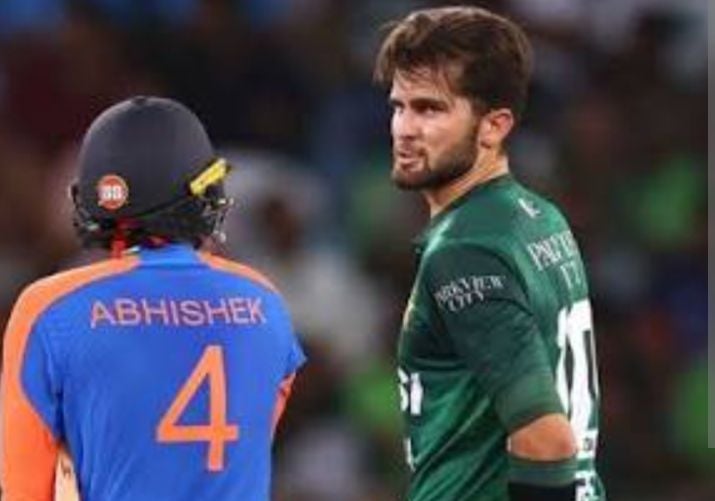
Tensions between the two nuclear-armed neighbours have remained elevated since the conflict of May 2025, which concluded after mediation by the United States. The Asia Cup 2024 had already marked a turning point, becoming the first major cricketing event staged amid open hostilities. Symbolic gestures — including the absence of customary post-match handshakes between players — reflected a deep freeze extending beyond diplomatic channels into sporting protocol.
However, the friction predates the 2025 conflict. In December 2024, the Pakistan Cricket Board and the Board of Control for Cricket in India agreed to a “hybrid model” for the ICC Champions Trophy 2025, hosted by Pakistan. Under that arrangement, both sides committed to playing matches at neutral venues during the 2024–2027 ICC rights cycle if the tournament host was the other country.
The hybrid model was a commercial compromise designed to preserve broadcast revenues while accommodating political realities. Yet it also institutionalised separation, effectively acknowledging that bilateral sporting engagement had become untenable.
The last bilateral series between the two sides took place in 2012–13, when Pakistan toured India. Since then, New Delhi has consistently barred its national team from touring Pakistan, citing political tensions and security considerations.
From a purely financial perspective, India stands to incur the greatest losses if the ICC ultimately relocates the 2029 and 2031 events. India represents the largest cricket market globally, accounting for an estimated 70 percent of ICC broadcast revenue. Hosting rights amplify domestic economic gains through ticketing, hospitality, tourism, and advertising multipliers.
Should Australia be confirmed as an alternative venue, India would forfeit not only hosting prestige but also billions in projected economic activity tied to infrastructure upgrades, sponsorship cycles, and state-level tourism boosts.
Industry analysts note that global sponsors increasingly demand logistical certainty. Recurrent disputes over venue neutrality, security assurances, and potential boycotts inject volatility into long-term contractual frameworks. In this context, Australia — with its established stadium infrastructure, political stability, and prior experience hosting multi-nation events — offers predictability that broadcasters value.
Crucially, the ICC must balance commercial imperatives against geopolitical realities. While India remains the financial backbone of global cricket, the risk calculus shifts when marquee fixtures are jeopardised. The India–Pakistan encounter alone can account for a disproportionately large share of advertising revenue during a tournament cycle.
If Pakistan were to refuse participation in India-hosted events under future rights cycles, the commercial downgrade would be immediate and quantifiable. Reduced viewership across South Asia, diminished digital subscriptions, and renegotiation pressures from global sponsors could reshape the ICC’s long-term revenue projections.
At the same time, shifting events away from India would not be a straightforward decision. The Board of Control for Cricket in India wields significant influence within global cricket governance, and any relocation would require consensus among member boards wary of destabilising the sport’s largest market.
Nevertheless, the discussion itself signals a recalibration within international cricket. Political tensions, once treated as peripheral disruptions, are now central risk variables in tournament planning.
For India, the stakes extend beyond immediate revenue. Losing hosting rights for successive flagship tournaments could weaken its soft power within the sport and complicate future bids. For Pakistan, strategic leverage lies in its indispensable role in high-value fixtures.
As global cricket navigates this uncertain terrain, one reality is clear: the commercial engine of the sport remains inseparable from the India–Pakistan rivalry. When diplomacy falters, the financial architecture of international cricket trembles.