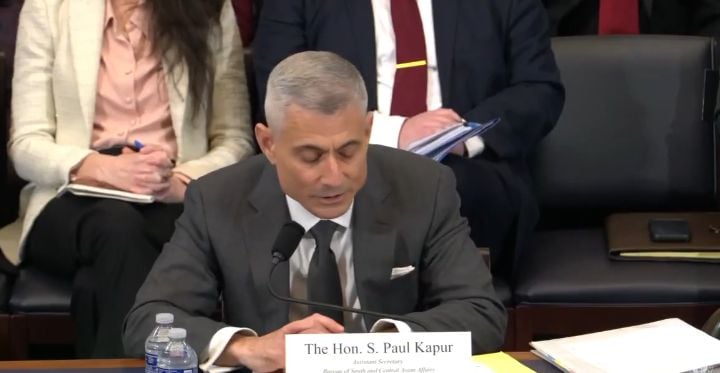




ISLAMABAD: The United States has reaffirmed Pakistan’s significance as an important partner in South Asia, emphasizing robust counter-terrorism cooperation that addresses both domestic security challenges and transnational threats with potential repercussions for American interests. Assistant Secretary of State Paul Kapur, in recent testimony before the House Foreign Affairs Committee’s Subcommittee on South and Central Asia, described Pakistan as a vital regional actor where bilateral engagement seeks to expand trade, economic ties, and security collaboration. This statement underscores Washington’s strategic interest in maintaining constructive relations with Islamabad amid evolving regional dynamics.
Kapur’s remarks highlight the mutual benefits derived from ongoing counter-terrorism initiatives. He specifically noted that such cooperation assists Pakistan in combating internal security threats posed by militant groups while simultaneously mitigating transnational dangers that could harm the United States or its allies. This dual-purpose approach reflects a pragmatic recognition of shared vulnerabilities in an era where terrorism transcends national borders, often exploiting porous frontiers and ideological networks spanning multiple countries.
The context of Kapur’s testimony emerges against a backdrop of fluctuating US-Pakistan relations over the past two decades, shaped primarily by counter-terrorism imperatives following the events of September 11, 2001. Pakistan’s role as a frontline state in the global war on terror has historically involved significant cooperation with Washington, including intelligence sharing, joint operations, and capacity-building efforts that have targeted groups like Al-Qaeda and its affiliates. Despite periodic tensions over issues such as Afghanistan and militant safe havens, security collaboration has remained a resilient pillar of the bilateral relationship.
Recent developments illustrate the continuity of this partnership. In 2025, the United States and Pakistan conducted high-level dialogues focused on countering threats from entities such as the Tehreek-e-Taliban Pakistan, Islamic State Khorasan Province, and other militant outfits. These engagements have included commitments to enhanced intelligence exchange, border security measures, and multilateral coordination through forums like the United Nations and the Global Counterterrorism Forum. Kapur’s emphasis on assisting Pakistan’s internal efforts aligns with broader US objectives to stabilize the region and prevent terrorist spillover.
Beyond security, Kapur pointed to expanding economic dimensions that complement counter-terrorism cooperation. Efforts are underway to leverage Pakistan’s critical mineral resources through joint ventures combining US government financing with private sector expertise. Trade in sectors like energy and agriculture is witnessing growth, providing Islamabad with avenues for economic diversification while reinforcing strategic alignment. This integrated approach suggests that Washington views counter-terrorism not in isolation but as part of a comprehensive engagement strategy encompassing economic and diplomatic elements.
Challenges persist in fully realizing the potential of this partnership. Kapur acknowledged the difficulties in detecting and neutralizing small terrorist cells that blend into civilian populations, a persistent issue in counter-terrorism operations worldwide. Pakistan has faced substantial losses from militant violence, with military and civilian casualties underscoring the urgency of sustained efforts. US support has included training programs, equipment provision, and technical assistance aimed at bolstering Pakistan’s law enforcement and intelligence capabilities against evolving threats.
The strategic calculus also involves regional balance. While strengthening ties with India remains a priority for the United States through defense, technology, and Quad frameworks, Kapur’s designation of Pakistan as another important partner indicates a nuanced policy avoiding zero-sum dynamics. Cooperation with Islamabad serves US interests in countering transnational terrorism, particularly groups targeting American assets or allies, even as broader geopolitical considerations shape the relationship.
Analysts note that this reaffirmation comes at a time when global terrorism trends demand collaborative responses. Transnational threats, including those emanating from ungoverned spaces, require intelligence-driven partnerships. Pakistan’s geographic position and operational experience against militants position it uniquely to contribute to collective security efforts, benefiting both bilateral and multilateral objectives.
In conclusion, Kapur’s statement signals Washington’s intent to deepen constructive engagement with Pakistan, prioritizing counter-terrorism as a core area of mutual interest. This approach aims to enhance Pakistan’s internal stability while safeguarding against threats that could impact international peace and US national security.