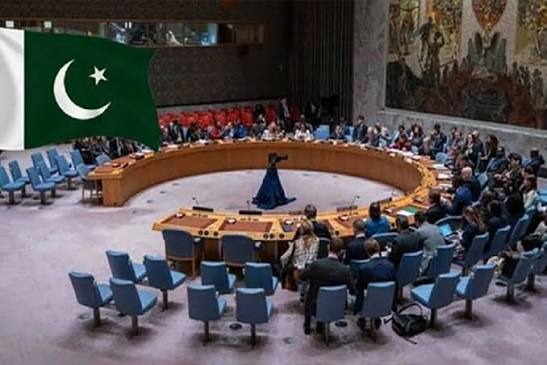
*NEW YORK: Pakistan has criticized a bid of India and other aspirants ofpermanent seats on the United Nations Security Council (UNSC), to scuttlethe ongoing process of bringing reforms to the UN body.*
Ambassador Maleeha Lodhi, permanent representative of Pakistan to the UN,called on India, Brazil, Germany and Japan to instead “review their ownposition” which is responsible for the stalemate in the restructuring ofthe Security Council.
“We believe that the quest by some to gain permanent seats for themselvesremains the primary stumbling block” in the course of discussions in theInter-governmental Negotiations (IGN) aimed at making the Security Councilmore efficient and representative, the envoy said.
She was reacting to the questioning of the IGN process by the Group of Four— India, Brazil, Germany and Japan — because of lack any progress towardsreforming the UNSC.
“Those calling for a review of the IGN process, should instead review theirown positions,” Ambassador Lodhi said.
“We should not risk undermining the painstaking progress made within theIGN, just to advance the narrow interests of a few members states,” sheadded.
Holding the IGN process for failing to produce results was like an attemptto blame the ‘storm’ on the ‘ship’, she said.
Read Top Stories


“As the ship of the IGN finds itself afflicted by deep divisions amongmember states, their suggestion is to abandon it, altogether. What we needis not to abandon ship, but instead, to join our sails to weather the storm– indeed, to ensure we remain on an IGN-centric course to make progress.”
Full-scale negotiations to reform the Security Council began in the GeneralAssembly in February 2009 on five key areas — the categories of membership,the question of veto, regional representation, size of an enlarged SecurityCouncil, and working methods of the council and its relationship with theGeneral Assembly.
Despite a general agreement on enlarging the Council, as part of the UNreform process, member states remain sharply divided over the details.
The Group of Four has shown no flexibility in their campaign to expand theSecurity Council by 10 seats, with 6 additional permanent and fournon-permanent members.
On the other hand, the Italy/Pakistan-led Uniting for Consensus (UfC) groupmaintains that additional permanent members will not make the SecurityCouncil more effective and also undermine the fundamental principle ofdemocracy that is based on periodic elections.