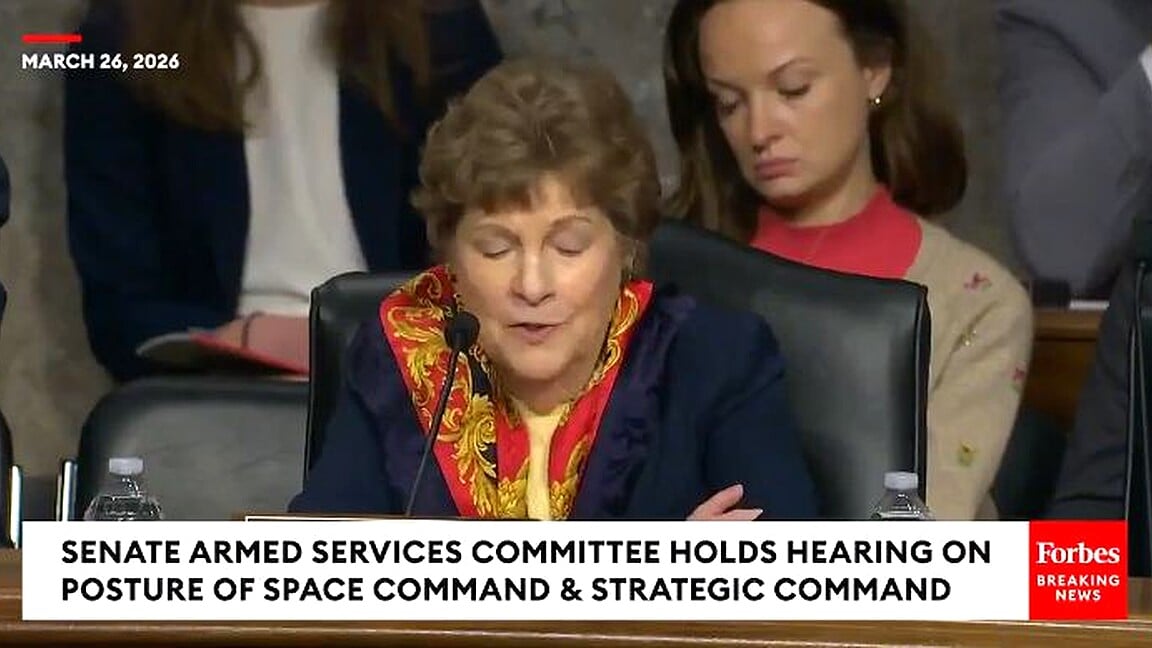




ISLAMABAD: A senior US senator has openly discussed the ongoing Iran war, highlighting Iranian cyberattacks on American medical systems and attempts to target US satellites and radars.
During a recent Senate Armed Services Committee hearing, Senator Jeanne Shaheen addressed the conflict that began on February 28, 2026, when US and Israeli forces launched Operation Epic Fury with nearly 900 strikes in the first 12 hours.
The strikes killed Iranian Supreme Leader Ali Khamenei and dozens of top officials, according to multiple reports.
Shaheen noted that Iranians have been targeting US satellites, radars, and communications capabilities in the region.
She also referenced reports of potential cyber strikes inside the United States against critical systems.
A top Space Force general responded to questions on these threats, acknowledging Iranian efforts in the space domain.
The war has seen US forces strike more than 8,000 Iranian military targets, including 130 vessels, as stated by Admiral Brad Cooper.
President Donald Trump has indicated another 3,554 targets remain, suggesting the campaign continues despite calls for de-escalation.
In the cyber realm, pro-Iran hackers from the group Handala claimed responsibility for a destructive wiper attack on Stryker, a major US medical device manufacturer based in Michigan.
The March 11, 2026, attack caused global network disruption, wiping thousands of employee devices and affecting order processing, manufacturing, and shipments.
Stryker reported the incident contained to its internal Microsoft environment with no ransomware detected, yet operations faced significant setbacks.
The hackers described the strike as retaliation for a US-Israeli missile attack on a girls’ school in Minab, southern Iran, which killed at least 168 to 175 people, mostly children.
This marks one of the first notable pro-Iranian cyberattacks on US infrastructure since the war started.
Iran-linked actors have long conducted espionage and disruptive operations, but the Stryker incident escalated concerns over threats to civilian critical infrastructure.
Space vulnerabilities have also come under scrutiny.
US military leaders have described space and cyber forces as “first movers” in the operation, layering non-kinetic effects to disrupt Iranian communications and sensors before kinetic strikes.
Chairman of the Joint Chiefs General Dan Caine noted these actions blinded Iran’s ability to see, communicate, and respond effectively.
Iran has retaliated with missiles and drones across the Middle East, injuring US service members at bases in Saudi Arabia and striking energy and communication infrastructure.
At least 10 US troops were reported injured in one such attack on a Saudi base.
Iran has also hit targets in Israel, including Dimona and Arad, causing over 190 injuries combined in reported incidents.
The conflict has resulted in more than 2,000 deaths across Iran, Israel, and Lebanon, with hundreds of thousands displaced.
Satellite imagery has documented damage to Iranian naval facilities, air defenses, and nuclear-related sites such as Natanz, which faced repeated strikes including bunker buster bombs.
US officials emphasize objectives including degrading Iran’s missile and naval capabilities without ground troops, with Secretary of State Marco Rubio suggesting the campaign could achieve goals in weeks.
However, Iranian responses continue, raising fears of broader escalation into cyber and space domains.
Experts warn that space assets remain inherently vulnerable to jamming, spoofing, and electronic warfare, a reality long discussed in military hearings but now tested in active conflict.
Regional observers in Pakistan note the war’s spillover effects on energy markets and diplomacy.
Pakistan has offered to host talks between the US and Iran, with Prime Minister Shehbaz Sharif pitching Islamabad as a venue for negotiations.
The economic impact includes surging oil prices above 100 dollars per barrel, straining import-dependent economies.
International Atomic Energy Agency officials have urged restraint to prevent nuclear accidents at sites like Bushehr, hit multiple times.
As the war enters its fifth week, congressional discussions highlight both the progress in degrading Iranian capabilities and persistent risks from asymmetric responses.
The senator’s remarks underscore that while US space superiority has enabled operations, Iranian attempts in cyber and space domains signal a multi-domain battlefield where vulnerabilities persist.
Analysts point to the Stryker hack as evidence that civilian sectors, including healthcare technology, could face heightened threats in prolonged conflict.
With over 50,000 US troops in the region and additional forces en route, the stakes involve not only military outcomes but also protection of critical infrastructure at home and abroad.
The revelations in the hearing add to data-driven assessments of modern warfare, where cyber disruptions and space interference complement traditional strikes.
Pakistan and other regional states monitor developments closely, given proximity and potential for wider instability affecting trade routes like the Strait of Hormuz.