NEW DELHI – India will send a three-member team into orbit for up to a weekwhen it launches its first manned space mission expected in 2022, thegovernment announced Friday.
Indian ministers approved $1.4 billion to provide technology andinfrastructure for the programme, according to a government statement.
The sum would make India’s one of the cheapest manned space programmes,stepping up its space rivalry with China. But the statement said India alsohopes to take part in “global” space projects.
India will become the fourth nation after Russia, the United States andChina to send a manned mission into space.
Ministers approved financing to launch an Indian-developed craft into a”low earth orbit” for a duration ranging from one orbital period to amaximum of seven days, the statement said.
Prime Minister Narendra Modi announced in August that India will launch amanned space flight by 2022 with at least one astronaut. The cabinet hadnot approved the project however.
There will be two unmanned and one manned flights to launch the Gaganyaan(Sky-Vehicle) Programme, the statement said.
Without giving a date for the blast off, the government said the mannedflight would be “within 40 months” of Friday’s meeting. Modi has hailed thenational space programme as a prestige project.
The government has stated that space flights will boost the economy,generate jobs and enhance capabilities in areas such as medicine,agriculture and fighting pollution.
Read Top Stories


A successful manned mission would allow India to become a “collaboratingpartner in future global space exploration initiatives with long termnational benefits,” said the statement.
The country has invested heavily in its space programme in the past decade.
The Indian Space Research Organisation announced in July that it planned tosend an unmanned mission to the moon in 2019.
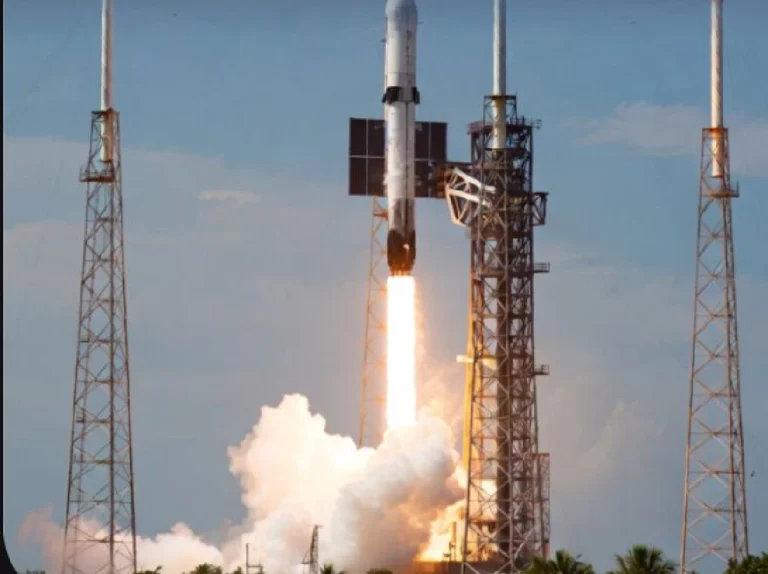
India launched an orbiter to Mars in 2013 which is still operational andlast year launched a record 104 satellites in one blast-off.
New Delhi is competing with other international players for a greater shareof the satellite market, and hopes its low-cost space programme will giveit an edge.
China put its first humans into space in 2003 but its Shenzhou programmecost more than $2.3 billion.
Experts say the United States spent the equivalent of about $110 billion atcurrent values on preparatory flights and the mission to put the first manon the moon in 1969. – APP/AFP