ISLAMABAD: President Donald Trump has issued a stark warning to Iran, stating he is dissatisfied with ongoing negotiations and emphasizing the strength of US forces, amid signs that military action could be imminent within the next 48 to 72 hours.
The US leader’s comments come as diplomatic efforts in Geneva failed to yield a breakthrough, heightening fears of conflict in the region.
Trump declared he is “not happy” with the talks, underscoring that sometimes military intervention becomes necessary.
He suggested it would be better for Iran to concede, as the US military remains the most powerful in the world.
This rhetoric aligns with Trump’s broader strategy to pressure Tehran into curbing its nuclear ambitions.
Recent US deployments include a massive buildup of aircraft and warships in the Middle East, the largest since the 2003 Iraq invasion.
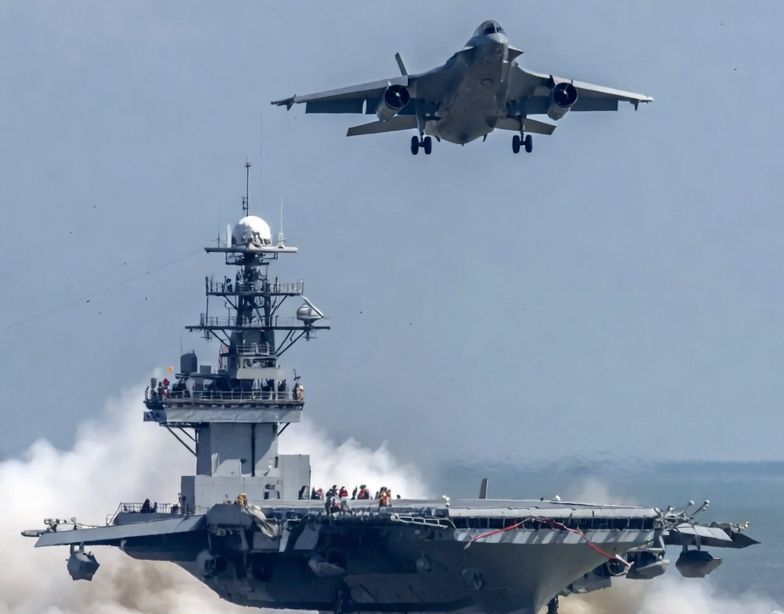
Two aircraft carrier strike groups, the USS Abraham Lincoln and USS Gerald R. Ford, have been positioned in the region.
Scores of fighter jets, bombers, and air defense systems have also been mobilized.
These moves signal preparation for potential strikes on Iranian nuclear sites or missile facilities.
The US State Department has authorized non-emergency personnel and family members to depart Israel, citing safety concerns.
This advisory reflects growing apprehension about an impending US attack on Iran.
Several nations have urged their citizens to leave the area, anticipating escalation.
In Israel, authorities have suspended certain flights and opened public shelters as a precaution.
Diplomatic missions, including those in Tehran, have faced closures or reduced operations amid the crisis.
Iran has responded defiantly, positioning ballistic missiles along its southern coast targeting US bases.
Tehran vows to strike American forces across the region if attacked, including in allied Arab states.
This could endanger tens of thousands of US troops stationed in the Middle East.
The Islamic Revolutionary Guards Corps (IRGC) recently conducted exercises in the Strait of Hormuz, simulating conflicts with US or Israeli forces.
These drills involved Rezvan loitering drones and Shahed-136 attack drones for reconnaissance and strikes.
Iran showcased Fath-450 and Fath-360 ballistic missiles, capable of penetrating fortified positions.
Such preparations indicate Tehran’s readiness for a maritime or broader Gulf confrontation.
Trump’s administration has imposed new sanctions on Iran while threatening force.
Negotiations focused on limiting Iran’s uranium enrichment, ballistic missiles, and proxy support.
However, Iranian officials reject an interim deal, insisting on full sanctions relief first.
US envoys, including Steve Witkoff and Jared Kushner, led the Geneva talks without a positive readout.
Experts assess that an agreement is unlikely, making a US strike probable soon.
Trump reportedly leans toward a limited strike to coerce concessions, with regime change as a fallback.
Options include targeting Supreme Leader Ali Khamenei or key nuclear sites.
This follows a June 2025 Israel-Iran war, where US and Israeli strikes disrupted Iran’s command.
Iran has fortified sites and named successors for leadership posts to mitigate decapitation risks.
Satellite imagery shows repairs to bombed nuclear facilities amid US tensions.
Trump’s State of the Union address highlighted Iran’s missile threats, claiming they could soon reach the US.
He warned against rebuilding weapons programs post-2025 war.
Iran denies nuclear weapon pursuits, asserting rights to peaceful enrichment.
Yet, Tehran nears a deal with China for anti-ship missiles, enhancing strike capabilities.
This could threaten US naval assets in the region.
Secretary of State Marco Rubio plans a visit to Israel next week to discuss priorities including Iran.
This trip may indicate a slightly extended timeline for action, but urgency remains.
US Central Command chief briefed Trump on strike options.
Pentagon assessments suggest severe damage potential from B-2 bombers and precision weapons.
Iran temporarily closed the Strait of Hormuz for drills, risking global oil disruptions.
Oil prices may spike if conflict erupts, given the chokepoint’s significance.
Regional allies fear a wider war, with embers from the Israel-Hamas conflict still active.
Iran’s proxies could target US interests, complicating any military campaign.
Trump set a 10-15 day deadline earlier, now seemingly compressed to critical hours.
He believes Iran wants a deal but accuses Tehran of “sinister ambitions.”
Iranian Foreign Minister Abbas Araghchi noted some progress on principles but no imminent agreement.
US demands a detailed Iranian proposal within weeks.
As tensions mount, global observers warn of catastrophic consequences.
A US strike could destabilize the Middle East, drawing in multiple actors.
Iran’s response might include asymmetric attacks on shipping or bases.
The coming days will determine if diplomacy prevails or conflict ensues.
Pakistan, monitoring from afar, urges restraint to avoid spillover effects.
The world watches as the 48-72 hour window could redefine regional security.