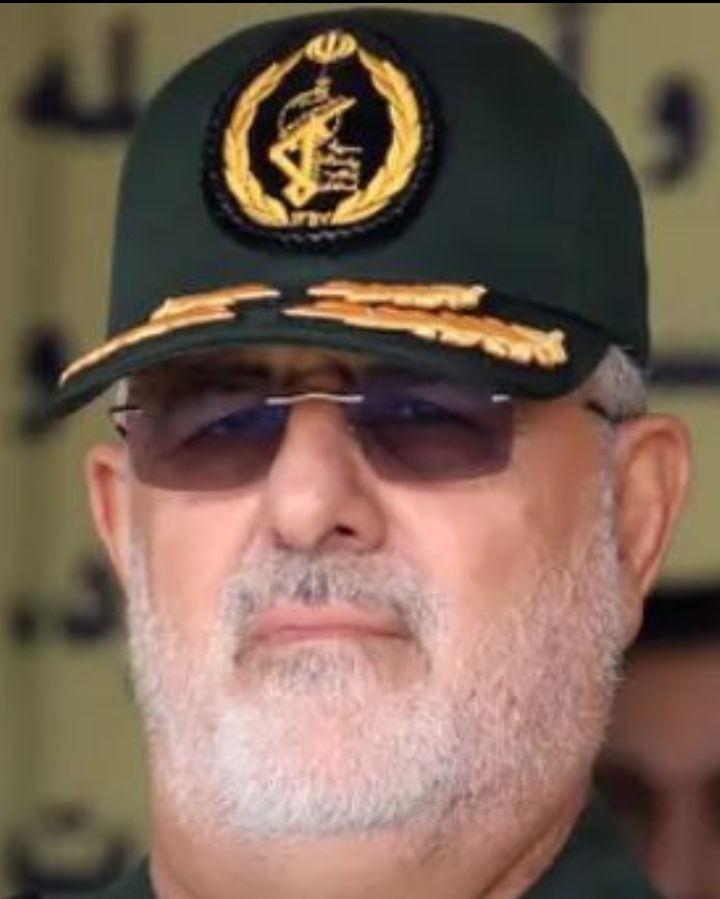
ISLAMABAD: Iran’s Defence Minister Amir Nasirzadeh and the commander of the Islamic Revolutionary Guard Corps (IRGC), Mohammad Pakpour, are believed to have been killed in Israeli attacks, according to multiple sources familiar with Israel’s military operations.
The development, reported on Saturday, marks a severe blow to Iran’s military leadership at a time of heightened tensions in the Middle East. Three sources — two with knowledge of Israeli military activities and one regional contact — confirmed the belief that both senior figures perished in the strikes.
Nasirzadeh, who previously served as deputy chief of staff for the Iranian armed forces, had a background as a fighter pilot before ascending to the defence ministry role. His death, if confirmed, removes a key architect of Iran’s conventional military strategy.
Pakpour assumed command of the IRGC in 2025 following the elimination of his predecessor, Hossein Salami, in earlier Israeli operations. The IRGC remains Iran’s most powerful military and political institution, overseeing ballistic missile programs, regional proxies and internal security.
Israeli assessments earlier indicated that strikes targeted not only these commanders but also Iran’s intelligence chief and other high officials. Reports suggest the attacks formed part of a broader joint US-Israeli operation aimed at degrading Iran’s leadership and capabilities.
The strikes occurred amid a rapid escalation. President Donald Trump announced major combat operations against Iran, framing them as necessary to eliminate threats from ballistic missiles and nuclear ambitions while calling for regime change.
Iranian responses included missile launches toward Israel and US bases in the region, affecting countries such as Qatar, Bahrain and the United Arab Emirates. Explosions and air raid sirens were reported across affected areas.
The targeting of top commanders reflects a pattern in recent Israeli strategy. Operations have increasingly focused on decapitation strikes to disrupt command structures and deter aggression from Tehran and its allies.
Pakpour’s relatively recent appointment underscored the IRGC’s vulnerability to such actions. His leadership had emphasized ground forces coordination and proxy support across West Asia.
Nasirzadeh’s role involved overseeing Iran’s defence procurement and integration of armed forces with IRGC elements. His elimination could complicate coordination between regular military and revolutionary forces during ongoing hostilities.
Regional observers note that such losses compound pressures on Iran’s hierarchy. Supreme Leader Ali Khamenei faces isolation reports, with communications reportedly disrupted in some compounds.
Iranian officials have downplayed certain casualties, with foreign ministry statements suggesting limited impact on command continuity. One minister indicated that the loss of a few figures would not critically impair operations.
International reactions emerged swiftly. France called for an urgent UN Security Council meeting to address the crisis. Gulf states intercepted incoming missiles, highlighting the conflict’s spillover risks.
Russia suspended flights to Iran and Israel, signaling concerns over airspace safety. Oil markets braced for volatility given Iran’s strategic position in global energy supplies.
The strikes coincide with failed diplomatic efforts mediated by Oman on Iran’s nuclear file. No breakthrough occurred, paving the way for military action.
Analysts view the targeting of Nasirzadeh and Pakpour as intentional to weaken Iran’s retaliatory capacity. The IRGC’s role in asymmetric warfare makes its commander’s death particularly significant.
Broader implications include potential internal instability in Iran. Calls for regime opponents to act have surfaced from external leaders.
Confirmation of deaths remains pending official Iranian statements. Tehran has denied some reports of senior figures killed, including army commanders and political leaders.
The operation, dubbed Epic Fury by the Pentagon, primarily hit leadership sites in initial phases before expanding to missile and nuclear-related facilities.
Satellite imagery and regional sources indicate heavy damage to key sites in Tehran. Casualty figures beyond the commanders stay unclear.
This episode intensifies the long-standing shadow war between Israel and Iran into open confrontation. Proxy conflicts in Lebanon, Syria and Yemen now risk merging into direct state-on-state warfare.
Global powers monitor developments closely. The involvement of US forces elevates the stakes beyond bilateral Israel-Iran dynamics.
For Iran, replacing Nasirzadeh and Pakpour swiftly will test institutional resilience. Interim appointments may emerge from within the armed forces or IRGC ranks.
The events underscore the fragility of deterrence in the region. Repeated targeting of high-value individuals has become a feature of modern conflicts here.
As strikes continue, the focus shifts to Iran’s next moves and potential for wider escalation involving allies and adversaries alike.