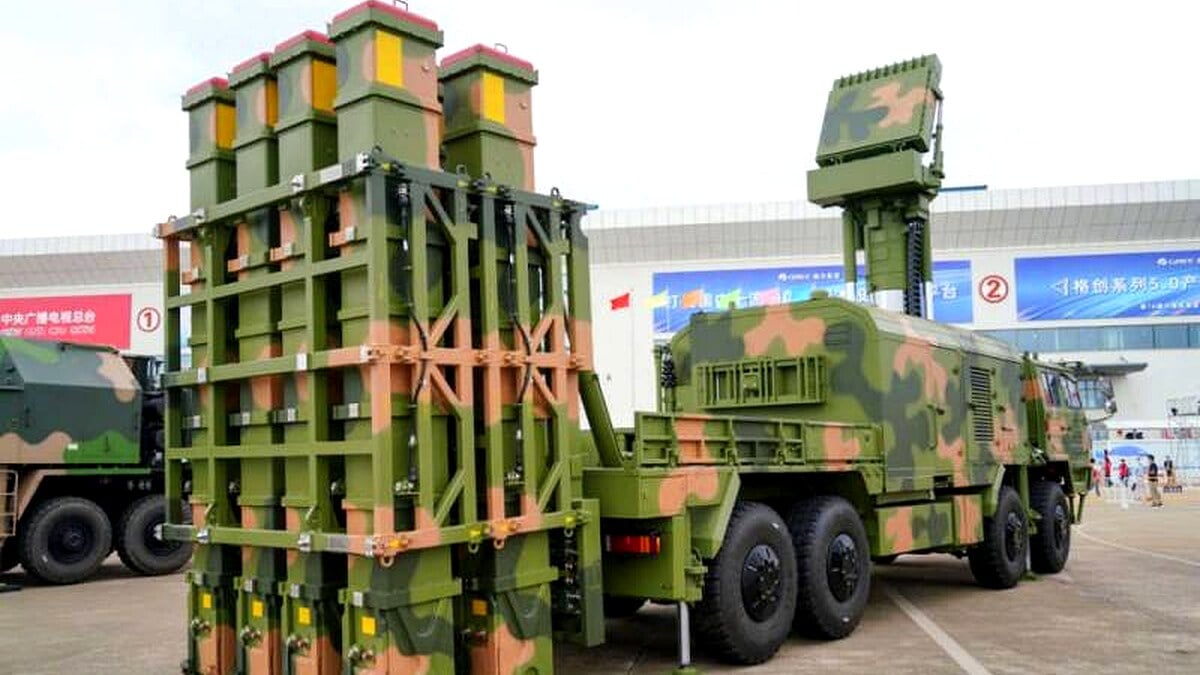




ISLAMABAD: In a significant move to fortify its defense capability, Pakistan has deployed advanced air defense systems targeting potential threats from India.
The deployment includes the HQ-11, HQ-9B, HQ-16FE, and LY-80 systems, marking a strategic enhancement in Pakistan’s defense arsenal.
This development aims to counter India’s BrahMos missile threat through a layered defense strategy.
The HQ-11 point air defense system plays a pivotal role with its range of 20 to 30 kilometers, guided by active radar homing.
A single battery of HQ-11 is capable of defending a base against over 20 BrahMos missiles, making saturation of Pakistan’s defenses challenging for India.
The high-altitude HQ-9B missile system complements this strategy by providing long-range interception capabilities.
The HQ-9B enhances Pakistan’s capability to neutralize aerial threats at significant distances, further strengthening its air defense umbrella.
The medium-range HQ-16FE system is integrated into this defense network, optimizing Pakistan’s ability to intercept various threat types.
The LY-80 system operates at the lower altitude spectrum, offering comprehensive coverage against aircraft and missile threats.
This strategic deployment is geared towards establishing a multi-layered defense architecture.
According to a defense analyst from Global Times, this enhancement significantly elevates Pakistan’s defensive deterrence.
The integration of these systems demonstrates Pakistan’s commitment to maintaining a robust defense posture amid regional tensions.
Defense experts suggest that these advancements will complicate any potential offensive strategy by India.
This is seen as a direct response to India’s expanding missile capabilities, especially with its deployment of the BrahMos missile.
As reported by Jane’s Defense Weekly, Pakistan’s decision aligns with its long-term defense modernization plans.
The HQ-11 system’s ability to protect pivotal locations underscores its strategic importance to Pakistan’s defense strategy.
The HQ-9B, known for its precision and extended range, reinforces Pakistan’s airspace integrity.
The HQ-16FE and LY-80 systems complement this by providing agile and dynamic response capabilities.
This deployment is expected to trigger further developments in the defense dynamics between the two nuclear-armed neighbors.
The evolving security situation highlights the necessity for agile defense solutions in South Asia.
This is a developing story, and further updates will shed more light on regional implications.
The enhancement of these systems marks a significant milestone in Pakistan’s defense capabilities.
Future strategic discourse will likely revolve around the impact of these new defense systems on regional stability.
This development raises questions about potential responses and adjustments from India.