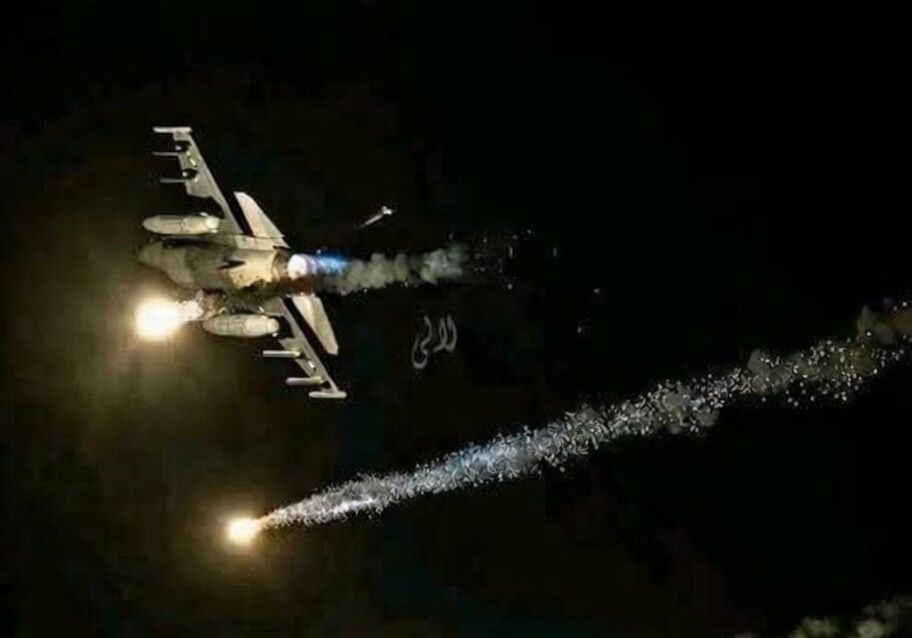
ISLAMABAD: Reports from reliable security sources indicate that the Pakistan Air Force is poised to launch a massive aerial response against Taliban positions within the next one to two hours, following intense border clashes and retaliatory actions under Operation Ghazab Lil Haqq.
Defence analyst Muhammad Malik has warned that the coming 72 hours will prove extremely difficult for the Afghan Taliban regime amid ongoing military pressure from Pakistan.
The escalation builds on recent cross-border incidents, including unprovoked firing by Afghan Taliban forces on Pakistani positions in multiple sectors of Khyber Pakhtunkhwa.
Pakistan’s security forces have already delivered effective responses, eliminating at least 30 Taliban personnel in initial retaliatory measures across Chitral, Khyber, Mohmand, Kurram, and Bajaur districts.
The operation targets militant infrastructure used for planning attacks inside Pakistan, with sources emphasizing intelligence-driven precision to avoid civilian areas.
Tensions surged after Pakistani airstrikes earlier this week destroyed seven militant camps linked to Tehreek-e-Taliban Pakistan and affiliates in Nangarhar, Paktika, and Khost provinces.
Those strikes reportedly neutralized over 80 militants, according to Pakistani military assessments released through official channels.
Afghan Taliban authorities claimed civilian casualties in those operations, including women and children, accusations firmly rejected by Islamabad as propaganda.
In retaliation, Taliban forces initiated large-scale offensives on Thursday, claiming to have captured border posts and inflicted losses on Pakistani troops.
Pakistan countered that Afghan actions were unprovoked provocations, prompting coordinated responses from army, air force, and paramilitary units.
Security officials reported that Taliban claims of capturing numerous outposts remain unverified, with Pakistani forces maintaining control over key positions.
The Durand Line border has witnessed repeated exchanges of fire, artillery duels, and targeted strikes since mid-February.
Analysts point to the persistent presence of TTP militants on Afghan soil as the root cause, with the group responsible for a surge in suicide bombings and attacks within Pakistan.
Since the Taliban’s takeover in 2021, cross-border militancy has intensified, leading to multiple Pakistani operations to degrade terrorist capabilities.
Operation Ghazab Lil Haqq, meaning “Wrath for the Truth,” represents a formal escalation in response to direct attacks on Pakistani military installations.
The Ministry of Information and Broadcasting has described the Afghan Taliban’s miscalculation in opening fire, vowing continued punishment until threats are neutralized.
International calls for restraint have emerged, with the United Nations human rights chief urging dialogue to prevent further civilian suffering.
Border communities in affected districts face displacement, economic disruption, and heightened insecurity amid the fighting.
Pakistan maintains that its actions remain defensive, proportionate, and focused solely on terrorist threats emanating from across the border.
The anticipated aerial response could involve precision strikes on Taliban command structures and logistics hubs, building on earlier successes in disrupting militant networks.
Muhammad Malik’s assessment highlights the strategic pressure on the Taliban, suggesting sustained operations could force concessions or behavioral change.
Military sources indicate high alert status along the 2,600-kilometer frontier, with additional assets deployed to counter any further incursions.
Diplomatic engagement remains limited, as Pakistan has not formally recognized the Taliban government in Kabul.
The situation underscores longstanding challenges in bilateral relations, compounded by security concerns and the unresolved status of the Durand Line.
As the next phase unfolds, observers monitor for potential de-escalation through back-channel talks or third-party mediation.
Pakistan reiterates its commitment to regional peace while insisting that the Afghan side must prevent its territory from being used against neighbors.
The coming hours and days will likely determine whether the conflict spirals further or opens pathways to dialogue.