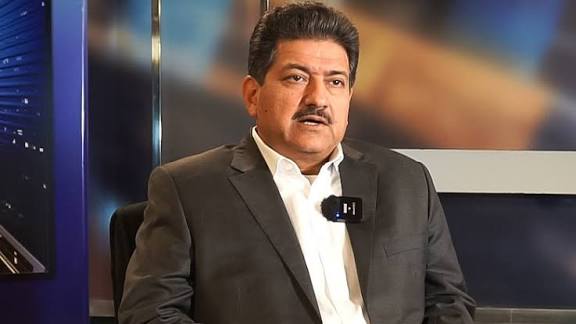
ISLAMABAD: Renowned Pakistani journalist Hamid Mir has unveiled a startling revelation, claiming that a Middle Eastern country is actively encouraging the Taliban government in Afghanistan to launch attacks on Pakistan, culminating in yesterday’s cross-border assault that escalated into open warfare.
This disclosure comes amid heightened tensions along the Durand Line, where Afghan forces initiated large-scale offensive operations against Pakistani military positions on February 26, 2026, prompting immediate retaliation from Islamabad.
According to Mir, speaking on a televised program, the unnamed Middle Eastern nation seeks to destabilize Pakistan due to longstanding regional rivalries, with the Taliban acting as proxies in this geopolitical maneuver.
International observers note that such provocations align with broader grudges held by global powers against Pakistan’s nuclear arsenal, which has long been a point of contention in strategic discussions.
Analysts suggest Qatar or the United Arab Emirates as potential states, though no official confirmations have emerged, given their historical roles in Afghan affairs.
Qatar, for instance, mediated a ceasefire between Pakistan and Afghanistan in October 2025, alongside Turkiye, following deadly clashes that claimed dozens of lives on both sides.
Despite that truce, negotiations faltered, leading to the current escalation, where Pakistan’s Defense Minister declared an “open war” with the Taliban regime.
The February 26 assault by Afghan Taliban forces targeted Pakistani border posts in provinces like Nangarhar, Nuristan, Kunar, Khost, Paktia, and Paktika, according to Taliban spokesperson Zabihullah Mujahid.
Pakistan responded swiftly with Operation Ghazab Lil Haq, conducting airstrikes on Kabul, Kandahar, and Paktika, marking a significant shift from border skirmishes to strikes on major Afghan cities.
Casualty figures remain disputed: Pakistan claims to have eliminated 274 Taliban militants and officials, while Afghanistan reports 55 Pakistani soldiers killed, with both sides acknowledging their own losses at 12 and 13, respectively.
These numbers, sourced from official statements and unverified by independent bodies like Reuters, underscore the intensity of the conflict that has displaced thousands along the 2,600-kilometer border.
Historical data from the International Crisis Group indicates that border clashes have surged since the Taliban’s 2021 takeover of Afghanistan, with over 1,200 incidents recorded between 2022 and 2025, primarily over fencing disputes and militant sanctuaries.
Pakistan accuses the Afghan Taliban of harboring the Tehrik-i-Taliban Pakistan (TTP), responsible for recent terrorist attacks in Islamabad, Bajaur, and Bannu, which killed scores and prompted the initial Pakistani airstrikes on February 21, 2026.
Those strikes targeted alleged TTP and ISIS-K camps in Nangarhar, Paktika, and Khost, killing militants but also civilians, as per Afghan reports, fueling retaliatory sentiments.
Mir’s revelation adds a layer of intrigue, suggesting external backing for the Taliban, possibly tied to economic interests in Afghanistan’s mineral resources, estimated by the U.S. Geological Survey at over $1 trillion in untapped lithium, copper, and rare earths.
Middle Eastern nations like the UAE have invested in Afghan infrastructure, signing deals worth $3.5 billion in 2023 for energy and logistics projects, potentially viewing Pakistan as a competitor in regional trade routes.
Qatar, host to the Taliban’s political office since 2013, has provided over $740 million in humanitarian aid to Afghanistan post-2021, per UN records, raising questions about its influence over Taliban decisions.
Critics argue that silent international support for Afghanistan stems from apprehensions over Pakistan’s nuclear program, which includes an arsenal of approximately 170 warheads, according to the Stockholm International Peace Research Institute’s 2025 report.
Western powers, including the United States, have expressed concerns about the security of these assets amid Pakistan’s internal instability, with declassified documents from 2024 highlighting fears of proliferation risks.
This grudge, Mir posits, manifests in muted responses to Afghan aggressions, allowing the Taliban to act with impunity despite violations of the Doha Agreement, which barred support for terrorist groups.
Data from the Armed Conflict Location & Event Data Project (ACLED) shows a 45 percent increase in cross-border violence since October 2025’s ceasefire, with civilian casualties rising to 1,500 in the past four months alone.
Pakistan’s military response, involving advanced F-16 jets and precision-guided munitions, reflects its superior conventional capabilities, with a defense budget of $11.3 billion in 2025, dwarfing Afghanistan’s estimated $2 billion under Taliban control.
Yet, the Taliban’s guerrilla expertise, honed over two decades against NATO forces, poses asymmetric threats, including drone incursions that Pakistan claims to have intercepted on February 27.
Regional implications are profound: India, Pakistan’s arch-rival, has offered humanitarian aid to Afghanistan while condemning Pakistani strikes, potentially exacerbating South Asian tensions.
China, with $60 billion invested in the China-Pakistan Economic Corridor, has urged restraint, fearing disruptions to Belt and Road Initiative projects traversing the border regions.
The United Nations Security Council convened an emergency session on February 27, 2026, calling for de-escalation, but veto powers like the U.S. and Russia remain divided on assigning blame.
Humanitarian organizations, including the Red Crescent, report 18 civilian deaths from Pakistani strikes in Kabul, with hospitals overwhelmed and supply chains disrupted.
Displaced populations along the Durand Line, numbering over 50,000 per UNHCR estimates, face acute shortages of food and shelter amid winter conditions.
Mir emphasizes that exposing these covert encouragements is crucial for Pakistan’s sovereignty, urging diplomatic isolation of the implicated Middle Eastern state.
Pakistan’s Foreign Ministry has summoned ambassadors from Qatar and the UAE for clarifications, though both deny involvement in stoking hostilities.
As clashes continue, with reports of ground engagements in Khost province, the risk of a protracted conflict looms, potentially drawing in proxy militias and further destabilizing the region.
Experts from the Lansing Institute warn of spillover effects, including increased TTP activities within Pakistan, which have already claimed 800 security personnel lives since 2021.
The Afghan Taliban’s openness to talks, as stated by Mujahid on February 27, offers a glimmer of hope, but trust remains eroded by repeated breaches.
Pakistan insists on verifiable actions against TTP sanctuaries before any dialogue, a demand echoed in its National Security Policy of 2022.
Mir’s revelation, if substantiated, could reshape alliances, prompting scrutiny of Middle Eastern investments in Afghanistan.
For now, the fog of war obscures motives, but data points to a complex web of grudges, resources, and power plays fueling this dangerous escalation.