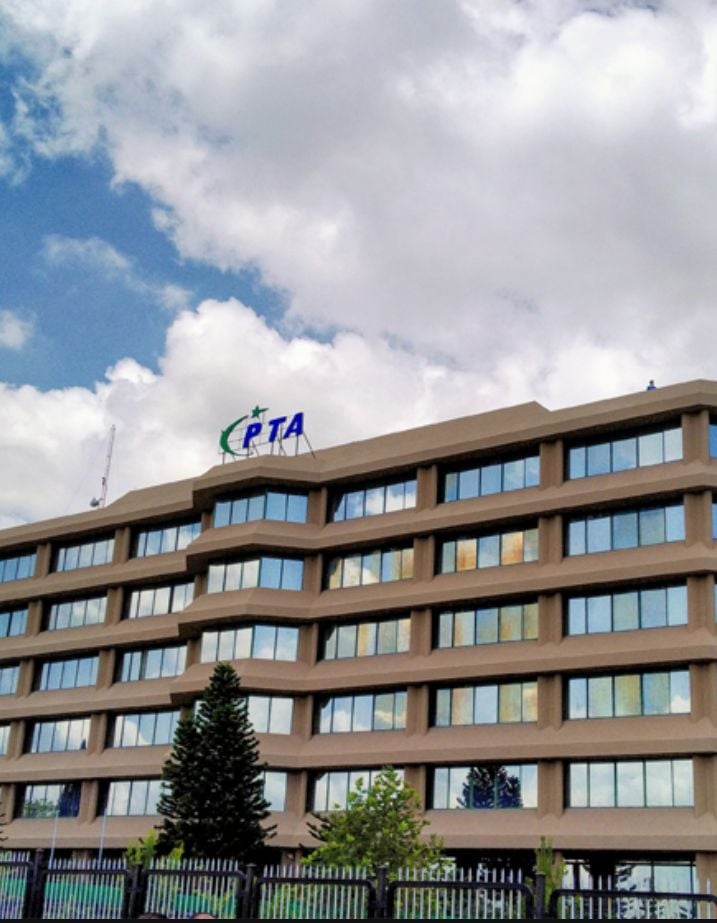
ISLAMABAD: The National Assembly Standing Committee on Information Technology was informed on Wednesday that reports suggesting the shutdown of Pakistan’s so-called internet firewall ahead of the 5G spectrum auction were incorrect and misleading.
Committee Chairman Syed Aminul Haque opened the discussion by addressing circulating media reports on the alleged dismantling of the firewall. He emphasized the need for clarity on the system’s status and its national importance. Member Sadiq Memon sought a detailed briefing on the mechanism, its benefits to the country, and distinctions between an internet firewall and the Pakistan Telecommunication Authority’s Web Monitoring System (WMS).
Information Technology Secretary Zarar Hashim Khan firmly denied any dismantling. He stated that the PTA’s WMS continues to function without interruption. Khan clarified that neither a separate firewall nor the WMS had contributed to any delays or disruptions in internet services across the nation.
PTA Chairman Hafeezur Rehman provided further technical details. He explained that “firewall” serves as a colloquial term for the WMS in public discourse. The system has been active in Pakistan since 2006, initially established to regulate digital traffic and security.
Rehman noted that the WMS underwent four major upgrades, with the latest completed in 2023. This evolution transformed it into a more advanced tool, often referred to in recent reports as WMS 2.0. The upgrades incorporated sophisticated capabilities, including deep packet inspection to monitor and manage internet traffic effectively.
The primary objectives of the WMS include eradicating grey traffic in telephony, which involves unauthorized rerouting of international calls to evade taxes and regulations. It also facilitates the blocking of illegal websites, restricted social media platforms when necessary, and content deemed harmful within Pakistan’s legal framework.
Officials stressed the role of the system in safeguarding digital borders. During periods of heightened bilateral tensions, particularly with India, the WMS has successfully thwarted cyberattacks originating from external sources. This protective function underscores its utility in maintaining national cybersecurity.
Historically, internet content regulation in Pakistan traces back to early 2000s efforts to control access via international gateways. By 2006, foundational monitoring tools were deployed. A significant milestone occurred in 2018 when a contract worth approximately $18 million was signed with Canadian firm Sandvine for an advanced nationwide system, marking the formal installation of what became known as WMS 1.0.
Following Sandvine’s exit from certain markets in 2023, the system was upgraded using technology from China’s Geedge Networks, supplemented by hardware from U.S.-based Niagara Networks and French firm Thales. This shift aligned Pakistan’s capabilities more closely with advanced models seen globally.
The WMS can now inspect traffic and block up to two million active sessions simultaneously. Reports indicate it currently restricts access to around 650,000 web links and various platforms, balancing security needs with content management.
In comparative context, China’s Great Firewall, operational since the early 2000s with major phases completed by 2006 and 2008, remains the most extensive example. It blocks foreign websites, slows cross-border traffic, and employs techniques like IP blocking and DNS tampering. Estimated early costs for China’s Golden Shield Project reached hundreds of millions of dollars, with ongoing investments in the billions to sustain its scale and effectiveness against circumvention tools.
Other nations have adopted similar systems with varying scopes and expenses. Russia plans to invest over $660 million between 2025 and 2030 to enhance its TSPU censorship infrastructure. Iran maintains one of the strictest regimes, blocking millions of sites through national gateways. Turkey has expanded blocking over 450,000 websites in recent years, often citing national security.
These systems aim to protect against illegal content, cyber threats, and economic losses from grey traffic. However, they draw criticism for potential overreach into privacy and expression. In Pakistan, the WMS is positioned strictly as a tool for lawful content management and security, not arbitrary censorship.
The committee briefing highlighted that the system’s continuity ensures no adverse impact on the forthcoming 5G rollout. Officials reiterated commitments to cybersecurity while addressing public concerns over internet quality, attributing slowdowns to infrastructure demands rather than monitoring tools.
Pakistan’s approach reflects a broader global trend where governments deploy monitoring to secure networks amid rising digital threats. The WMS, through successive upgrades, has adapted to evolving challenges, from grey telephony to sophisticated cyberattacks.
As the country advances toward 5G deployment, maintaining robust digital safeguards remains a priority. The clarification from the committee meeting reaffirms that the WMS stands as an integral component of national digital infrastructure, fully operational and aligned with regulatory objectives.