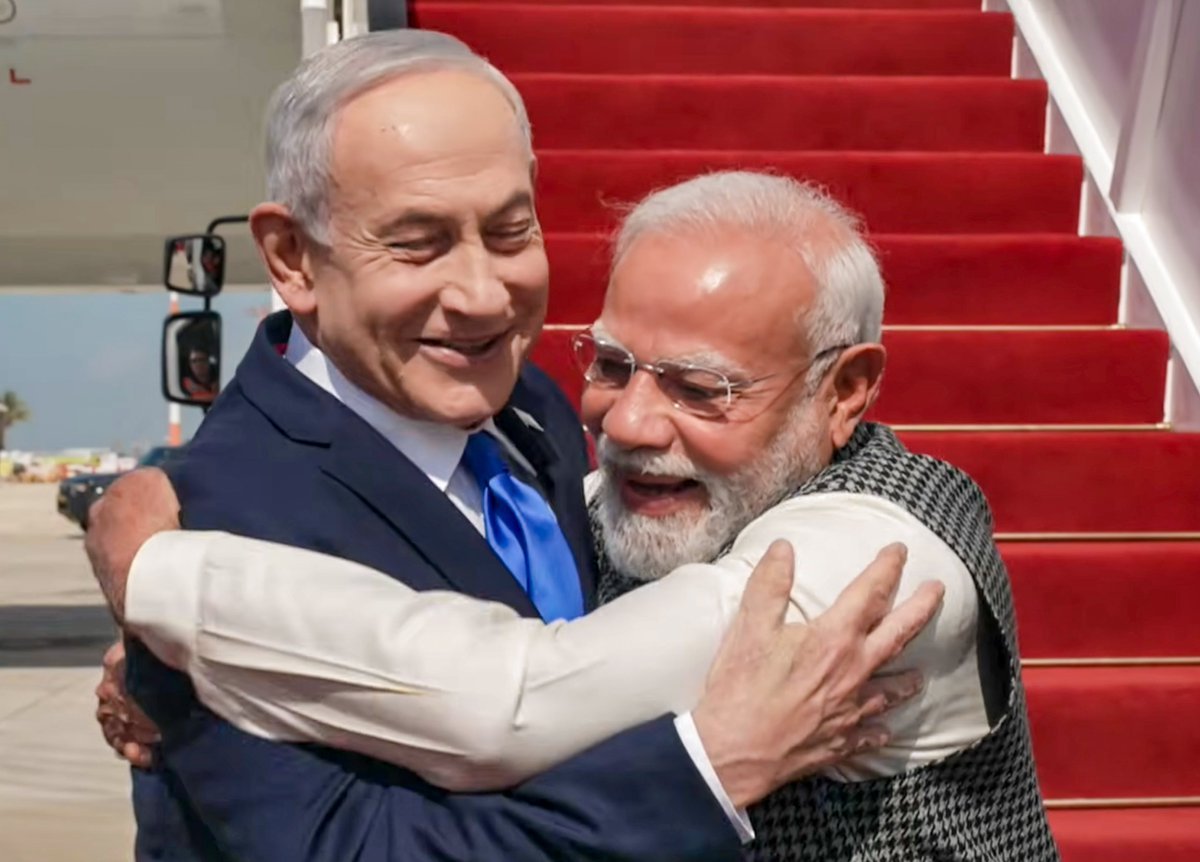
ISLAMABAD: Pakistan has expressed heightened vigilance over the expanding defence cooperation between India and Israel, viewing it as a direct challenge to regional peace and stability, a Foreign Office spokesperson stated on Thursday.
The remarks come amid reports of multibillion-dollar arms deals signed during Indian Prime Minister Narendra Modi’s recent visit to Israel, including agreements worth up to $10 billion for missiles, drones, and laser-based defence systems.
These pacts, announced by Israeli media, encompass joint production of advanced technologies like the Iron Beam laser weapon and Rampage air-to-surface missiles, aimed at bolstering India’s capabilities against perceived threats from neighbors.
Pakistan’s spokesperson emphasized that Islamabad is closely monitoring these developments, particularly in light of historical instances where Israeli-supplied weapons were deployed by India in conflicts with Pakistan.
A notable example is Operation Sindoor in May 2025, a four-day military campaign launched by India in response to a terrorist attack in Pahalgam, Kashmir, which killed 26 civilians.
During the operation, India utilized Israeli-origin armaments, including Barak-8 surface-to-air missiles co-developed with Israel, HARPY drones for radar suppression, and Rampage missiles with a 250-kilometer range.
Indian reports confirmed these systems repelled Pakistani missile barrages and targeted terror infrastructure, with Netanyahu later acknowledging their “battle-tested” performance in a press interaction
The conflict, which involved missile strikes across the Line of Control, resulted in at least 31 casualties in Pakistan-administered areas, according to Al Jazeera, and escalated tensions to near-nuclear levels before a ceasefire.
Pakistan’s concerns extend to Israel’s interest in countering its Ababeel missile, a medium-range ballistic missile equipped with Multiple Independently Targetable Re-entry Vehicles (MIRV) technology, tested successfully in 2017.
Indian defence analyst Shishir Gupta, in a recent article, highlighted Israel’s eagerness for boost-phase missile defence collaboration with India to neutralize such threats, noting that MIRV warheads make post-launch interception nearly impossible.
This aligns with broader strategic discussions in Indian media, where experts argue Israeli expertise in systems like Arrow and David’s Sling could integrate into India’s Sudarshan Chakra air defence network by 2035.
The spokesperson further accused the India-Israel partnership of forming an “axis” against Muslim-majority nations, particularly Pakistan.
Israeli Prime Minister Benjamin Netanyahu’s proposal for a “hexagon of alliances” including India, Greece, Cyprus, and unnamed Arab and Asian states, was condemned by Pakistan’s Senate as an anti-Muslim bloc aimed at countering “radical Shia and Sunni axes.”
The resolution, passed unanimously, warned that such alignments threaten the unity of the Muslim Ummah and could destabilize South Asia.
Data from the Stockholm International Peace Research Institute shows Israel as India’s second-largest arms supplier after France, with exports totaling $2.9 billion over the past decade, including radars, surveillance drones, and precision-guided munitions.
This trade surged in 2026, with Forbes India reporting $8.6 billion in deals, encompassing SPICE 1000 bombs and Air Lora ballistic missiles.
Pakistan views this as fueling an arms race, diverting resources from development, as South Asia’s military spending reached $81 billion in 2024 per SIPRI figures.
Allegations of India-Israel collaboration in destabilizing Pakistan’s border regions add to the unease.
Intelligence reports cited in Pakistani media suggest joint operations in Balochistan and Afghanistan, where separatist groups like the Baloch Liberation Army have received covert support.
A 2019 Middle East Institute analysis noted India’s use of Balochistan as a counterweight to Kashmir, with Israel providing intelligence and training expertise.
In Afghanistan, India’s $35 million Chabahar port deal with the Taliban in 2024 is seen as a conduit for influencing anti-Pakistan elements, amid cross-border clashes that killed dozens in 2025.
Israel’s historical perception of Pakistan’s nuclear program as an “existential threat” exacerbates tensions.
Declassified documents reveal Israel’s 1979 campaign, led by Prime Minister Menachem Begin, to pressure Western leaders against Pakistan’s nuclear pursuits, fearing a “Muslim bomb.”
In the 1980s, Israel collaborated with India on plans to strike Pakistan’s Kahuta facility, though aborted due to U.S. intervention.
Today, with Pakistan possessing around 170 warheads per the Arms Control Association, Israeli officials like former Prime Minister Naftali Bennett have flagged it as a post-Iran concern, especially amid Iran’s nuclear ambitions.
Pakistan’s Foreign Office reiterated that its nuclear arsenal serves as deterrence, not aggression, but warned of vigilance against any pre-emptive threats.
During Modi’s February 2026 visit to Israel, protests erupted in the Knesset, with opposition leaders walking out over the exclusion of Supreme Court President Isaac Amit, amid Netanyahu’s judicial disputes.
Spokesperson Andrabi described these actions as “encouraging,” noting that conscientious voices in Israel still challenge provocative policies.
Indian opposition parties, including the Congress, slammed Modi’s trip as “moral cowardice,” accusing him of aligning with a “war criminal” amid global criticism of Israel’s Gaza operations.
Pakistan Tehreek-e-Insaf leaders, meanwhile, sought Chief Justice intervention on unrelated issues like Imran Khan’s medical access, underscoring domestic pressures amid external threats.
Analysts warn that unchecked India-Israel ties could lead to Operation Sindoor 2.0, as hinted by Indian Army’s Western Command, promising harsher responses to future provocations.
With Pakistan’s economy strained, allocating 4% of GDP to defence per World Bank data, the spokesperson urged international mediation to prevent escalation.
As ties deepen, with joint ventures in cyber-defence and AI, Pakistan remains committed to dialogue but prepared for any challenges to its sovereignty.