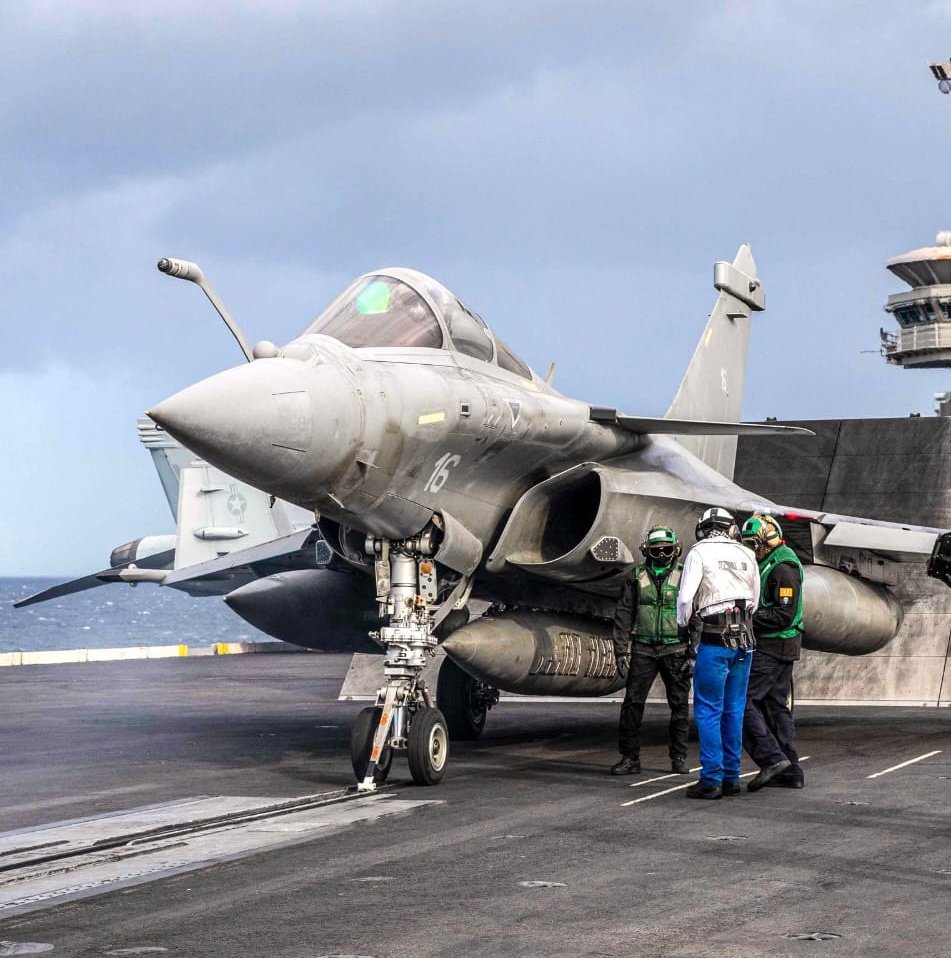
ISLAMABAD: France has rejected India’s request to provide the source codes for the Rafale fighter jet’s key electronic systems, according to a recent report in French business outlet L’Essentiel de l’Éco.
This development comes as India pursues one of its largest defence acquisitions, seeking up to 114 Rafale multirole combat aircraft to bolster the Indian Air Force amid regional security pressures.
The refusal centres on proprietary software governing the SPECTRA electronic warfare suite and other core avionics, including radar and mission computing elements.
French authorities view these source codes as highly sensitive intellectual property, built over decades of development by Dassault Aviation and partners like Thales.
Transferring them would compromise long-term control over the aircraft’s advanced defensive and operational capabilities.
The ongoing negotiations stem from India’s Multi-Role Fighter Aircraft programme, approved by the Defence Acquisition Council in early February 2026.
Under the plan, 18 jets would arrive in fly-away condition from France, while the remaining 96 or more would involve local production to align with India’s self-reliance goals.
This follows the 2016 inter-governmental agreement for 36 Rafale jets, which faced criticism over limited technology transfers and high costs.
The earlier Medium Multi-Role Combat Aircraft tender for 126 jets collapsed partly due to disagreements on offsets and technology sharing.
Experts note that without source code access, India cannot independently reprogram the Rafale for integration of indigenous weapons such as the Astra beyond-visual-range missile or Rudram anti-radiation missile.
Such limitations require ongoing French approval for software modifications, potentially delaying upgrades and increasing dependency.
Reports highlight that the lack of source code access posed challenges during the May 2025 military clash with Pakistan, where Rafale performance reportedly suffered from restricted adaptability.
US Air Force veteran Lieutenant General David Deptula has pointed out that without code control, rapid reprogramming for indigenous munitions or data-link optimisation becomes impossible.
This dependency contrasts with offers from other suppliers, including Russia’s reported willingness to provide full source code access for the Su-57 fifth-generation fighter in potential licence production deals.
Analysts suggest the French stance may reflect strategic caution in protecting core technologies, even in high-value exports.
The Rafale, a twin-engine 4.5-generation fighter, features advanced AESA radar, supercruise capability and the SPECTRA suite for electronic countermeasures.
India’s push for greater autonomy aligns with the Atmanirbhar Bharat initiative, emphasising domestic manufacturing and indigenisation.
The proposed deal, valued at around $35-40 billion, would mark Dassault’s largest export order if finalised.
Negotiations now focus on offsets, production partnerships involving entities like Hindustan Aeronautics Limited, and possible application programming interfaces for limited integration.
Some reports indicate France may offer APIs to enable restricted customisation without full code release.
No official comments from the French or Indian governments have contradicted the French media disclosure as of late February 2026.
The issue revives debates from the original Rafale controversy, including pricing, offsets and alleged irregularities in the 36-jet deal.
India’s air force faces squadron shortages, with fleet strength below sanctioned levels, heightening urgency for modern platforms.
Competing options include American F-35 offers and Russian Su-57 proposals, though Rafale remains favoured for its proven combat record and interoperability.
The source code impasse could influence final terms, with Indian negotiators likely pressing for concessions to meet indigenisation targets.
Observers warn that persistent restrictions might prompt reconsideration of alternatives offering deeper technology partnerships.
The deal’s progression remains under active discussion, with a request for proposal expected soon.
Finalisation would require Cabinet Committee on Security approval and a formal inter-governmental agreement.
This refusal underscores the challenges in balancing strategic partnerships with demands for technological sovereignty in defence acquisitions.