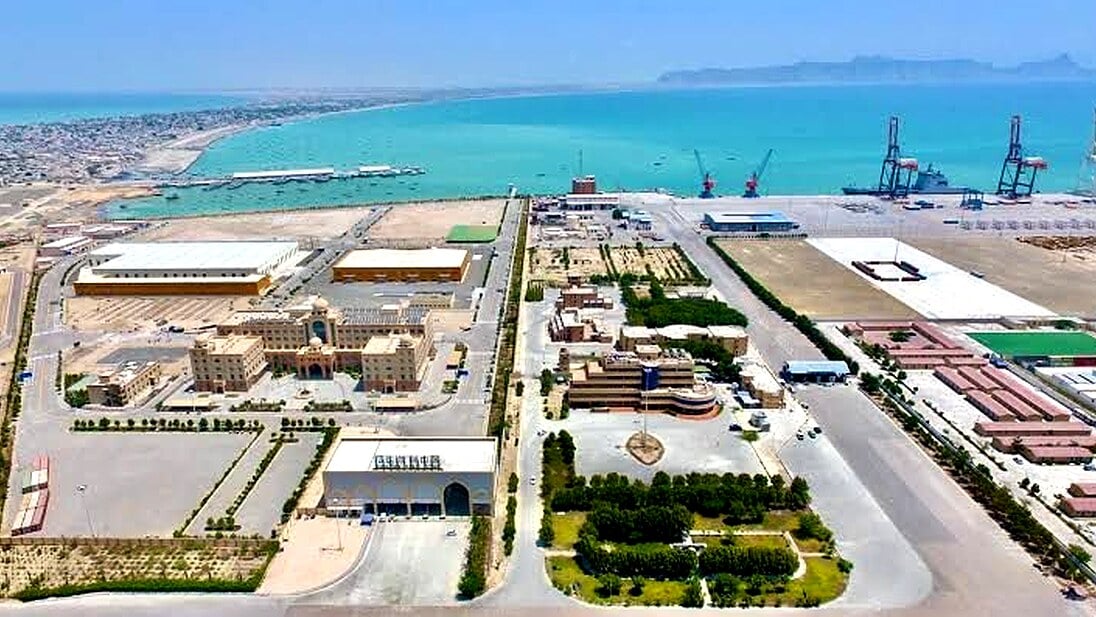


ISLAMABAD: The China-Pakistan Economic Corridor (CPEC) has profoundly impacted Pakistan’s economic development, driving substantial growth across critical sectors. This multi-billion dollar initiative, a flagship project of China’s Belt and Road Initiative (BRI), was launched on April 20, 2015.
It aims to enhance connectivity and foster economic cooperation between China and Pakistan.
CPEC’s initial phase focused heavily on addressing Pakistan’s infrastructure and energy deficits. The project has since evolved, with its second phase, often termed CPEC 2.0, emphasizing industrial development, agriculture, technology transfer, and job creation.
This strategic shift aims to translate infrastructure gains into sustainable economic productivity.
### Bolstering Infrastructure and Connectivity
CPEC has significantly modernized Pakistan’s transportation networks, linking seaports in Gwadar and Karachi with northern Pakistan and further into western China. This includes the construction of new highways and the overhaul of existing routes.
The 1,100-kilometer-long motorway between Karachi and Lahore is a key component, alongside the reconstruction of the Karakoram Highway.
The Main Line 1 (ML-1) railway upgrade, connecting Karachi and Peshawar, is another crucial infrastructure project. This upgrade aims to enable train travel at speeds up to 160 km per hour. These improved networks reduce trade costs and enhance Pakistan’s export capabilities.
More on this topic: Pakistan-China & CPEC · All topics
### Addressing Energy Shortages
A primary objective of CPEC has been to alleviate Pakistan’s chronic energy shortages. Approximately $33 billion was initially allocated for investment in the energy sector. As of April 2026, CPEC has added over 8,000 megawatts (MW) of power generation capacity to Pakistan’s national grid.
These energy projects encompass a diverse mix, including coal-fired, hydroelectric, wind, and solar power plants. The 1,000 MW Quaid-e-Azam Solar Park near Bahawalpur is a notable example, with 400 MW completed by 2016.
The Hub coal power plant in Balochistan, with a capacity of 660 MW, is also a significant CPEC energy project.
### Developing Gwadar Port
Gwadar Port is central to the CPEC initiative, envisioned as a vital link between China’s Belt and Road and its 21st Century Maritime Silk Road projects. China acquired control of Gwadar Port on May 16, 2013.
The port’s development includes deep-water berths capable of handling large cargo vessels.
Over $1 billion worth of projects were planned around Gwadar Port by December 2017. The Gwadar Free Zone, a 2,282-acre area, is being developed with manufacturing zones, logistics hubs, and warehouses.
Businesses operating within this free zone benefit from exemptions on various taxes for 23 years.
### Fostering Industrial Cooperation and Job Creation
CPEC aims to accelerate Pakistan’s industrialization through the establishment of Special Economic Zones (SEZs). Nine SEZs have been established under CPEC, strategically located across all four provinces to promote balanced regional development and attract foreign investment.
More on this topic: Economy & IMF →