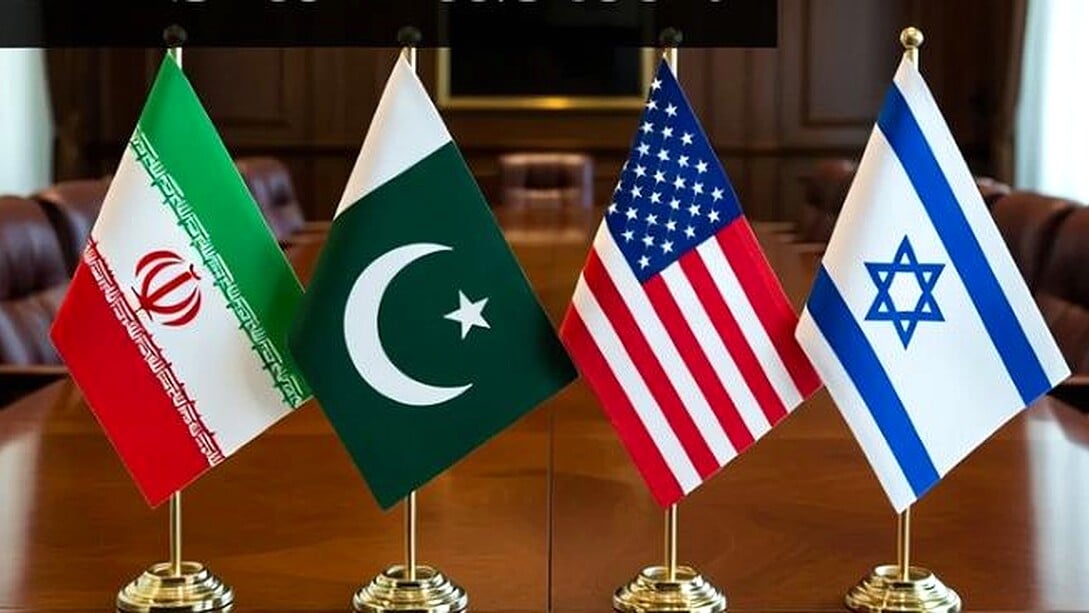
ISLAMABAD: Israel has categorically ruled out any involvement in the high-level negotiations between the United States and Iran reportedly scheduled for Islamabad this week, directly contradicting viral social media claims that Israeli officials may travel to Pakistan for the talks.
Pakistani officials confirmed that contacts are advancing for a possible meeting between senior American and Iranian representatives in the capital, with Prime Minister Shehbaz Sharif publicly offering Islamabad as the venue on Tuesday.
The development unfolds against the backdrop of the US-Israeli war on Iran, which entered its fourth week on March 24 after strikes commenced on February 28 following stalled nuclear negotiations.
President Donald Trump claimed on Monday that Washington had secured an important concession from Tehran and was advancing a 15-point settlement proposal, prompting him to postpone threatened attacks on Iranian power plants until the end of the week.
Iranian authorities, however, have repeatedly denied that any direct negotiations have taken place, dismissing reports as “fake news” designed to influence markets and public opinion.
Iran’s Parliament Speaker Mohammad Bagher Qalibaf stated explicitly that no talks had occurred with the US, while the foreign ministry acknowledged only indirect responses through friendly intermediaries including Pakistan, Egypt, Qatar and Turkey.
Pakistan’s offer to host carries significant diplomatic weight, positioning the country as a bridge between Washington and Tehran at a critical juncture.
Prime Minister Shehbaz Sharif posted on X that Pakistan “stands ready and honoured to be the host to facilitate meaningful and conclusive talks for a comprehensive settlement of the ongoing conflict,” tagging accounts linked to President Trump and Iranian officials.
Trump himself reposted Sharif’s message, signalling a degree of American interest in the Pakistani initiative without formal confirmation from the White House.
A senior Western diplomat told Bloomberg that US Vice President JD Vance, special envoy Steve Witkoff and Jared Kushner could potentially travel to Islamabad if an agreement appeared imminent.
Yet Israeli officials have drawn a firm line on participation.
Israel’s ambassador to the United Nations, Danny Danon, told reporters on Tuesday that as far as he knew, Israel was not part of any reported talks between the US and Iran in Pakistan.
“As we speak Israel and the US continue to target military targets in Iran, and we will continue to do that,” Danon emphasised, underscoring that operations remain active despite diplomatic manoeuvres.
The clarification from Tel Aviv comes after Reuters and Israel’s Channel 12 cited unnamed Israeli sources indicating that contacts were underway for a US-Iran meeting in Islamabad later this week.
Social media platforms amplified these reports, fuelling speculation of a broader multilateral summit that might include Israeli representatives, a narrative now firmly debunked.
Pakistan’s army chief General Asim Munir has leveraged longstanding ties with both Tehran and the Trump administration to advance the mediation effort, according to multiple regional sources.
The Financial Times and Axios reported that Munir held direct conversations with President Trump on Sunday, further elevating Islamabad’s role.
Analysts note that Pakistan’s unique position—sharing a long border with Iran while maintaining close strategic relations with Saudi Arabia and the United States—makes it an ideal neutral ground for de-escalation talks.
The war has already triggered sharp fluctuations in global oil prices and heightened fears of wider regional spillover, with Iranian missiles striking Israeli targets and US forces reinforcing positions across the Gulf.
White House Press Secretary Karoline Leavitt urged caution against “speculative” reports, refusing to confirm or deny the Islamabad venue while emphasising that any progress remained preliminary.
Despite the denials from Tehran and the explicit Israeli exclusion, backchannel diplomacy continues through multiple capitals, with Pakistan emerging as the most visible facilitator.
Foreign Ministry spokesperson Tahir Andrabi reiterated that “if the parties desire, Islamabad is always willing to host talks,” reflecting Pakistan’s long-standing policy of offering its capital for sensitive dialogues.
Whether the proposed meeting materialises remains uncertain, yet the flurry of activity underscores the urgent search for an off-ramp from a conflict that has already lasted 26 days and shows no immediate signs of abating.
For Pakistan, successful hosting would represent a major diplomatic victory, enhancing its stature on the global stage at a time when regional powers are scrambling for influence.
Observers in Islamabad view the moment as a rare opportunity for the country to translate its extensive diplomatic networks into tangible peacemaking credentials.