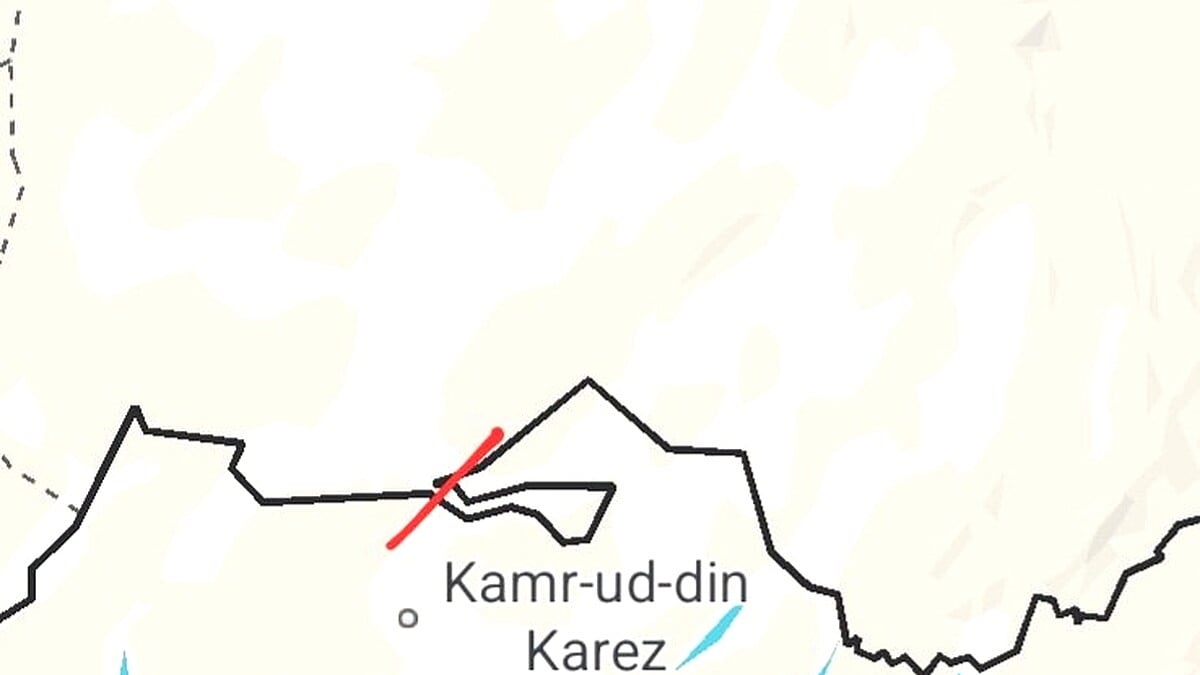
ISLAMABAD: Pakistan has permanently secured and fenced off 32 square kilometres of territory in the Gudwana Enclave, formerly under Afghan Taliban control, marking a significant shift in border dynamics along the Zhob sector.
The operation followed unprovoked attacks on Pakistani positions, prompting a limited tactical response that resulted in the capture of the area without any reported casualties on the Pakistani side.
Security officials described the action as a direct counter to repeated assaults from Taliban positions, including the strategic Tahir Post, which served as a key staging point for militant activities.
The Gudwana Enclave, spanning 32 square kilometres opposite the Zhob district, had long been identified as a logistical corridor and movement hub for Tehrik-i-Taliban Afghanistan elements targeting Pakistani frontiers.
Local and national reports indicate that Pakistani forces achieved complete control after neutralizing multiple Taliban outposts in the general area during overnight engagements on February 27-28.
Arab News quoted a Pakistani security official confirming the seizure of 32 square kilometres of Afghan territory in the Gudwana region as part of defensive measures.
Business Recorder highlighted the enclave’s strategic significance, noting its prior use by Afghan Taliban for cross-border operations against Pakistan.
Sources close to security operations revealed that the area was permanently closed off with fencing to establish a buffer zone, preventing future militant infiltrations and enhancing border management.
This development comes amid escalating tensions, with Pakistani forces reporting heavy losses inflicted on Taliban militants while sustaining zero casualties in the Gudwana action.
The fencing initiative builds on Pakistan’s broader border barrier project along the 2,670-kilometre Durand Line, where over 98 per cent of fencing and 85 per cent of fortifications had been completed by 2023.
The Gudwana fence represents a targeted consolidation effort following the capture, aimed at creating a fortified defensive line in a historically volatile sector.
National media outlets, including Azaad Digital and The Pakistan Connect, reported that the armed forces have sealed the 32-square-kilometre enclave permanently, with comprehensive defences now in place.
Social media platforms circulated images and updates showing Pakistani troops raising the national flag in the secured zone, underscoring the irreversible nature of the control.
Analysts view this as a major setback for Taliban border operations in the Zhob opposite region, disrupting their ability to launch attacks or use the enclave as a safe haven.
Pakistan’s decision to retain and fortify the area stems from ongoing threats, with officials stating that such territories will remain under control until the terrorism risk subsides.
The move has drawn attention in regional strategic circles, where it is seen as a response to persistent violations and a step toward stronger frontier security.
No independent international verification of the territorial shift has emerged, but local Pakistani reports consistently affirm the permanent fencing and control.
The Gudwana Enclave’s seizure and fortification underscore Pakistan’s resolve to protect its borders amid complex regional challenges.
This territorial adjustment in the Zhob sector could influence future border negotiations and security arrangements between the two neighbours.