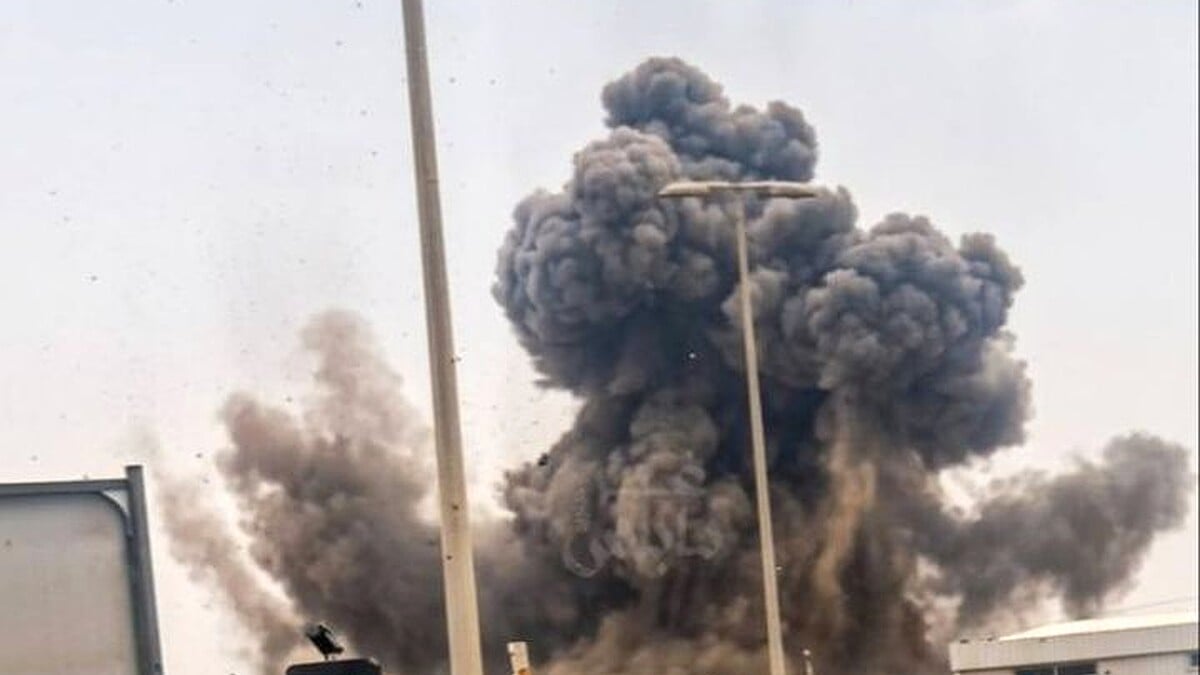
ISLAMABAD: Russia Today amplified dramatic footage on March 25, 2026, showing a massive explosion as an Iranian ballistic missile struck area of Israel’s Dimona nuclear research center, with Iranian state media Mehr claiming a direct hit on the strategic hub in southern Israel.
The RT post, viewed by tens of thousands within hours, featured video of a bright flash followed by a towering plume of smoke and debris, accompanied by the headline “Massive explosion as Iranian missile strikes Israel’s nuclear hub Dimona — Mehr.”
Israeli media shared similar footage but reported conflicting locations, with impacts registered in residential zones of Dimona and the nearby town of Arad rather than the underground Shimon Peres Negev Nuclear Research Center itself.
Israeli Health Ministry figures released by March 25 confirmed more than 180 people wounded across both towns from the March 21-22 barrages, including 64 in Dimona where one child remained in serious condition with shrapnel injuries.
Rescue teams described a one-story building completely destroyed in Dimona, with apartment blocks suffering heavy structural damage, shattered windows and collapsed interiors from the warhead’s blast wave estimated at hundreds of kilograms.
The Dimona facility, believed to house Israel’s undeclared nuclear arsenal of approximately 90 warheads, lies within 8 to 13 kilometers of the reported strike points, including the Rotem industrial zone targeted in follow-up footage.
International Atomic Energy Agency officials monitoring the site reported no radiological release or damage to the reactor complex, yet the proximity triggered global alerts over potential escalation risks near sensitive nuclear infrastructure.
Mehr News Agency and Iranian state television framed the strike as precise retaliation under the ongoing “True Promise” operations, executed hours after reported Israeli and US strikes damaged enrichment halls at Natanz and other Iranian nuclear sites.
RT’s coverage highlighted Israeli air defense failures, noting that despite activation of Iron Dome and allied systems, at least two heavy ballistic missiles penetrated and impacted southern population centers.
Local Israeli accounts from Dimona residents described chaos with families fleeing damaged homes, emergency sirens blaring repeatedly and rescue workers pulling victims from rubble amid thick smoke.
Hospitals including Soroka Medical Center declared mass-casualty events, treating dozens with blast trauma, fractures and psychological shock, while 36 patients remained hospitalized days later.
Russian state media emphasized the symbolic weight, stating that by bringing the conflict closer to Israel’s most sensitive deterrent geography, Tehran imposed new psychological and strategic costs after its own nuclear program faced direct attacks.
Analysts observed that the March 21 strike marked a notable breach in Israel’s multilayered defenses during the fourth week of intensified tit-for-tat exchanges that began in late February 2026.
Additional RT-shared clips from March 22 showed residents gathering belongings from shattered homes in Dimona, underscoring civilian impact with no reported fatalities but significant property destruction.
Israeli Prime Minister Benjamin Netanyahu and other leaders visited impact sites, condemning the attacks as deliberate targeting of civilians while launching an urgent investigation into the defense system’s inability to intercept every incoming threat.
Iranian officials warned of further operations if pressure on their nuclear facilities continued, with state media releasing multiple angles of the Dimona-area blast to demonstrate missile reach and accuracy.
The incident has drawn international scrutiny, with observers noting the delicate balance around nuclear ambiguity and the dangers of conventional strikes landing near undeclared weapons sites.
Casualty assessments continued into March 25, with Israeli emergency services warning that delayed injuries could slightly increase the toll beyond the initial 180 wounded.
Broader retaliatory barrages prompted fresh sirens across southern and central Israel, signaling sustained Iranian pressure amid the escalating regional conflict.
Russia’s reaction, as covered in related RT reporting, described the developments as deeply alarming and warned of serious consequences from further destabilization.
The event underscores shifting dynamics in Middle East deterrence, where long-range precision munitions increasingly challenge even advanced protective umbrellas around strategic assets.