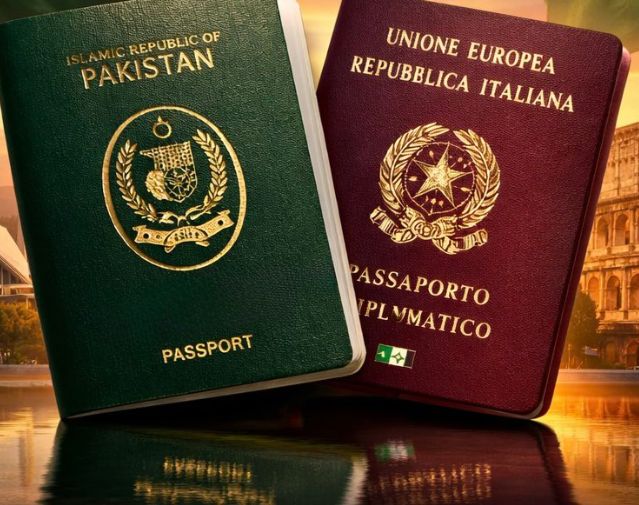
ISLAMABAD: Italy has committed to issuing 10500 work visas to skilled Pakistani nationals in a significant step to foster legal migration channels between the two countries.
The announcement came from Italian Interior Minister Matteo Piantedosi following a high-level meeting in Rome with Pakistan’s Federal Interior Minister Mohsin Naqvi.
This development aims to address labor shortages in Italy while providing structured employment opportunities for Pakistan’s workforce.
The visas target skilled labor, reflecting Italy’s ongoing efforts to regulate migration amid broader European challenges with irregular flows.
Discussions during the meeting also covered enhanced bilateral cooperation on internal security and measures to curb illegal immigration.
Both ministers reviewed existing frameworks and expressed commitment to strengthening ties in areas of mutual interest.
Piantedosi emphasized Italy’s readiness to promote lawful migration pathways as part of a balanced approach to demographic and economic needs.
Pakistan has been actively seeking expanded legal migration routes to reduce irregular migration risks and remittances dependency.
The 10500 visas represent a concrete outcome of recent diplomatic engagements between Islamabad and Rome.
Earlier bilateral talks had laid groundwork for such labor mobility agreements.
A landmark Memorandum of Understanding on Migration and Labour Mobility was signed in May 2025, setting the stage for increased cooperation.
The current commitment builds on that foundation, focusing on skilled sectors where Pakistan offers competitive talent.
Italy faces an aging population and workforce gaps in construction, agriculture, healthcare and manufacturing.
Pakistani workers, known for their adaptability and technical skills, are seen as a valuable addition to fill these roles.
The initiative is expected to benefit both economies through formal channels that ensure worker rights and social protections.
In addition to work visas, Italy agreed to waive visa requirements for holders of Pakistani diplomatic passports.
This exemption, granted at Naqvi’s request, will facilitate smoother official travel and diplomatic exchanges.
It responds to a prior proposal from the Pakistani side and marks a gesture of goodwill in bilateral relations.
The waiver simplifies procedures for government officials, enhancing high-level interactions.
Officials described the overall agreement as a positive stride in Pakistan-Italy partnership.
The two countries also plan to resume sessions of their Joint Working Group on migration matters.
Such meetings will help monitor implementation and address any emerging issues.
The 10500 visas are anticipated to be distributed over a multi-year period to allow orderly processing.
Some reports suggest an allocation across seasonal and non-seasonal categories to match Italy’s labor demands.
Seasonal visas often cover agriculture and tourism, while non-seasonal ones target longer-term employment in industry.
This structured approach helps prevent exploitation and aligns with international labor standards.
Pakistan’s government has highlighted its effective measures against illegal migration outflows.
Interior Minister Naqvi briefed his counterpart on steps taken domestically to manage borders and prosecute smuggling networks.
Italy appreciated these efforts and reiterated support for collaborative security initiatives.
The agreement underscores growing trust between the two nations on sensitive migration topics.
Trade and investment ties have also expanded in recent years, complementing people-to-people contacts.
Remittances from Pakistani diaspora in Europe, including Italy, remain a key economic pillar for Pakistan.
Legal migration pathways are expected to boost these flows through documented employment.
Analysts view this as part of Italy’s broader strategy under its current administration to manage migration humanely and economically.
By prioritizing skilled workers from partner countries, Rome seeks sustainable solutions over ad-hoc responses.
For Pakistan, the deal opens doors for youth seeking opportunities abroad without resorting to dangerous irregular routes.
Skills training programs may be aligned to meet Italian certification requirements.
Both sides expressed optimism about future expansions based on successful implementation.
The development has been welcomed by stakeholders in labor export and migration policy circles.
It signals potential for similar arrangements with other European partners facing comparable challenges.
Overall, the visa commitment and diplomatic waiver strengthen bilateral relations at a practical level.
This move promotes mutual benefits in an era of global mobility and economic interdependence.