ISLAMABAD: Senior Indian journalist Shishir Gupta has revealed that Israel harbours keen interest in collaborating with India on boost-phase missile defence systems, specifically to neutralise Pakistan’s Ababeel missile.
The Ababeel, a surface-to-surface ballistic missile developed by Pakistan, features multiple independently targetable re-entry vehicles, or MIRV technology, allowing a single launch to deliver several warheads on separate trajectories.
This capability poses a significant challenge to conventional missile defences, which often struggle after warheads separate in the mid-course or terminal phases.
Boost-phase interception targets the missile during its powered ascent, shortly after launch, when it remains vulnerable and its trajectory is predictable.
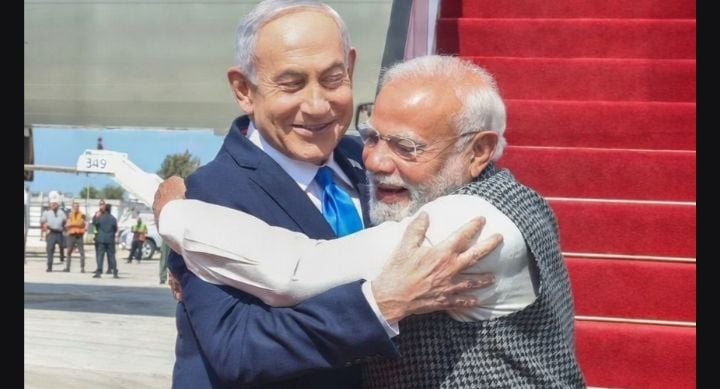
Gupta’s assessment links this potential cooperation to deepening India-Israel strategic ties, highlighted during Prime Minister Narendra Modi’s recent visit to Israel.
Analysts note that the Ababeel, with a reported range of approximately 2,200 kilometres, was first tested in 2017 as a direct response to India’s advancing ballistic missile defence programme.
Pakistan positions the Ababeel as a means to maintain credible deterrence against India’s multi-layered shield, including systems like the Prithvi Air Defence and Advanced Air Defence.
The missile’s MIRV feature enables it to overwhelm interceptors by saturating defences with multiple incoming threats.
Gupta emphasised that once MIRVed warheads disperse, interception becomes extraordinarily difficult, making early-phase targeting a priority for effective countermeasures.
Israel’s expertise in missile defence, demonstrated through systems such as Arrow, David’s Sling and Iron Dome, positions it as a natural partner for such advanced collaboration.
While Israel’s existing systems focus primarily on mid-course and terminal interception, joint development could extend capabilities into the boost phase.
This interest aligns with broader India-Israel defence engagements, including joint production and technology transfer initiatives.
Recent reports indicate India exploring enhanced anti-ballistic missile cooperation with Israel under frameworks like Mission Sudarshan Chakra, a multi-layered defence initiative announced by Indian leadership.
Pakistan’s missile advancements, including longer-range systems, have prompted India to accelerate its own defensive architecture amid regional tensions.
The Ababeel draws from solid-fuel technology, offering quicker launch readiness compared to liquid-fuel alternatives.
Its development reflects Pakistan’s strategy to counter perceived asymmetries in conventional and missile capabilities.
Gupta described Pakistan as pursuing disruptive technologies in response to India’s defensive build-up.
Theoretically, the Ababeel’s range places distant targets, including parts of the Middle East, within reach from certain launch points in Pakistan.
However, practical employment against far-flung adversaries remains hypothetical and constrained by geopolitical realities.
Boost-phase systems require interceptors positioned close to potential launch sites, posing logistical and operational challenges.
Critics question the feasibility due to geographical distances and the short engagement window during the boost phase, which lasts only minutes.
Despite these hurdles, the prospect underscores evolving strategic alignments in South Asia and beyond.
India’s ballistic missile defence programme has progressed steadily, with successful tests establishing it among a select group of nations possessing such capabilities.
Cooperation with Israel could accelerate indigenous development while ensuring technology access under co-production models.
This partnership builds on decades of defence trade, with Israel emerging as a major supplier of advanced systems to India.
Recent deals have included precision munitions, drones and surveillance equipment, further solidifying bilateral military links.
Pakistan maintains that its missile programme serves purely defensive purposes to preserve strategic balance.
Officials in Islamabad have consistently affirmed commitment to credible minimum deterrence without seeking escalation.
The revelation from Gupta highlights how missile defence pursuits can influence regional dynamics and international partnerships.
As technologies advance, the focus on early interception may reshape deterrence calculations across South Asia.
Observers watch closely for any formal announcements emerging from ongoing India-Israel dialogues.
Such developments could mark a new chapter in missile defence evolution in one of the world’s most militarised regions.