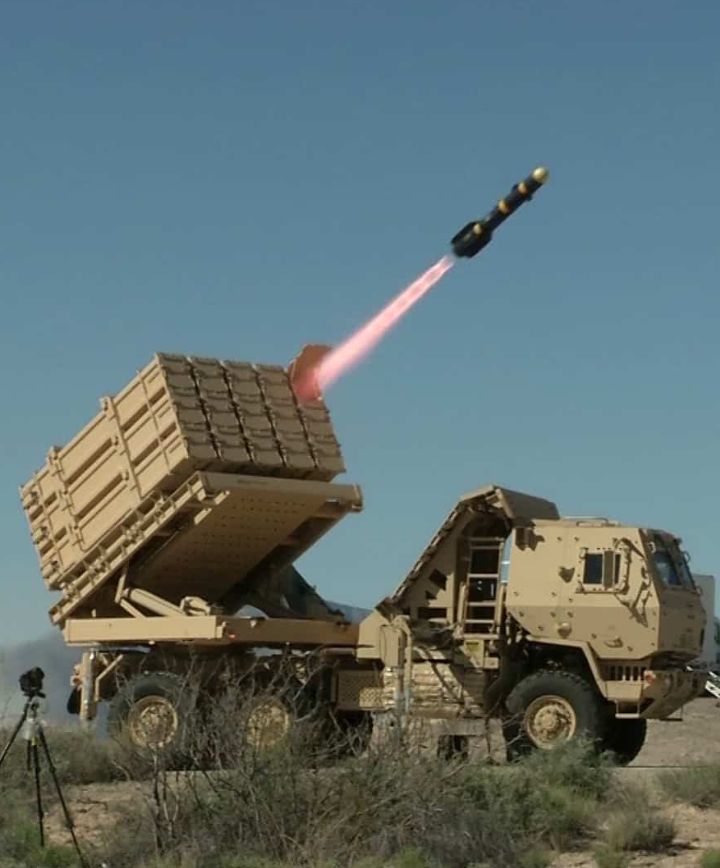
ISLAMABAD: Israel has expressed readiness to share its advanced Iron Dome air defence system technology with India, marking a potential escalation in bilateral defence ties. Israeli Consul General to Midwest India Yaniv Revach made the announcement in an exclusive interview ahead of Prime Minister Narendra Modi’s visit to Israel, highlighting plans to expand existing agreements.
The statement comes amid deepening strategic cooperation between the two nations. Revach emphasized that Israel and India already maintain a unique and strong defence partnership driven by shared security challenges. He noted ongoing collaboration but stressed the intent to broaden it significantly during the upcoming high-level visit.
Specifically, Revach outlined key areas of expansion. These include manufacturing military hardware within India, enhanced defence cooperation, and joint work on systems like the Iron Dome. He described the Iron Dome as one of several Israeli defence technologies that Israel shares with trusted partners.
The Iron Dome, developed by Rafael Advanced Defense Systems and Israel Aerospace Industries, has proven highly effective in real-world scenarios. It intercepts short-range rockets, artillery shells, and mortars fired from 4 to 70 kilometres away. The system uses radar to detect threats, tracks trajectories, and launches Tamir interceptors only against projectiles posing risks to populated areas.
Over the years, the Iron Dome has achieved interception rates often cited above 90 percent in conflicts involving rocket barrages. Its layered approach integrates with other Israeli systems like David’s Sling for medium-range threats and Arrow for ballistic missiles. This multi-tiered architecture has made it a benchmark in active air defence worldwide.
For India, acquiring or co-producing such technology could strengthen defences against short-range aerial threats. India faces diverse security challenges, including border tensions and potential rocket or drone attacks in contested regions. Integrating elements of the Iron Dome could complement existing systems like the Russian S-400 and indigenous developments under the ballistic missile defence programme.
The proposal aligns with India’s Make in India initiative. Revach explicitly mentioned focusing on local manufacturing to boost self-reliance in defence production. This approach would involve technology transfer, joint ventures, and production facilities in India, potentially creating jobs and building domestic expertise.
Defence analysts view the move as timely. India and Israel have collaborated extensively on drones, missiles, and surveillance equipment. Recent years have seen multi-billion-dollar deals, including acquisitions of Spike missiles and Heron UAVs. Sharing Iron Dome technology could represent the next phase in this partnership.
However, experts caution that no defence system is impenetrable. The Iron Dome excels against slower, predictable short-range projectiles but faces limitations against advanced threats. Supersonic cruise missiles, hypersonic glide vehicles, and multiple independently targetable reentry vehicles (MIRVs) pose greater challenges due to speed, manoeuvrability, and saturation tactics.
Pakistan has developed capabilities in these domains. Its Ababeel missile incorporates MIRV technology, allowing a single launcher to deploy multiple warheads that can target separate locations. This design aims to overwhelm missile defences by presenting numerous incoming threats simultaneously.
Pakistan’s arsenal also includes supersonic cruise missiles and emerging hypersonic systems. The recently unveiled SMASH anti-ship ballistic missile, promoted as hypersonic, offers ranges around 290-350 kilometres with high terminal speeds and manoeuvring capabilities. Such systems could target naval assets or coastal installations, reducing reaction times for interceptors.
Defence observers note that ballistic missiles with MIRV payloads and hypersonic anti-ship variants travel at velocities far exceeding those the Iron Dome was designed to counter. The Iron Dome primarily addresses unguided rockets and artillery, not high-speed ballistic or manoeuvring threats. More advanced layers like Arrow or David’s Sling handle ballistic missiles, but saturation attacks or decoys could still strain resources.
In the South Asian context, these developments influence the regional deterrence balance. India’s pursuit of layered defences prompts countermeasures from Pakistan to maintain credible minimum deterrence. The potential Iron Dome collaboration with Israel adds another dimension, potentially enhancing India’s short-range protection while prompting further innovations elsewhere.
The announcement has generated significant interest in defence circles. If formalized during Modi’s visit, it could lead to detailed negotiations on technology transfer terms, intellectual property rights, and integration with Indian systems. Both nations share interests in countering terrorism and asymmetric threats, providing a foundation for such cooperation.
As discussions progress, the focus remains on mutual benefits. Israel gains a strategic partner in Asia, while India advances its defence indigenization goals. The outcome could reshape air defence dynamics in the region, though ultimate effectiveness will depend on integration, deployment scale, and evolving threat profiles.