*Islamabad / Nairobi* — The killing of renowned Pakistani investigativejournalist *Arshad Sharif* in Kenya continues to spark controversy anddemands for justice, with political figures and rights groups calling foran independent international investigation.
Sharif, a well-known television anchor and outspoken critic of Pakistan’spowerful establishment, was shot dead by Kenyan police on *October 23, 2022*,near Nairobi. Authorities in Kenya claimed it was a case of “mistakenidentity,” saying police opened fire on his vehicle after it failed to stopat a roadblock. He was struck by multiple bullets, including a fatal shotto the head.
The official Kenyan explanation, however, has been widely questioned.Pakistan’s Interior Minister at the time described the killing as a *“targetedassassination”*, while journalists, civil society groups, and Sharif’sfamily rejected the narrative of an accidental shooting.Shireen Mazari’s Revelation
Former Pakistani human rights minister *Shireen Mazari* added a new layerof suspicion to the case. Speaking after Sharif’s death, she revealed thatat the time of the fatal incident, he was preparing to *return to Pakistan*.According to Mazari, Sharif had been in contact with trusted political andjournalistic circles about his plans to come back home after months ofexile.
“Arshad Sharif was on his way back to Pakistan when he was brutallymurdered,” Mazari stated, suggesting that his imminent return could haveposed a threat to those who wanted to silence him. Her remarks reinforcedspeculation that the killing was not accidental, but part of a broader plotto eliminate a critical voice.Flight from Pakistan and Exile in Kenya
Sharif had fled Pakistan in August 2022 after facing sedition charges andharassment for his critical reporting on the military. He first moved toDubai, but later relocated to Kenya, where he lived in relative obscurity.Reports suggested he had been receiving threats and had moved frequently toavoid being tracked.
His decision to return to Pakistan reportedly stemmed from growingfrustration with life in exile and renewed assurances from his supportersthat conditions might be safer for him at home.Investigations and Legal Proceedings
Read Top Stories

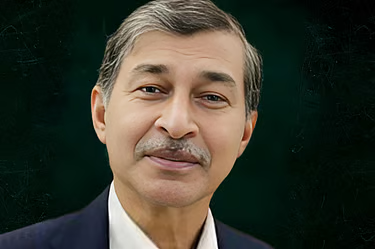
Following his death, Pakistan’s Supreme Court took *suo moto notice* of thecase, while the government formed investigation committees to determinewhether the killing was premeditated. A fact-finding report submitted byPakistani investigators later concluded that the shooting appeared tobe a *plannedassassination* rather than an accident.
In Kenya, Sharif’s widow, alongside press unions, filed a lawsuit againstthe elite General Service Unit (GSU) officers involved. In *July 2024*, aKenyan court ruled that the police had acted unlawfully and ordered thegovernment to pay compensation of 10 million Kenyan shillings (around USD78,000) to his family.A Case with Lasting Impact
Arshad Sharif’s killing not only robbed Pakistan of one of its mostprominent journalists, but also highlighted the dangers faced by reporterswho challenge entrenched political and military powers. His death hasbecome a rallying point for press freedom advocates both within Pakistanand internationally, with ongoing calls for accountability.
Mazari’s claim that Sharif was preparing to return home when he was killedcontinues to fuel suspicions that his death was *not coincidental*, butrather a deliberate effort to prevent him from resuming his work inPakistan.