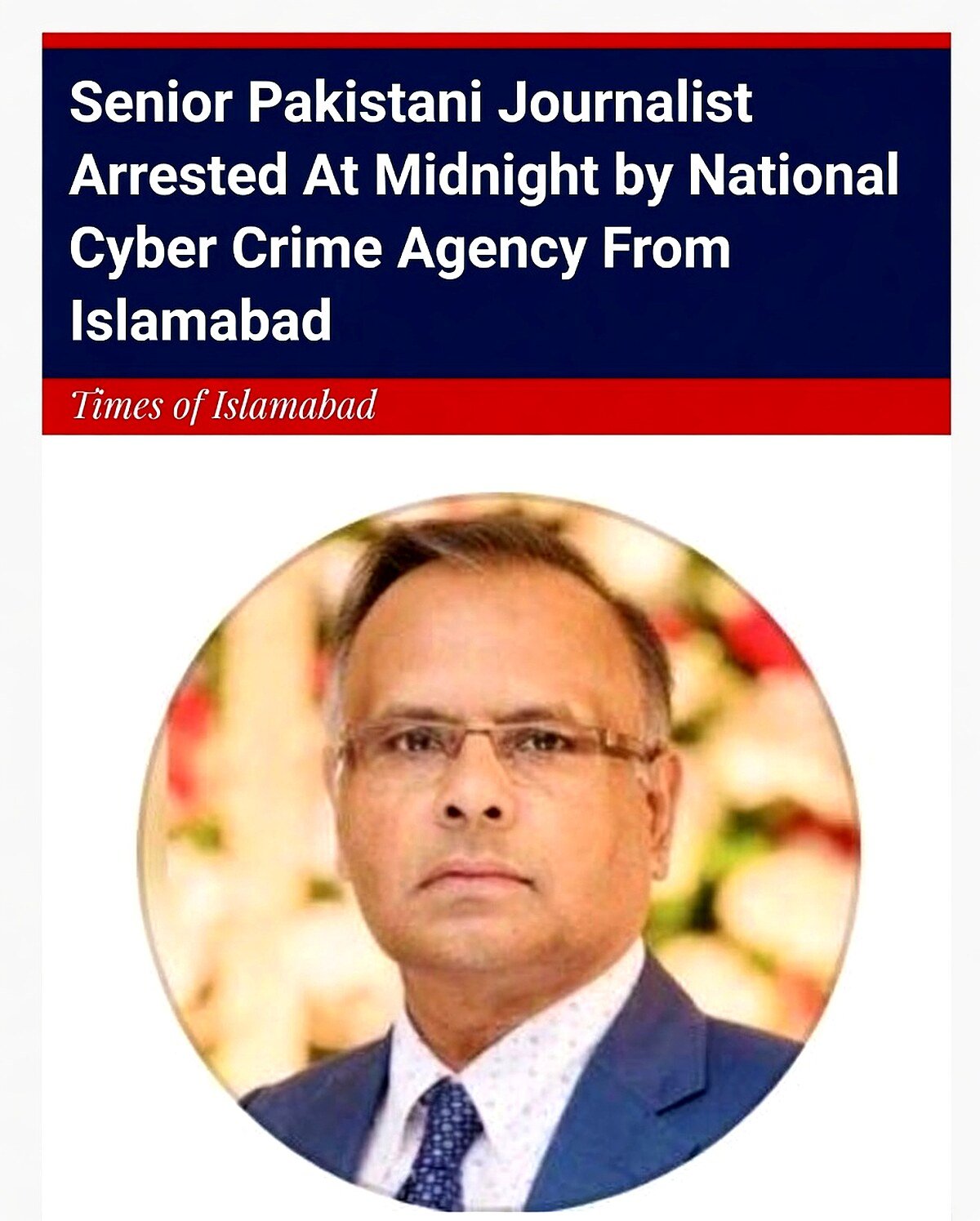




Title: NCCIA: Senior Pakistani Journalist Arrested At Midnight from Islamabad
Excerpt: Pakistan journalist arrest raises concerns over NCCIA authority and transparency
Categories: Pakistan, Politics
ISLAMABAD: A sudden late-night arrest of a senior journalist has triggered a wave of concern, raising urgent questions about transparency, due process, and the growing reach of cybercrime authorities in Pakistan.
According to reports shared by senior journalist Matullah Jan, Fakhar Rehman was taken into custody from his home by officials of the National Cyber Crime Investigation Agency (NCCIA), in what family members describe as a “mysterious and unexplained action.”
Family sources claim that the arrest came without prior disclosure of any formal complaint, leaving behind a trail of unanswered questions about what led to such a decisive move.
A Notice Without Clarity
What makes the situation more puzzling is that Fakhar Rehman had reportedly received a notice days earlier, summoning him to appear before the NCCIA.
However, the notice allegedly contained no details about the nature of the complaint, the charges involved, or the complainant’s identity.
This is where things get interesting…
Legal experts point out that such notices typically include at least basic information to ensure procedural fairness, yet in this case, the absence of details has sparked debate over whether standard protocols were followed.
Late-Night Arrest Raises Eyebrows
The timing of the arrest has further intensified the controversy.
Family members revealed that NCCIA officials arrived at Rehman’s residence and took him into custody without providing any explanation on the spot.
What’s more concerning is…
They claim he was not informed of the specific allegations even at the time of arrest, raising serious questions about the rights of individuals under cybercrime investigations.
Growing Role of Cybercrime Authorities
The NCCIA, established to tackle digital crimes and online threats, has significantly expanded its operational footprint in recent years.
From financial fraud to online harassment and national security concerns, the agency’s mandate covers a wide range of cyber-related issues.
However, a deeper issue is emerging…
Critics argue that with increasing powers must come greater accountability, especially when actions involve journalists and public figures whose work directly impacts public discourse.
Freedom of Expression Debate Intensifies
The arrest has reignited an ongoing debate around freedom of expression and the boundaries of cybercrime enforcement in Pakistan.
Journalists and media bodies have often raised concerns about the potential misuse of cyber laws to silence dissent or critical voices.
And this raises an important question…
Where should the line be drawn between legitimate law enforcement and the protection of journalistic independence?
Government and Institutional Silence
As of now, there has been no official statement from the NCCIA clarifying the reasons behind the arrest.
This lack of immediate transparency has only fueled speculation and concern across media circles.
But that’s not the full story…
Sources suggest that internal reviews or legal proceedings may already be underway, though no confirmation has been made public yet.
Midway Twist: A Pattern or an Isolated Case?
Around this point, a more complex angle begins to emerge.
This is not the first time concerns have been raised about unclear notices and sudden detentions under cybercrime frameworks.
In recent months, similar complaints have surfaced from individuals claiming lack of clarity in legal procedures involving digital investigations.
However, officials have consistently maintained that all actions are taken within the legal framework and in accordance with national laws.
This is where things get even more critical…
If this case follows due legal process, it could reinforce institutional authority, but if gaps are found, it may lead to renewed calls for reforms in cybercrime regulations.
Legal Community Watches Closely
Lawyers and rights advocates are now closely monitoring the situation, emphasizing the need for transparency and adherence to due process.
They argue that clear communication of charges is not just a legal requirement but also essential for maintaining public trust.
What’s more concerning is…
Any perceived ambiguity in such high-profile cases risks undermining confidence in institutions tasked with enforcing the law.
What Happens Next?
As the situation unfolds, all eyes are on the authorities for an official explanation.
Will details of the complaint be made public?
Will Fakhar Rehman be formally charged, or could this lead to a broader legal debate?
And perhaps most importantly…
Will this case redefine how cybercrime laws are applied in Pakistan moving forward?
The answers remain unclear, but one thing is certain — this development has opened a new chapter in the ongoing conversation about law, media, and digital governance in the country.