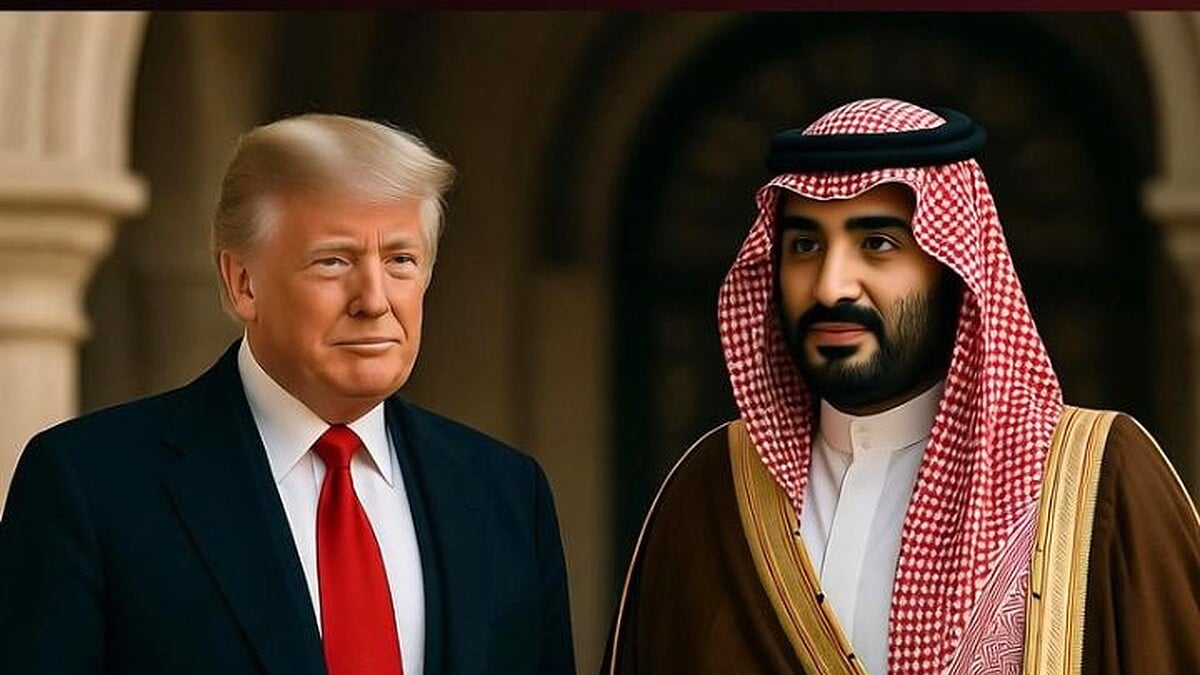
ISLAMABAD: Saudi Arabia’s Crown Prince Mohammed bin Salman has been actively urging US President Donald Trump in multiple phone calls over the past week to press ahead with the war against Iran and move toward the destruction of its hardline government.
American officials briefed on the conversations say the de facto Saudi ruler views the ongoing US-Israeli military campaign as a historic opportunity to remake the Middle East.
Prince Mohammed has conveyed that Iran poses a sustained threat to Gulf stability that can only be eliminated through decisive action.
The revelations surface as the conflict enters its fourth week following the initial US-Israeli strikes launched on February 28 2026.
Those strikes targeted Iranian nuclear sites and military infrastructure after failed negotiations.
Since then Iranian retaliatory attacks have hit Gulf energy facilities and shipping routes causing widespread disruption.
Brent crude oil prices have surged more than 40 percent to 106 dollars per barrel from 72 dollars before the war began.
Liquefied natural gas prices have climbed nearly 60 percent amid the chaos.
The Strait of Hormuz which handles 20 percent of global oil and gas supplies has seen traffic plummet with hundreds of tankers stranded.
Iranian actions including attacks on vessels and facilities have cut Gulf oil production by at least 10 million barrels per day according to energy market trackers.
The economic shock ranks as the most severe global supply disruption since the 1970s per the International Energy Agency.
Casualty figures paint a grim picture with nearly 1940 people killed overall and most deaths occurring inside Iran.
Iranian officials report over 1348 civilians among the dead while US Central Command confirms 232 American service members injured in operations.
Despite these costs Prince Mohammed has privately advocated for escalation insisting the moment demands full regime pressure.
Saudi public statements condemn Iranian strikes on Gulf states and warn of retaliation if attacks continue.
Foreign Minister Prince Faisal bin Farhan has stressed that Gulf patience is not unlimited and capabilities exist to respond forcefully.
Yet the private push to Trump aligns with long-standing Saudi concerns over Iranian influence in Yemen and beyond.
Analysts note Riyadh’s dual approach reflects both self-preservation and strategic ambition.
Continued fighting has already forced Saudi Arabia and other Gulf producers to slash output as storage fills.
Food imports reliant on the Strait face 70 percent disruption triggering price spikes of 40 to 120 percent across consumer goods.
Pakistan which imports nearly all its crude oil now confronts higher energy costs that could fuel inflation and strain foreign reserves.
Regional aviation has halted in parts due to airspace closures while desalination plants in Gulf states have come under threat.
The war’s expansion risks drawing in more actors with Houthis preparing Red Sea operations targeting Saudi assets.
Prince Mohammed’s calls reportedly include pledges of massive US investment up to 600 billion dollars potentially scaling to one trillion.
Such commitments aim to cement ties even as the conflict threatens Vision 2030 projects.
International coverage by The New York Times and Washington Post underscores the Saudi role in shaping Trump’s decisions.
Earlier reports highlighted joint lobbying with Israel to initiate strikes despite US intelligence seeing no imminent Iranian threat.
As fighting intensifies questions mount over whether the historic opportunity will deliver stability or prolonged instability.
Gulf states including Saudi Arabia have intercepted Iranian drones and missiles yet stopped short of direct offensive entry.
The prince’s insistence on continuing the campaign signals Riyadh’s calculation that a weakened Iran outweighs immediate risks.
Global markets remain on edge with recession fears rising if the Strait remains blocked beyond April.
For Pakistan and other energy importers the data signals urgent need for diversified supplies.
The Saudi leader’s private diplomacy could prove pivotal in determining the war’s duration and outcome.
Observers watch closely as each new call between Riyadh and Washington shapes the Middle East’s future trajectory.