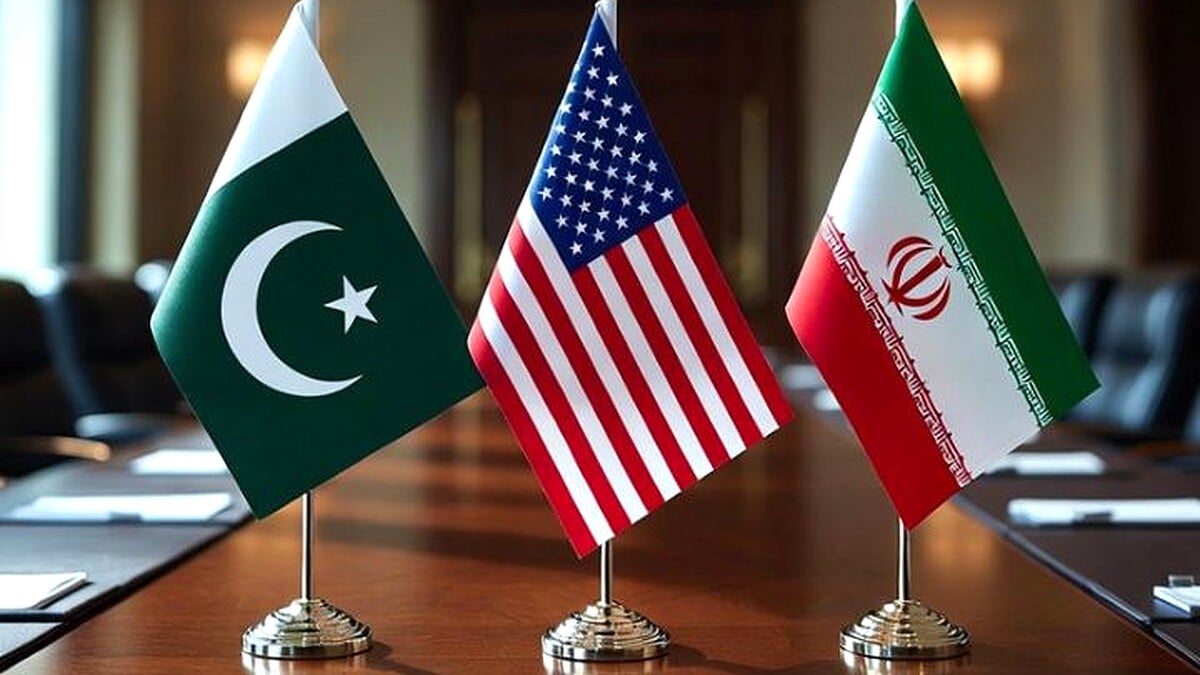
Pakistan, United States, Iran, Tahir Andrabi
ISLAMABAD: Pakistan’s Foreign Office on Tuesday urged the media to refrain from speculation about reports suggesting Islamabad as a possible venue for talks between US and Iranian representatives amid the ongoing Middle East conflict.
The call for restraint came from FO spokesperson Tahir Andrabi, who highlighted the importance of discretion in diplomatic processes.
“Pakistan, consistent with its longstanding policy, remains committed to the resolution of the ongoing conflict in the Middle East and Persian Gulf through diplomatic means and engagements,” Andrabi said.
He further encouraged the media to await official announcements regarding any decisions or outcomes.
This development follows coverage by international media such as Reuters and Axios, which pointed to Islamabad as a potential site for direct US-Iran engagements in the near future.
The reports gained momentum after US President Donald Trump hinted on Monday about forthcoming discussions with Iran.
However, neither Pakistan nor the involved parties have provided official confirmation on the matter.
In an earlier response to Dawn, Andrabi noted that if the parties desire, Islamabad is always willing to host such talks.
Pakistan has long championed dialogue as a means to promote peace and stability across the region.
The Middle East conflict continues to exact a devastating human cost, with United Nations estimates reporting more than 42,000 deaths in Gaza and associated areas since October 2023.
Millions more have been displaced, creating one of the largest humanitarian crises in recent history.
Economic repercussions are equally severe, with disruptions in the Persian Gulf leading to an 18 percent increase in international oil prices in recent weeks.
Pakistan, which meets 85 percent of its crude oil demand through imports, incurs an annual energy bill surpassing $16 billion.
Any further surge could exacerbate the country’s fiscal challenges, where inflation currently stands at approximately 9 percent.
Remittances from Pakistani expatriates in the Gulf, amounting to $31 billion last year, represent a vital lifeline for the economy and could be jeopardized by prolonged instability.
With over 2.8 million Pakistanis working in the region, the stakes for Islamabad are profoundly personal and economic.
Pakistan’s geographical position and balanced diplomacy make it an ideal neutral ground for sensitive negotiations.
The nation has previously hosted key diplomatic initiatives, including multiple rounds of Afghan peace talks and Iran-Pakistan-Afghanistan trilateral summits focused on countering terrorism.
These engagements have facilitated trade volumes worth hundreds of millions and enhanced regional security cooperation.
Current bilateral trade with Iran hovers around $450 million annually, but experts project significant growth if energy projects like the Iran-Pakistan pipeline advance.
The proposed pipeline promises to supply 1,100 million cubic feet of gas daily, helping alleviate Pakistan’s chronic power shortages exceeding 6,000 megawatts.
Strong relations with the United States, bolstered by over $33 billion in aid since 2001, coexist with deep historical ties to Iran.
This dual engagement underscores Pakistan’s policy of constructive neutrality.
The FO’s advisory against speculation aims to protect the integrity of potential backchannel communications.
Should these talks materialize in Islamabad, they could mark a pivotal moment in averting a wider war that threatens to engulf additional nations and destabilize global energy markets.
Think tanks estimate the cumulative economic damage from the current Middle East turmoil at over $120 billion, affecting trade, investment, and growth worldwide.
For Pakistan, resolution through diplomacy is not just strategic but essential for sustaining its development trajectory amid domestic economic pressures.
The Organisation of Islamic Cooperation, where Pakistan plays an active role, has repeatedly called for de-escalation and negotiated settlements in the region.
Such positions reinforce Islamabad’s credibility as a peace promoter.
While international media has amplified the possibility of talks, the lack of formal endorsements keeps expectations tempered.
Pakistan remains steadfast in its readiness to support any initiative that advances regional harmony.
This stance reflects a mature approach to foreign policy, prioritizing long-term stability over short-term sensationalism.
In the Persian Gulf, which accounts for 30 percent of global oil output, sustained peace is critical to preventing supply shocks that have historically triggered recessions.
Pakistan’s proactive diplomacy could thus contribute to broader international efforts for conflict resolution.