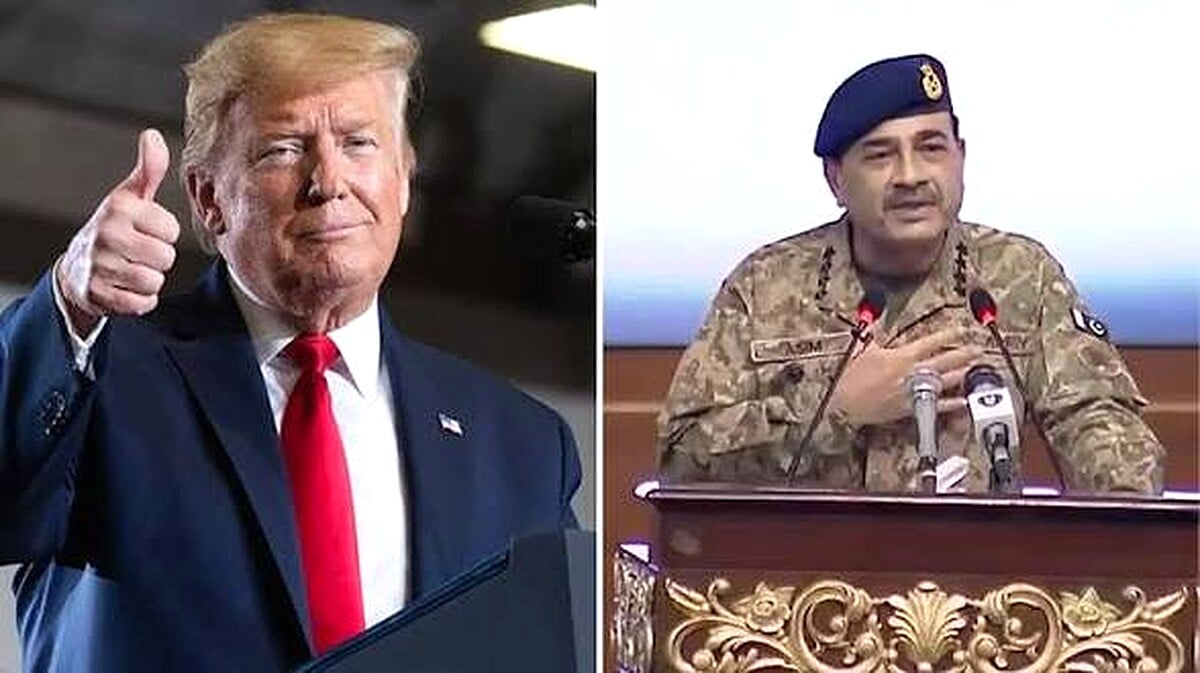
ISLAMABAD: In a stunning disclosure that has electrified diplomatic circles, Pakistan’s Field Marshal Asim Munir secretly visited Oman few days ago for a four-hour closed-door meeting with US President Donald Trump’s top envoys Steve Witkoff and Jared Kushner.
The high-stakes encounter, kept entirely off public radar at the time, has now emerged as the hidden catalyst behind Islamabad’s audacious bid to broker an end to the US-Israel war on Iran.
Former Pakistani ambassador to Oman Imran Ali Chaudhry made the explosive claim during a recent television programme, directly linking the covert mission to fresh momentum in de-escalation efforts.
This revelation comes just 24 hours after the Financial Times reported that Pakistan has positioned itself as the lead mediator in the four-week-old conflict, leveraging Munir’s unique rapport with both Tehran and Washington.
According to the FT, Munir held a telephone conversation with Trump on Sunday while Prime Minister Shehbaz Sharif spoke directly with Iranian President Masoud Pezeshkian on Monday.
Senior Pakistani officials simultaneously facilitated back-channel contacts between Iranian counterparts and the Trump team, including Witkoff and Kushner.
The timing is no coincidence. Trump had just announced the postponement of his threat to strike Iranian power plants, describing recent talks with Tehran as “very good and positive”.
Pakistan’s mediation push carries enormous weight as the war, launched by US and Israeli strikes on February 28, has already triggered the largest oil supply shock in history.
Brent crude prices have surged more than 40 percent since late February, climbing from 72 dollars to 106 dollars per barrel, with analysts warning of a possible spike to 170 dollars if the conflict drags into a second quarter.
The closure of the Strait of Hormuz, which handles one-fifth of global oil and gas supplies, has compounded the crisis, sending liquefied natural gas prices soaring nearly 60 percent.
Global economists forecast that prolonged fighting could shave 0.3 percent off worldwide GDP growth this year, with Europe facing at least a one-percent drop in output.
In the United States alone, gasoline prices have jumped more than 30 percent to nearly four dollars a gallon, the highest level since 2022.
Pakistan’s role is not accidental. The country shares a long border with Iran and maintains deep historical ties with Tehran while enjoying unprecedented personal chemistry between Munir and Trump, who has publicly hailed the Pakistani army chief as his “favourite field marshal”.
Islamabad has even offered its capital as the venue for direct talks involving senior US figures and Iranian officials as early as this week.
The secret Oman meeting, according to Chaudhry, provided the discreet platform that allowed these back channels to flourish without the glare of international scrutiny.
Regional observers note that traditional mediators Oman and Qatar had lost momentum after the initial Geneva talks collapsed just before the strikes.
Pakistan’s entry has injected fresh energy into diplomacy precisely when fears of a wider regional catastrophe were peaking.
The Financial Times quoted two officials familiar with the discussions confirming that Pakistani intermediaries are working to secure a brief ceasefire to create breathing space for negotiations.
This multi-layered effort, combining public calls and private shuttle diplomacy, marks a rare moment when Pakistan’s military leadership has taken centre stage in shaping Middle Eastern outcomes.
Critics in some Western quarters question whether Islamabad can deliver given its own economic vulnerabilities, yet the speed and secrecy of the Oman engagement suggest otherwise.
With oil markets still jittery and global supply chains under strain, the world is watching closely to see if Pakistan’s bold gamble can translate secret talks into tangible peace.
Should the mediation succeed, it would not only avert further economic pain but also elevate Pakistan’s diplomatic stature to unprecedented heights in the post-conflict order.
For now, the revelation of Field Marshal Munir’s undisclosed Oman mission stands as compelling evidence that behind the headlines of war lies a determined Pakistani effort to engineer its end.