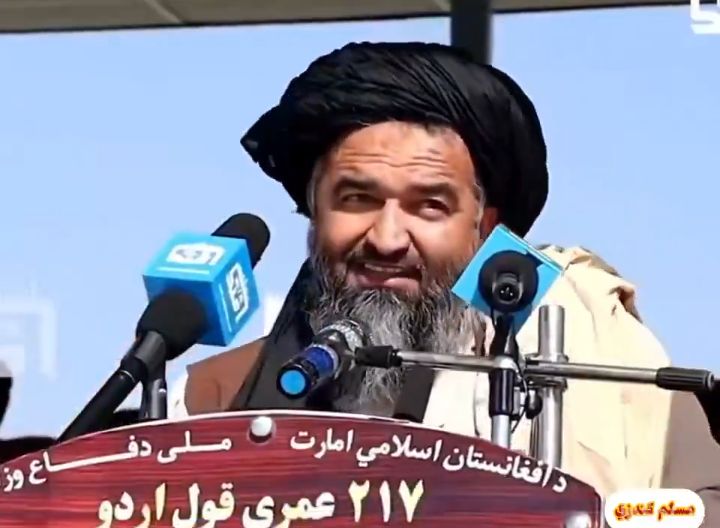
The provocative statement by Sheikh Abdulhadi Hemat, head of the Military Court of Afghanistan’s Northeast Zone, has escalated already strained relations between Islamabad and Kabul, raising serious concerns over border security and regional stability.
ISLAMABAD: A senior Taliban judicial official has issued a stark warning to Pakistan, claiming that Afghan forces could swiftly advance into major Pakistani cities if authorised by the leadership in Kabul.
Sheikh Abdulhadi Hemat made the remarks during a recent gathering in Kunduz province, where he addressed a ceremony related to defence forces.
He declared that with permission from higher authorities, Taliban fighters would reach Peshawar and Quetta by the second night.
The statement, delivered with religious invocation, underscores deep-seated tensions amid ongoing cross-border militant activities.
Pakistan has long accused the Taliban-led government in Afghanistan of harbouring Tehreek-e-Taliban Pakistan (TTP) militants, who launch attacks on Pakistani soil.
Recent Pakistani air strikes targeted alleged TTP camps inside Afghanistan, killing dozens of fighters according to Islamabad’s claims.
These operations followed deadly incidents, including a suicide bombing at a Shia mosque in Islamabad and attacks in Bajaur and Bannu districts.
Pakistan’s military described the strikes as intelligence-based and selective, aimed at seven hideouts linked to TTP and affiliates.
Afghan officials denied civilian casualties and condemned the incursions as aggression, promising an appropriate response.
Defence Minister Khawaja Asif warned that further strikes could follow if Kabul fails to curb militant groups operating from its territory.
The Taliban regime has repeatedly rejected these accusations, insisting it does not allow its soil to be used against Pakistan.
However, the presence of TTP leadership in Afghanistan remains a core grievance for Islamabad.
Pakistan has summoned Afghan diplomats multiple times over such issues, conveying strong concerns about impunity for cross-border terrorism.
The latest threat from Sheikh Abdulhadi Hemat adds a new dimension, suggesting potential offensive capabilities beyond defensive postures.
Peshawar, capital of Khyber Pakhtunkhwa, and Quetta, capital of Balochistan, are strategically vital cities near the Afghan border.
Both have faced historical militant violence and serve as key economic and administrative hubs.
Any suggestion of rapid incursion into these areas evokes memories of past instability along the Durand Line.
The border dispute itself dates back to colonial times, with Afghanistan never fully recognising the 1893 Durand Line agreement.
Under Taliban rule since 2021, relations have deteriorated sharply despite initial hopes of improved ties.
Pakistan provided crucial support to the Taliban during their insurgency against foreign forces.
Yet, post-takeover, divergences emerged over militant safe havens and border fencing disputes.
TTP attacks surged in Pakistan after the Taliban returned to power, with fighters allegedly enjoying sanctuary across the border.
Intelligence reports indicate TTP has regrouped, recruiting and planning operations from Afghan provinces.
Pakistan’s response has included diplomatic pressure, border closures at times, and military actions.
Recent escalations include claims of over 100 terrorists eliminated in strikes across Afghan provinces.
The Pakistani government maintains these were necessary for self-defence after repeated unheeded warnings.
Analysts note that such rhetoric from Taliban officials could aim to rally domestic support or deter further Pakistani operations.
Sheikh Abdulhadi Hemat’s position as head of a military court in the Northeast Zone, covering provinces like Kunduz and Takhar, places him in a region with significant Taliban military presence.
His statement, while conditional on leadership approval, carries weight given the hierarchical structure of the Islamic Emirate.
Taliban supreme leader Mullah Haibatullah Akhundzada holds ultimate authority on major decisions.
No official Taliban response has yet clarified or distanced from the remarks.
Pakistan’s military and civilian leadership view such threats seriously, amid heightened alert along the western frontier.
Security forces have intensified patrols and intelligence gathering in border areas.
Public opinion in Pakistan remains wary of Afghan developments, with calls for decisive action against perceived threats.
The international community watches closely, as instability could affect regional counter-terrorism efforts.
Broader implications include potential refugee flows, trade disruptions, and risks to Chinese investments in both countries.
Diplomatic channels remain open, though trust is low following repeated failed talks.
Pakistan insists on verifiable actions from Kabul to dismantle TTP infrastructure.
The Taliban demands respect for sovereignty and cessation of strikes.
Without de-escalation, the cycle of accusations and retaliations risks further intensification.
Sheikh Abdulhadi Hemat’s warning highlights the fragility of bilateral ties and the urgent need for dialogue.
Regional powers urge restraint to prevent a wider conflict with consequences beyond the two nations.