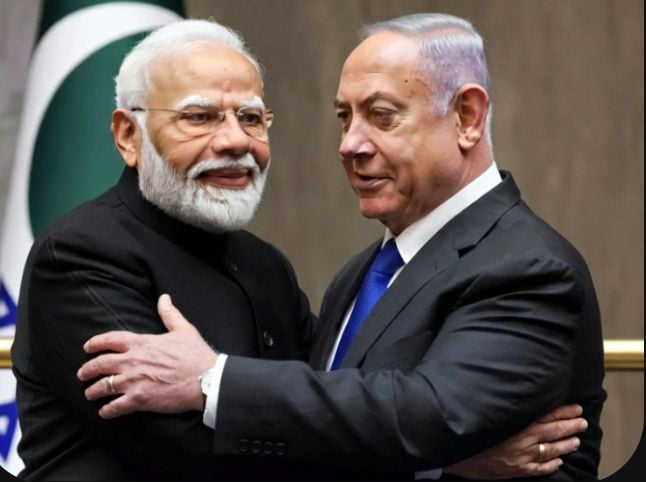
ISLAMABAD: The Senate on Tuesday unanimously adopted a resolution strongly condemning Israeli Prime Minister Benjamin Netanyahu’s recent remarks outlining a plan to form a “hexagon of alliances” involving India and other nations aimed at countering Muslim-majority states.
The resolution, moved by Pakistan Peoples Party Senator Palwasha Mohammad Zai Khan, highlighted the provocative nature of Netanyahu’s statements made during a cabinet meeting on Sunday.
Netanyahu described his vision as creating “an entire system — essentially a kind of hexagon of alliances — around or within the Middle East.”
He explicitly named India, Greece, the Greek Cypriot Administration, and unnamed Arab, African, and Asian countries as potential members of this proposed framework.
The Israeli leader positioned the alliance as a counter to what he termed the “radical Shia axis,” which Israel has confronted militarily, and an “emerging radical Sunni axis.”
These comments came ahead of Indian Prime Minister Narendra Modi’s scheduled visit to Israel, during which Modi is set to address the Knesset.
The Senate resolution deplored the continued provocative steps and statements by Israeli leadership that threaten regional and international peace and stability.
It took strong exception to what it described as attempts to diminish the unity and integrity of the Muslim Ummah on political and ideological grounds.
Senators emphasized that such declarations undermine the sovereignty, unity, and territorial integrity of brotherly Islamic countries.
The resolution rejected any efforts by Israel to interfere in the internal affairs of Muslim nations or to foster divisions within the Islamic world.
Pakistan’s upper house reaffirmed its longstanding support for the Palestinian cause and called for international efforts to promote genuine peace in the Middle East.
The adoption of the resolution reflects Pakistan’s consistent diplomatic stance against perceived aggressions targeting Muslim solidarity.
Netanyahu’s proposal appears to build on existing strategic partnerships, particularly Israel’s deepening ties with India in defense, technology, and economic domains.
India and Israel have strengthened relations in recent years, with cooperation extending to military equipment, intelligence sharing, and joint ventures.
The inclusion of Greece and Cyprus points to Mediterranean alignments, possibly linked to energy resources and geopolitical rivalries in the region.
Unnamed Arab and African countries in the hexagon suggest potential outreach to nations that have normalized relations with Israel under frameworks like the Abraham Accords.
However, the Senate viewed the rhetoric as divisive, especially amid ongoing tensions in Gaza and broader Middle East conflicts.
Analysts note that Netanyahu’s framing of “radical axes” refers to Iran-led Shia networks and possibly emerging Sunni groupings involving countries like Turkey and Pakistan.
This comes at a time when Pakistan maintains strong ties with both Sunni and Shia-majority nations, advocating for Muslim unity.
The unanimous passage in the Senate underscores cross-party consensus in Pakistan on issues concerning the Muslim world.
It also signals Islamabad’s rejection of any alliances perceived as hostile to collective Muslim interests.
The resolution further denounced Israel’s recent recognition of the so-called independence of Somaliland, viewing it as another attempt to undermine Somalia’s territorial integrity.
Such moves, according to the Senate, exacerbate instability in the Horn of Africa and beyond.
Pakistan’s response aligns with broader condemnations from Muslim countries against provocative Israeli policies.
The timing of the Senate action coincides with heightened diplomatic activity surrounding Modi’s Israel visit.
Observers suggest the resolution serves to register Pakistan’s position ahead of potential regional realignments.
It reinforces Islamabad’s commitment to multilateralism through organizations like the Organisation of Islamic Cooperation.
The Senate called upon the international community to discourage divisive alliances and promote dialogue for lasting peace.
This development highlights the complexities of shifting geopolitical dynamics in West Asia and South Asia.
Pakistan remains steadfast in opposing narratives that pit nations against one another based on religious or ideological lines.
The resolution stands as a firm diplomatic message emphasizing unity over confrontation in international relations.