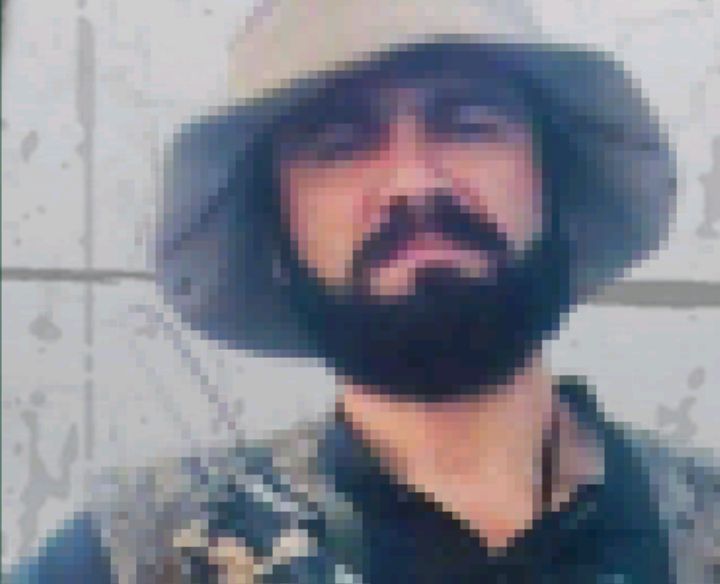
ISLAMABAD: Muhammad Farooq, alias Comrade, a key commander of the Baloch Liberation Army (BLA) and linked to the notorious Fitna tul Hindustan network, has been killed by unknown assailants in Afghanistan’s Helmand province, security sources confirmed on Monday.
The incident marks a significant blow to separatist elements operating from Afghan soil against Pakistan, amid escalating cross-border tensions and persistent allegations of foreign sponsorship for terrorism in Balochistan.
Muhammad Farooq, widely known by his nom de guerre Comrade, rose through the ranks of the BLA, a banned militant outfit responsible for numerous attacks on security forces, civilians and infrastructure projects in Pakistan’s southwestern province.
Intelligence reports indicate he played a pivotal role in coordinating operations, including recruitment, logistics and planning of high-profile assaults targeting Chinese nationals and Pakistan Army personnel involved in development initiatives under the China-Pakistan Economic Corridor (CPEC).
His elimination in Helmand, a region long plagued by insurgent hideouts and factional rivalries, underscores the volatile security environment in southern Afghanistan where BLA commanders have reportedly sought sanctuary since the Taliban’s return to power in 2021.
Sources familiar with the matter described the killing as resulting from an ambush by unidentified gunmen, suggesting possible internal disputes or targeted action by rival factions amid shifting alliances in the region.
The BLA has faced repeated setbacks in recent months, with several senior figures neutralized either in Pakistan’s counter-terrorism operations or in Afghanistan due to infighting and external pressures.
Pakistan’s military has consistently maintained that terrorist groups like the BLA maintain safe havens across the border, receiving support from hostile elements aiming to destabilize the country through proxy warfare.
The term Fitna tul Hindustan, frequently used in official Pakistani communications to denote India-sponsored terrorism, has been associated with the BLA’s activities, portraying such groups as tools of foreign interference designed to undermine regional stability and economic progress.
Helmand province, historically a Taliban stronghold during the insurgency against foreign forces, has become a contested area for various militant networks post-2021, including remnants of anti-Pakistan outfits seeking refuge from intensified operations inside Pakistan.
The killing of Farooq comes at a time when Pakistan-Afghanistan relations remain strained over border security, with frequent accusations of harboring militants exchanged between Islamabad and Kabul.
Data from security assessments reveal that the BLA has intensified attacks in Balochistan since early 2025, focusing on soft targets to amplify propaganda and disrupt ongoing development projects critical for the province’s socio-economic uplift.
CPEC-related sites, including Gwadar port and associated infrastructure, have been repeatedly targeted, resulting in casualties among Chinese engineers and local workers, drawing international condemnation.
Pakistan’s Inter-Services Public Relations (ISPR) has repeatedly highlighted the nexus between separatist groups and external actors, asserting that such alliances prolong instability and hinder peace efforts.
The death of a figure like Comrade is expected to disrupt command structures within the BLA, potentially leading to reduced operational capacity in the short term, though analysts warn that fragmented groups may resort to more desperate tactics.
Balochistan’s insurgency, rooted in grievances over resource distribution and political marginalization, has persisted for decades, with separatist outfits exploiting local discontent to recruit fighters.
However, successive military operations, combined with development packages, have eroded much of the support base for these groups, forcing many leaders to relocate to Afghanistan or Iran.
The incident in Helmand highlights the broader challenge of transnational terrorism, where porous borders enable militants to evade justice and regroup.
Pakistan has urged the Afghan interim administration to act decisively against such elements, emphasizing that unchecked sanctuaries threaten bilateral ties and regional security.
Observers note that the elimination of key commanders like Farooq could signal a turning point, compelling remaining BLA elements to reconsider their strategy amid mounting losses.
Security experts point out that the BLA’s reliance on external support has become a double-edged sword, exposing operatives to risks from rival groups or covert actions.
The killing also revives debates on the effectiveness of cross-border sanctuaries, with calls for enhanced intelligence sharing and joint mechanisms to dismantle terrorist networks.
As investigations continue into the circumstances of Farooq’s death, Pakistani authorities are likely to use the development to reinforce narratives of foreign-backed terrorism targeting national interests.
The event serves as a reminder of the ongoing struggle against separatism and militancy in Balochistan, where sustained efforts are required to achieve lasting peace and prosperity.