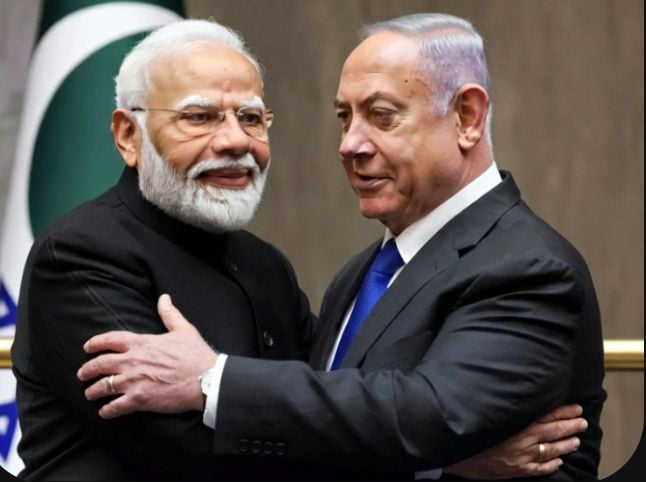
ISLAMABAD: Indian Prime Minister Narendra Modi is set to undertake a two-day state visit to Israel on February 25-26, 2026, marking his second trip to the country since 2017, but the planned address to the Knesset has sparked controversy as opposition parties threaten a boycott over the exclusion of Supreme Court President Isaac Amit.
The announcement from India’s Ministry of External Affairs confirmed the visit at the invitation of Israeli Prime Minister Benjamin Netanyahu, highlighting expectations for strengthened bilateral ties in defence, technology, and strategic cooperation. This comes amid reports from leading Israeli daily Haaretz detailing the brewing standoff in Israel’s parliament.
The opposition, led by Yair Lapid of Yesh Atid, has signalled intent to skip Modi’s speech in the Knesset unless Supreme Court President Isaac Amit is invited, a customary practice for such special sessions honouring foreign dignitaries. Lapid publicly urged Netanyahu to intervene and direct Knesset Speaker Amir Ohana to extend the invitation, emphasising the need for full participation to avoid turning the event into a political flashpoint.
The dispute stems from ongoing tensions between Israel’s coalition government and the judiciary, exacerbated by previous reforms and boycotts targeting the Supreme Court. Ohana’s decision not to invite Amit has been interpreted by opposition figures as a deliberate snub, prompting threats of absence that could leave the plenum visibly half-empty during Modi’s address.
Knesset Speaker Ohana has countered by stating that Modi would not speak to a sparsely attended chamber and plans to invite former lawmakers to fill vacant seats if opposition members boycott. Israel’s public broadcaster Kan reported this contingency measure, underscoring efforts to maintain the appearance of broad attendance and diplomatic decorum for the high-profile guest.
This internal political friction risks overshadowing what Israeli officials describe as a pivotal moment in India-Israel relations. Netanyahu has framed the visit as part of building alliances against regional threats, including radical elements, while broader agendas reportedly include multibillion-dollar arms deals and advancements in defence technology cooperation.
India and Israel have deepened ties significantly since Modi’s landmark 2017 visit, the first by an Indian prime minister to Israel. Bilateral trade has grown steadily, with defence emerging as a cornerstone, including Israeli systems integrated into Indian military capabilities. Recent years have seen collaboration in cybersecurity, agriculture technology, and water management, reflecting shared interests in innovation and security.
The current visit is expected to reaffirm this strategic partnership, with discussions likely covering enhanced defence exports, joint research initiatives, and responses to global challenges. Modi’s itinerary includes arrival at Ben Gurion Airport with ceremonial welcome, private meetings with Netanyahu, and the Knesset address, followed by engagements in Jerusalem before departure on February 26.
Analysts note that the opposition’s boycott threat, while rooted in domestic judicial-executive clashes, carries potential diplomatic implications. A visibly divided Knesset could project internal instability to an important partner like India, which has maintained balanced relations in the Middle East while strengthening bonds with Israel.
Lapid has repeatedly stressed the opposition’s desire to attend, framing participation as essential for national representation during a foreign leader’s address. He called on Netanyahu to resolve the issue swiftly, with less than 24 hours remaining before the scheduled speech in some reports.
The episode highlights persistent polarisation in Israeli politics, where judicial independence remains a contentious issue. Opposition parties, including National Unity and others, have previously boycotted Knesset events over similar exclusions, setting a precedent that now intersects with international diplomacy.
Despite the controversy, official statements from both sides emphasise the enduring friendship between India and Israel. The visit is anticipated to open a new phase in relations, focusing on economic and security collaboration amid evolving regional dynamics.
Observers will watch closely whether last-minute interventions avert the boycott, ensuring Modi’s address proceeds with full parliamentary participation. The outcome could influence perceptions of Israel’s political cohesion during a key bilateral engagement.