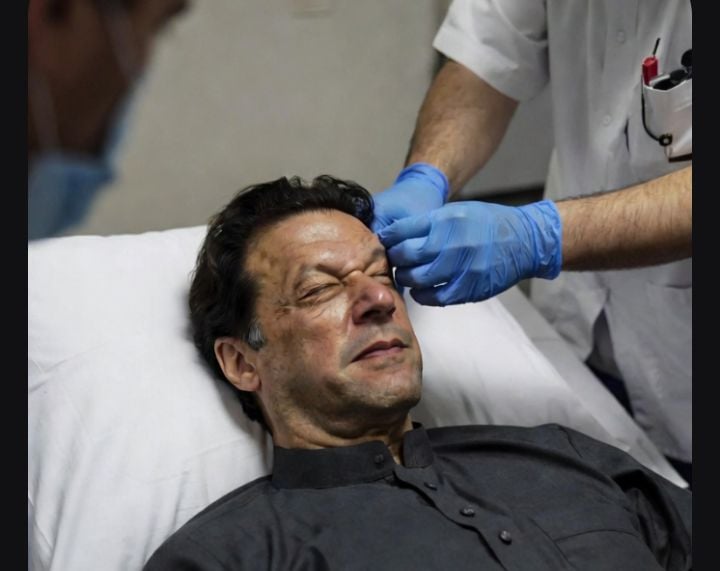
ISLAMABAD: Incarcerated Pakistan Tehreek-e-Insaf founder and former prime minister Imran Khan underwent a successful follow-up eye procedure at the Pakistan Institute of Medical Sciences on Tuesday, receiving his second anti-VEGF intravitreal injection to address central retinal vein occlusion in his right eye.
The procedure, conducted in the early hours under strict security protocols, marked the second in a prescribed series of three injections aimed at managing the serious retinal vascular disorder diagnosed last month.
Federal Minister for Parliamentary Affairs Tariq Fazal Chaudhry confirmed the development through an official statement, emphasizing that the transfer from Adiala Jail to the hospital adhered fully to legal and humanitarian standards.
According to the minister, medical experts observed noticeable improvement in Khan’s eyesight following the initial injection administered in late January, prompting the recommendation for this subsequent intervention.
A board of specialists, including senior ophthalmologists and vitreoretinal surgeons, supervised the day-care surgery in the same operation theatre used previously.
Hospital sources reported that Khan remained clinically stable throughout the process, which included a detailed examination prior to the injection and monitoring of his overall health, including cardiac evaluation.
After post-procedure clearance from the medical team, he was promptly shifted back to Adiala Jail in Rawalpindi under heavy security escort.
The minister highlighted that providing adequate medical care to prisoners constitutes a fundamental state responsibility, adding that all arrangements in this instance were executed transparently and in accordance with established regulations.
Central retinal vein occlusion represents a significant ocular emergency characterized by blockage in the central vein draining blood from the retina, often leading to swelling, hemorrhages, and potential vision impairment if untreated.
The condition carries risks of complications such as macular edema and neovascularization, necessitating prompt intervention to preserve visual function.
Anti-VEGF intravitreal injections, the standard therapeutic approach, work by inhibiting vascular endothelial growth factor to reduce abnormal vessel growth and leakage, thereby alleviating retinal swelling and improving or stabilizing vision.
Medical literature indicates that such injections, typically administered at intervals of four to six weeks initially, yield positive outcomes in a majority of cases when initiated timely.
Reports from earlier assessments suggested substantial vision loss in Khan’s right eye prior to treatment commencement, underscoring the urgency of the ongoing regimen.
The PTI has expressed reservations regarding the handling of the matter, criticizing perceived secrecy in the nighttime transfer and procedure.
Party Chairman Barrister Gohar Ali Khan reiterated demands for greater transparency, including access for family members and personal physicians during examinations, as well as consideration of transfer to a private facility such as Shifa International Hospital for independent oversight.
Despite these concerns, government officials have maintained that the treatment protocol aligns with professional medical advice and prison regulations.
The scheduled third injection on March 24 is expected to complete the current course, with further evaluations to determine long-term management.
This medical development occurs amid broader discussions on prisoner healthcare rights in Pakistan, where access to specialized treatment remains a point of contention in high-profile cases.
Authorities have consistently affirmed their commitment to fulfilling constitutional obligations toward incarcerated individuals, irrespective of political status.
Khan’s health updates continue to attract significant public and media attention, reflecting the intersection of medical care, judicial processes, and political dynamics in the country.