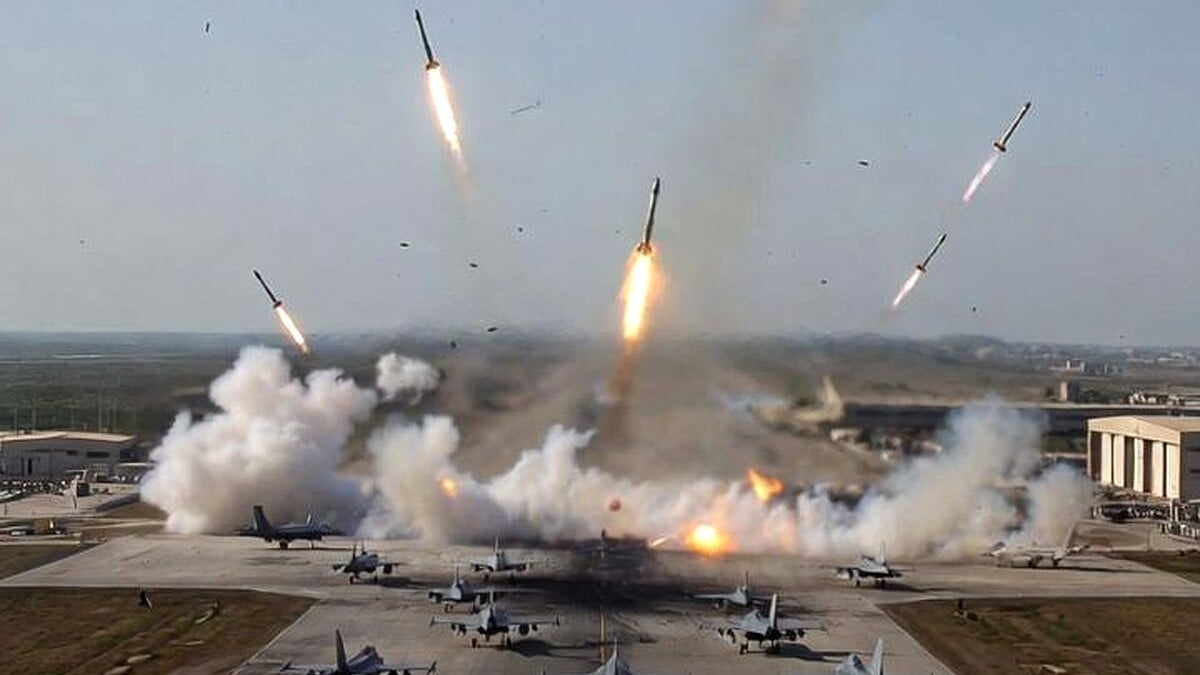
American KC-135 planes damaged by Iranian missiles at Saudi air base amid regional war.
ISLAMABAD: Iranian ballistic missiles have struck Saudi Arabia’s Prince Sultan Air Base, damaging US Air Force KC-135 refuelling tankers on the ground in a major escalation of the 2026 Iran war.
The precision attack marks the latest direct hit on American assets hosted by Riyadh.
No casualties were reported, yet the incident exposes critical vulnerabilities in one of the Gulf’s most strategic military installations.
The Prince Sultan Air Base sits in Al-Kharj, roughly 80 kilometres southeast of Riyadh, and serves as headquarters for the US 378th Air Expeditionary Wing.
Satellite images captured in February 2026 showed 43 aircraft parked there, including 13 Boeing KC-135 Stratotankers and six E-3 Sentry AWACS planes essential for command and control.
These tankers act as the lifeline for US air power, enabling long-range strikes and sustained operations across the region against Iranian targets.
Iran’s Fars news agency reported a salvo of missiles fired at the base, while the Islamic Revolutionary Guard Corps claimed responsibility for targeting the facility multiple times since the conflict erupted on February 28.
Saudi air defences responded swiftly, intercepting seven drones headed toward Riyadh and the Eastern Province on March 14 alone, followed by ten more the next day.
Ballistic missile debris fell near the base after interceptions, yet caused no additional structural damage according to the Saudi Defence Ministry.
This latest strike follows earlier Iranian attempts throughout March, including drone swarms and missile barrages aimed at the same location.
US officials noted the five damaged KC-135s earlier hit were being repaired and will return to service, downplaying total loss while acknowledging the strike’s operational impact.
The base originally hosted over 700 American personnel before a 2019 surge added 2,000 more troops along with Patriot missile batteries and advanced fighters.
Today it supports joint US-Saudi missions and remains central to Washington’s deterrence strategy in the Gulf.
Broader Iranian strikes on Saudi territory since February have killed two Saudi civilians and injured 12 others, according to Riyadh’s reports.
The United States has separately confirmed two American soldiers killed in related regional incidents tied to the same retaliatory wave.
Iranian claims describe the Prince Sultan attacks as part of the “True Promise” operations punishing hosts of US forces aiding Israel.
Saudi Arabia has maintained a defensive stance, intercepting dozens of incoming threats without confirming direct hits on its soil.
Military analysts highlight that repeated targeting of refuelling aircraft could disrupt US air campaigns, forcing reliance on distant bases and stretching logistics thin.
The KC-135 fleet, each capable of offloading thousands of litres of fuel mid-flight, is irreplaceable for extended operations against Tehran.
Tensions have surged since US and Israeli strikes hit Iranian targets on February 28, prompting Tehran to expand its campaign beyond Israel to Gulf allies.
Prince Sultan Air Base, once used in Operation Southern Watch and later against ISIS, now finds itself on the front line of this widening conflict.
Riyadh has ordered Iranian diplomats to leave and bolstered air defences around key cities, signalling readiness for further retaliation.
The strike’s timing, amid ongoing diplomatic efforts, underscores how rapidly the 2026 war is engulfing the entire Gulf region.
Observers warn that continued Iranian pressure on US-hosted bases risks drawing Saudi Arabia into direct confrontation, raising fears of a broader regional explosion.
With repairs underway and interceptions mounting, the Prince Sultan Air Base remains a high-stakes flashpoint where every missile salvo tests the limits of deterrence.