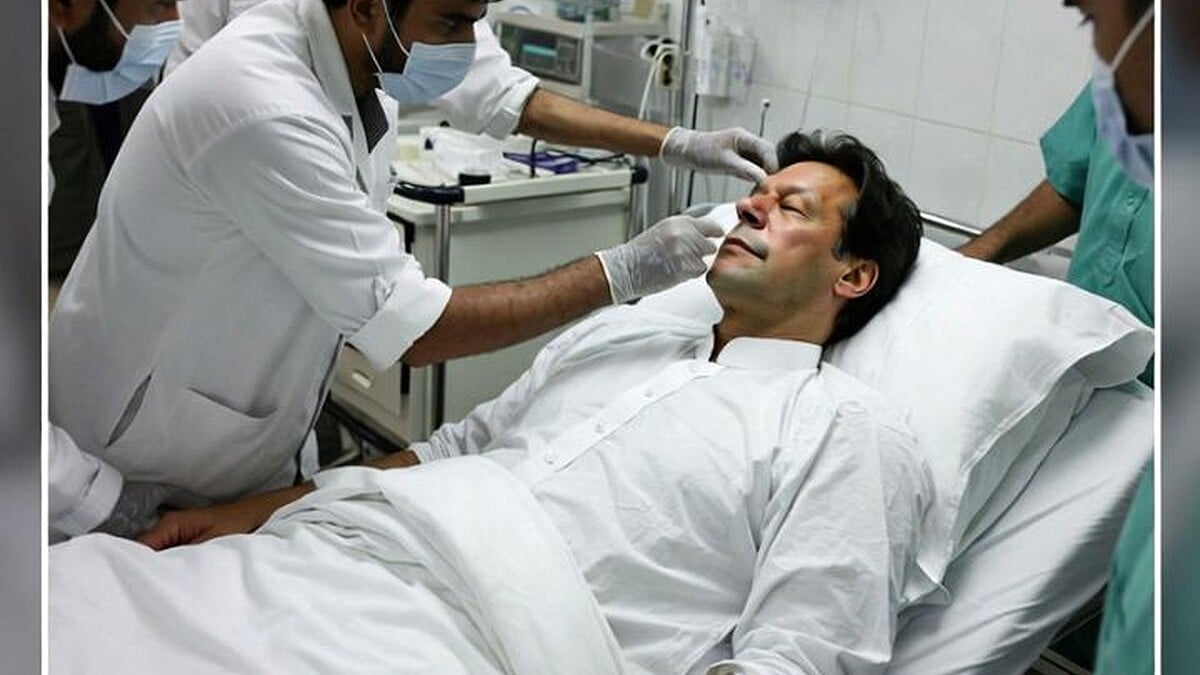
ISLAMABAD: Pakistan Tehreek-i-Insaf founder Imran Khan underwent his third and final eye procedure at the Pakistan Institute of Medical Sciences on Monday, completing a course of anti-VEGF intravitreal injections that has delivered remarkable vision gains.
Hospital officials confirmed the 74-year-old former premier was brought from Adiala Jail with his full consent for the scheduled third dose.
A senior medical board at PIMS assessed his condition and declared both vision and overall health satisfactory after the day-care operation in the theatre.
The procedure involved a precise anti-VEGF injection under microscopic guidance by consultant ophthalmologists and vitreo-retinal surgeons.
Imran Khan remained vitally stable before, during and after the treatment, according to the official PIMS statement released hours later.
This marks the end of a treatment plan initiated earlier this year for Central Retinal Vein Occlusion in his right eye.
The condition initially caused an alarming 85 percent vision loss, reducing right-eye acuity to a severely impaired 6/36 level.
Medical updates now show dramatic progress, with right-eye vision improving to 6/9 while the left eye maintains 6/6 with corrective glasses.
Such rapid recovery aligns with global clinical data on anti-VEGF therapy for CRVO, where patients often gain 10 to 16 ETDRS letters within the first year.
Long-term studies tracking over 500 eyes report average visual acuity improvements of 12 letters at 36 months and sustained gains of 14.4 letters even after eight years of follow-up.
Central retinal thickness typically reduces by 300 micrometres, matching the macular oedema control seen in Imran Khan’s case.
In real-world settings, 37 percent of CRVO patients achieve final vision of 70 letters or better after consistent injections.
PIMS, Islamabad’s premier public-sector tertiary hospital, handles thousands of ophthalmic emergencies and surgeries annually through its dedicated eye department equipped for 24-hour care and up to 30 inpatient beds.
The department conducts four surgical days weekly, making it a critical facility for complex retinal cases across the region.
Local media outlets including Dawn, The News and Geo TV have extensively reported the sequence of injections, authenticating each step with hospital statements.
The first injection occurred in February, followed by the second on February 24, with Monday’s third dose completing the prescribed course.
International outlets such as Arab News and News18 also covered the developments, noting the jailed leader’s transfer under strict security protocols.
PTI spokespersons have repeatedly called for greater transparency and access to independent physicians, yet PIMS maintains all protocols were followed with informed consent.
Cardiac evaluations including ECG and echocardiography remained normal prior to each procedure, confirming clinical stability.
Anti-VEGF agents work by inhibiting abnormal blood vessel growth that leaks fluid and damages retinal tissue in CRVO cases.
This mechanism halts further deterioration and often restores functional sight, as evidenced by Imran Khan’s shift from near-blindness in one eye to near-normal acuity.
Global prevalence data indicate CRVO affects roughly one to two adults per 1,000 over age 50, with higher risks linked to hypertension and vascular stress.
Experts note timely intervention within months of diagnosis yields the best outcomes, preventing permanent blindness in up to 70 percent of treated eyes.
The former prime minister’s case highlights how modern retinal therapies deliver life-changing results even under challenging circumstances.
Medical boards at PIMS have expressed satisfaction with the eyesight recovery at this stage, describing it as substantially good.
Follow-up instructions were provided upon discharge, ensuring continued monitoring after the final injection.
Political observers note the health update arrives amid ongoing legal proceedings, yet focus remains on the medical milestone.
PIMS ophthalmology teams collaborated with specialists from allied institutions including Al-Shifa Eye Hospital for optimal precision.
This collaboration reflects Pakistan’s advancing capacity in vitreo-retinal surgery, handling complex cases with state-of-the-art protocols.
The successful completion of Imran Khan’s treatment course underscores the efficacy of scheduled anti-VEGF regimens in restoring quality of life.
With vision now markedly improved, the development offers reassurance to supporters concerned about his well-being during incarceration.
Regional reports from major national dailies continue to track the story closely, providing authenticated timelines that match hospital records.
The case also serves as a public example of how consistent ophthalmic care can reverse severe vision threats in older adults.
PIMS officials reiterated that no complications arose, reinforcing public confidence in the institute’s tertiary care standards.
As the third injection concludes the current phase, long-term studies suggest periodic monitoring may still be required to sustain these gains.
Imran Khan’s journey from 85 percent vision loss to functional recovery in weeks stands as a testament to timely medical intervention.