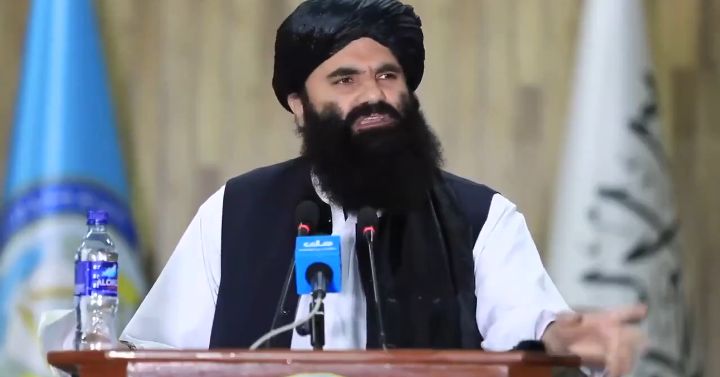
ISLAMABAD: Afghanistan’s Interior Minister Sirajuddin Haqqani has issued a stark warning to Pakistan, stating that if the Taliban’s senior leadership, referred to as “our elders,” decides to take serious action, there will be no trace of Pakistan left. The provocative remark, delivered amid escalating border tensions and recent Pakistani airstrikes on alleged militant hideouts in Afghanistan, has intensified diplomatic friction between the two neighbours and raised alarms over potential regional instability.
The statement from Haqqani, a key figure in the Taliban administration and leader of the Haqqani network, came in a public address that quickly circulated on social media platforms. It followed reports of Pakistani military operations that reportedly resulted in civilian casualties on Afghan soil, prompting Kabul to condemn the actions as violations of sovereignty.
Tensions between Pakistan and Afghanistan have persisted since the Taliban’s return to power in 2021. Pakistan has repeatedly accused the Taliban of providing safe havens to the Tehreek-e-Taliban Pakistan (TTP), a militant group responsible for numerous attacks inside Pakistan. Islamabad has demanded decisive action against TTP sanctuaries in Afghanistan, while Kabul has denied facilitating cross-border terrorism and urged Pakistan to address its internal security challenges domestically.
Recent developments have sharpened the rhetoric. Pakistani forces conducted precision airstrikes targeting what were described as militant hideouts in Afghanistan, with claims that over 20 individuals were killed in the operations. Afghan officials rejected these assertions, labelling the strikes as aggressive and unprovoked. In response, Haqqani declared that “final ultimatums are over,” signalling a shift from earlier calls for dialogue to a more confrontational posture.
The interior minister’s warning invokes the Taliban’s historical resilience against major powers, including the Soviet Union and the United States-led coalition. He emphasised that while Afghanistan prefers peace and brotherhood with Pakistan, any further provocation could lead to severe consequences. Analysts note that such language reflects frustration over stalled negotiations and mutual accusations.
Diplomatic efforts to de-escalate have yielded limited results. Talks in Doha and Istanbul aimed at establishing mechanisms for border security and counter-terrorism cooperation have repeatedly faltered. Pakistan has sought written guarantees that Afghan territory will not be used against it, a demand the Taliban has resisted. Meanwhile, border closures and skirmishes have disrupted trade and displaced populations on both sides.
The Haqqani network, designated a terrorist organisation by several countries including the United States, holds significant influence within the Taliban government. Sirajuddin Haqqani’s position as interior minister places him at the forefront of security policy, making his statements particularly noteworthy. His remarks also highlight internal dynamics within the Taliban, where hardline elements advocate a firmer stance against perceived external threats.
Pakistan’s military has vowed to respond decisively to any attacks originating from Afghan soil. Official statements emphasise that cross-border militancy will not be tolerated, with pledges to pursue perpetrators regardless of location. This position underscores Islamabad’s view that TTP activities pose an existential threat to national stability.
Observers point to the broader implications for regional security. Escalation could draw in other actors, complicate counter-terrorism efforts against groups like Islamic State-Khorasan Province, and exacerbate humanitarian challenges in an already fragile border region. Both countries share a 2,600-kilometre porous frontier, historically prone to militant infiltration and tribal complexities.
Despite the heated exchange, some voices within the Taliban have previously called for mutual security and avoidance of confrontation. Earlier statements from Haqqani himself described Pakistan as a “brotherly neighbour” and expressed a desire for stability without interference. However, the latest rhetoric suggests a narrowing window for reconciliation.
The international community has monitored these developments closely. Calls for restraint and renewed dialogue have emerged, with emphasis on addressing root causes such as militant safe havens and border management. Failure to contain the situation risks broader instability in South Asia.
As both sides trade accusations, the path forward remains uncertain. Diplomatic channels, though strained, represent the primary avenue for averting further deterioration. The coming weeks will likely determine whether rhetoric translates into action or prompts a return to negotiations.