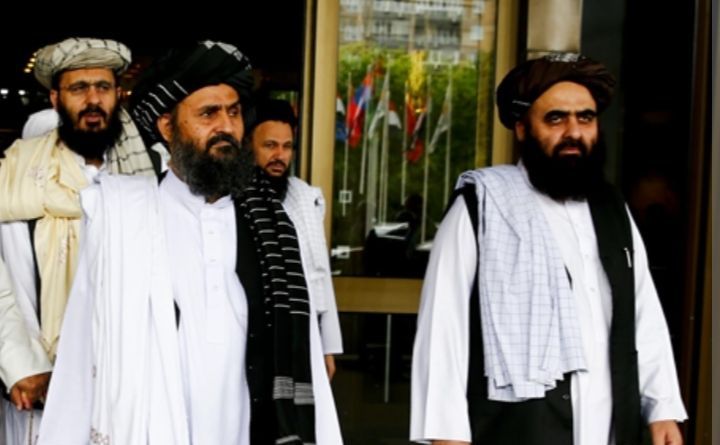
ISLAMABAD: Pakistan has adopted a stringent position towards the Afghan Taliban following recent cross-border airstrikes targeting militant hideouts, making it clear that no diplomatic engagement will proceed without verifiable action against terrorist groups operating from Afghan territory.
Diplomatic sources indicate that Islamabad has conveyed to Taliban representatives that requests for dialogue or de-escalation will not be entertained until concrete steps are taken to dismantle safe havens used by militants, particularly the Tehreek-e-Taliban Pakistan (TTP).
The airstrikes, described by Pakistani officials as intelligence-based and selective operations, targeted seven camps and hideouts linked to the TTP and its affiliates, including elements associated with the Islamic State Khorasan Province (ISKP), in border regions during the early hours of a recent Sunday.
Pakistan’s Information Minister Attaullah Tarar stated that these operations responded to a surge in militant violence inside Pakistan, including suicide bombings and attacks on security forces, many of which have been claimed by TTP factions allegedly operating from Afghanistan.
Officials emphasize that Pakistan has repeatedly urged the Taliban administration to fulfill commitments under agreements such as the Doha accord, which prohibit the use of Afghan soil for attacks against other countries, yet no substantive measures have been observed.
Despite past diplomatic efforts and fragile ceasefires negotiated through mediators like Qatar, militant activities have persisted, leading to escalated military responses from Islamabad.
Pakistan has explicitly warned that any future terrorist incident originating from Afghan territory will prompt decisive and proportionate retaliation, with militant sanctuaries directly targeted to neutralize threats.
In this context, Pakistan has rejected overtures from the Taliban for renewed contact, insisting that negotiations, if any, will focus solely on the elimination of terrorism rather than broader bilateral issues.
Authorities highlight that previous assurances from the Taliban have not translated into action, eroding trust and necessitating a results-oriented approach over mere verbal commitments.
The border with Afghanistan remains closed to trade and transit activities, a measure initiated amid ongoing clashes and sustained to exert pressure for security compliance.
This suspension has paralyzed commercial exchanges at key crossings such as Torkham and Chaman, disrupting bilateral trade valued in billions of dollars annually and stranding thousands of trucks laden with goods.
Economic repercussions extend to both nations, with reports of spoilage of perishable exports, job losses among traders, and significant revenue shortfalls for provincial governments in Pakistan’s border areas.
Analysts note that prolonged closures risk further straining already fragile relations, though Pakistani leadership views the step as essential to safeguard national security.
The TTP, distinct from but allied with the Afghan Taliban, has intensified attacks within Pakistan since the latter’s return to power in 2021, prompting Islamabad’s accusations of tacit support or failure to curb such groups.
Recent incidents, including ambushes on Pakistani soldiers and bombings in major cities, have heightened public and governmental resolve to address cross-border terrorism decisively.
Pakistan’s defence establishment maintains that defensive actions are justified under international law when facing persistent threats from adjacent territories.
The Taliban administration has condemned the airstrikes as violations of sovereignty, vowing measured responses while denying the provision of safe havens to anti-Pakistan militants.
Such exchanges underscore the deep mistrust that has characterized bilateral ties, with security concerns overriding prospects for immediate reconciliation.
International observers have called for renewed mediation to prevent further escalation, though Pakistan insists on verifiable counter-terrorism actions as a prerequisite.
As tensions persist, the situation highlights the complex interplay between counterterrorism imperatives and regional stability in South Asia.
The closure of borders and suspension of trade underscore the economic leverage employed by Pakistan to compel compliance on security matters.
Without demonstrable progress against militant networks, prospects for dialogue remain dim, with Islamabad prioritizing the protection of its citizens over premature diplomatic concessions.