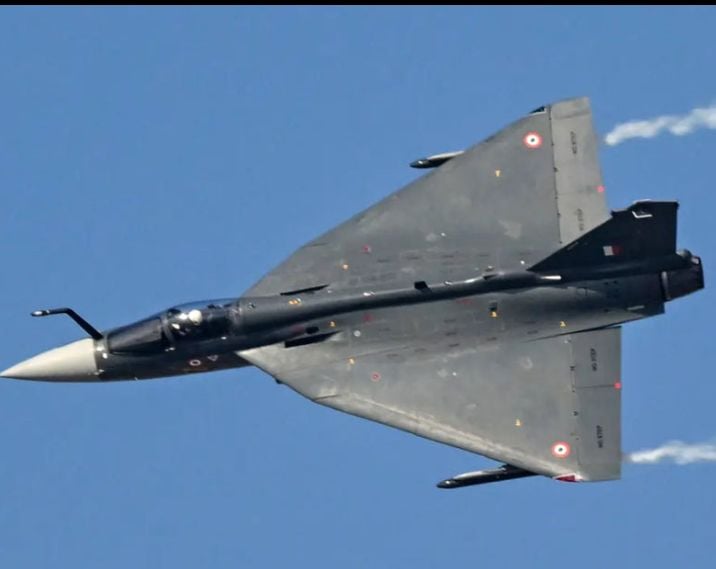
ISLAMABAD: The Indian Air Force has grounded its entire fleet of approximately 30 single-seat HAL Tejas light combat aircraft following a runway overrun incident earlier this month, marking the third major accident involving the indigenous fighter in just two years.
The latest mishap occurred on February 7 during a routine training sortie at a frontline airbase. The aircraft overshot the runway while landing, sustaining severe airframe damage, reportedly due to a suspected brake failure or technical fault in onboard systems.
The pilot ejected safely, avoiding any loss of life in the incident. No official statement has been issued by the Indian Air Force on the specifics, but sources cited in Indian media confirmed the grounding order for comprehensive technical scrutiny and safety probes across the fleet.
This development comes amid ongoing delays in the delivery of the upgraded Tejas Mk-1A variant, for which the Indian Ministry of Defence signed contracts worth over Rs 110,000 crore for 180 aircraft in recent years. The current operational fleet consists primarily of the earlier Mk-1 single-seat models, with around 30 in service across two squadrons.
The Tejas program, developed by the Aeronautical Development Agency and manufactured by Hindustan Aeronautics Limited, was inducted into the Indian Air Force in 2016 as a replacement for aging aircraft like the MiG-21. Despite its role in modernizing the force, the platform has now recorded three significant accidents since induction.
The first crash took place in March 2024 near Jaisalmer during an operational training sortie, with the pilot ejecting safely. The second occurred in November 2025 at the Dubai Airshow, where a Tejas jet crashed during an aerial display, resulting in the pilot’s death.
With three aircraft effectively lost or heavily damaged from a fleet of roughly 30, the incident rate stands at approximately 10 percent for the operational single-seat Tejas inventory. This figure represents one of the highest loss ratios recorded for any modern fighter fleet in recent peacetime operations globally.
Comparatively, historical data on other air forces shows far lower proportional losses for contemporary light combat aircraft during similar service periods. The Tejas incidents contrast sharply with established platforms that have achieved accident rates below 1-2 percent over comparable fleet sizes and flying hours in non-combat scenarios.
The Indian Air Force has long faced scrutiny over its overall aviation safety record. Over the past three decades, the force has lost more than 500 aircraft in non-combat accidents, including a high number of MiG-21 variants. The MiG-21 fleet, which logged around 1.5 million flying hours, experienced an accident rate of about 26-29 per 100,000 hours, influenced by prolonged service life, environmental factors, and technical issues.
While the MiG-21’s legacy contributed to perceptions of risk in Indian military aviation, the Tejas was positioned as a safer, indigenously designed alternative with modern avionics and systems. However, the rapid succession of incidents has prompted questions about integration challenges, maintenance protocols, and operational pressures on the limited fleet.
Experts note that small fleet sizes amplify the impact of each loss in percentage terms. With only about 30 operational single-seat Tejas jets, even isolated technical failures can yield disproportionately high relative rates compared to larger inventories like those of the US Air Force or other major powers, where mishap rates for fighters have declined to under one per 100,000 hours in recent decades due to extensive safety investments.
The grounding of the Tejas fleet underscores broader concerns within the Indian Air Force regarding squadron strength and readiness. The force has been pushing for accelerated induction of Mk-1A variants, which include enhancements such as improved radar, electronic warfare suites, and better reliability features to address early teething problems.
Hindustan Aeronautics Limited has defended the Tejas safety record in statements following the incident, describing some reports as overstated and emphasizing ongoing collaboration with the Indian Air Force for resolutions. The company maintains that the platform holds one of the better safety profiles among contemporary fighters, though independent verification remains limited.
The latest grounding will likely delay training and operational commitments for the squadrons involved, based at locations such as Sulur in Tamil Nadu and Naliya in Gujarat. It also highlights the risks associated with relying on a nascent indigenous program during a period of regional security tensions.
Aviation safety analysts stress that thorough investigations are essential to identify root causes, whether human factors, design elements, or maintenance-related. Until the probe concludes and corrective measures are implemented, the Tejas fleet remains sidelined, affecting India’s push for self-reliance in defense aviation.
The episode revives debates on balancing indigenous development with proven reliability in high-stakes military assets. As the Indian Air Force navigates these challenges, the focus remains on restoring confidence in the Tejas while pursuing long-term modernization goals.