ISLAMABAD: The United States has initiated the evacuation of hundreds of troops from key military installations in Qatar and Bahrain, signaling heightened concerns over an imminent confrontation with Iran.
Reports indicate that this repositioning primarily affects personnel at Al Udeid Air Base in Qatar, recognized as the largest American military facility in the Middle East with approximately ten thousand troops under normal circumstances.
The withdrawal also encompasses facilities associated with the US Navy’s Fifth Fleet headquarters in Bahrain, a critical hub for naval operations in the Persian Gulf.
According to sources cited in major international publications, the move is characterized as precautionary, designed to mitigate risks from potential retaliatory strikes by Iranian forces should hostilities escalate.
The New York Times, drawing on anonymous Pentagon officials, first detailed the evacuation of several hundred service members from these sites in recent days.
This development occurs against a backdrop of intensifying diplomatic and military standoff between Washington and Tehran, fueled by Iran’s domestic unrest and broader regional frictions.
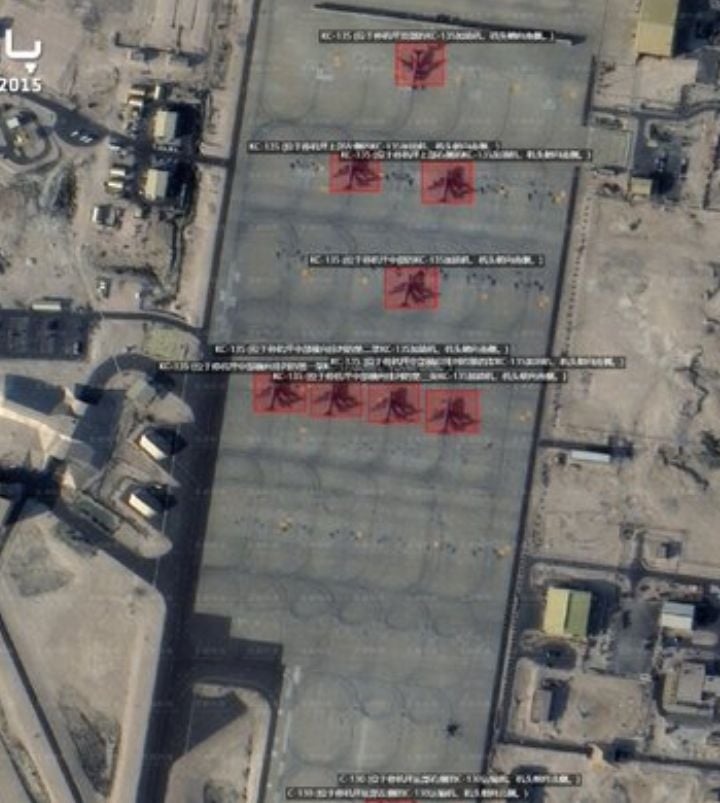
Chinese commercial satellite imagery has provided visual confirmation of related US military movements across the Gulf region.
High-resolution images released by firms such as MizarVision reveal shifts in American air assets, including concentrations at bases in Saudi Arabia.
Notably, satellite observations show increased deployments of refueling aircraft, surveillance platforms, and fighter jets at Prince Sultan Air Base in Saudi Arabia.
These repositionings suggest that evacuated air assets from Qatar are being redirected southward to more secure or strategically advantageous locations.
Experts interpret this pattern as an effort to disperse forces, thereby reducing vulnerability at forward bases closest to Iranian territory.
Al Udeid Air Base serves as the forward headquarters for US Central Command air operations and hosts a significant portion of American strike capabilities in the theater.
Bahrain’s naval facilities underpin freedom of navigation missions and support carrier strike groups operating in the region.
The partial drawdown from these sites contrasts with simultaneous reinforcements elsewhere, including additional fighter squadrons to Jordan and enhanced air defense systems across multiple Gulf states.
Flight tracking data and open-source intelligence corroborate the influx of cargo aircraft and personnel transports toward Saudi Arabia and other allied territories.
Iranian officials have issued stern warnings, declaring all American bases and assets as legitimate targets in the event of any US-initiated action.
Tehran’s response underscores the perceived threat posed by concentrated US presence in proximate locations such as Qatar, situated across the narrow Strait of Hormuz.
Analysts note that such evacuations often precede periods of elevated operational risk, allowing commanders to protect personnel while preserving force projection from dispersed positions.
The timing aligns with ongoing US military buildup in the Middle East, which includes the deployment of additional carrier strike groups to the Arabian Sea and Mediterranean approaches.
This force accumulation aims to maintain credible deterrence amid stalled negotiations and persistent concerns over Iran’s nuclear advancements and proxy activities.
While the Pentagon has not publicly confirmed the full scope of withdrawals, independent reporting consistently points to a deliberate strategy of risk reduction.
Observers caution that these movements could be misinterpreted as preparations for offensive operations rather than defensive measures.
The reliance on Chinese satellite data for public visibility highlights evolving dynamics in space-based reconnaissance and its impact on strategic transparency.
Beijing’s firms have repeatedly disclosed US deployments in recent weeks, offering unprecedented open-source insights into American positioning.
Such disclosures may influence Iranian planning and complicate US operational security in a contested environment.
Regional allies, including Qatar and Bahrain, continue to host remaining US forces, though at reduced levels for certain non-essential units.
The broader US posture remains robust, with thousands of troops still stationed across Iraq, Kuwait, the United Arab Emirates, and Jordan.
Military officials emphasize that these adjustments reflect prudent force protection rather than a retreat from commitments to Gulf security.
The situation remains fluid, with diplomatic channels open but strained as both sides navigate the threshold of potential conflict.