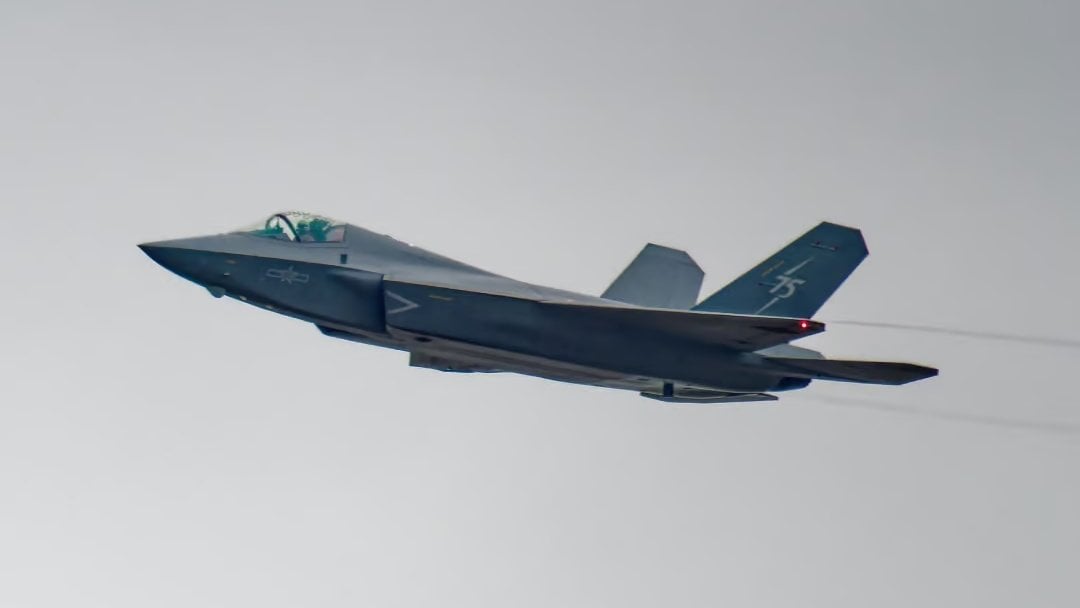
ISLAMABAD: The Indian Air Force is reportedly preparing to seek approval for the acquisition of 36 to 40 Sukhoi Su-57 stealth fighters from Russia, valued at approximately $7 billion, following the recent clearance of a major deal for 114 Dassault Rafale jets from France.
This development underscores New Delhi’s urgent push to modernize its combat aviation fleet, which currently faces squadron shortages and growing threats from advanced platforms in neighboring countries.
The proposed Su-57 purchase emerges as a strategic bridge solution until India’s indigenous Advanced Medium Combat Aircraft enters service in the coming decade.
Recent reports indicate that the Indian Air Force may soon approach the Defence Acquisition Council for formal clearance on the Su-57M1E variant, an export-oriented model of Russia’s fifth-generation fighter.
The deal, estimated at around $7 billion for 36 to 40 aircraft, positions the Su-57 as an interim fifth-generation asset to enhance stealth capabilities and air superiority.
This move comes days after the government approved the procurement of 114 Rafale fighters in a transaction worth over $30 billion, highlighting a multi-vector approach to defense acquisitions.
The Rafale deal focuses on bolstering multi-role capabilities with proven 4.5-generation technology, while the Su-57 targets true stealth features to counter evolving regional air threats.
Experts note that the Indian Air Force operates with only about 29 fighter squadrons against a sanctioned strength of 42, creating a pressing need for rapid augmentation.
The Su-57, known as Felon in NATO nomenclature, offers advanced stealth design, supercruise capability, sensor fusion, and internal weapons bays, making it a formidable platform for contested environments.
Russia has aggressively marketed the Su-57E to India, emphasizing deep technology transfer, licensed production, and integration of indigenous systems to align with Make in India objectives.
Previous Indo-Russian collaboration on the Fifth Generation Fighter Aircraft program ended in 2018 over disagreements on costs, technology sharing, and capabilities.
Renewed interest stems from operational urgency, including China’s expanding fleet of J-20 and emerging J-35 stealth fighters, alongside potential transfers to Pakistan.
The Su-57 proposal includes possibilities for local assembly at facilities such as Hindustan Aeronautics Limited in Nashik, building on the successful Su-30MKI licensed production model.
Russian officials have highlighted unrestricted technology transfer, source code access, and customization for Indian weapons, positioning the offer as highly attractive compared to Western alternatives.
The $7 billion valuation for 36 to 40 jets suggests a unit cost significantly lower than comparable fifth-generation platforms, factoring in co-production benefits.
This potential acquisition would complement the Rafale fleet, which provides advanced electronic warfare, long-range strike, and network-centric operations.
The Indian Air Force views the two platforms as complementary rather than competing, addressing distinct gaps in mass and stealth.
Delays in indigenous programs like the Tejas Mk2 and AMCA have amplified the need for imported solutions to maintain deterrence.
Russia’s push includes demonstrations at events like Aero India and technical discussions on infrastructure and production scalability.
If approved, the deal could mark the most significant Indo-Russian aerospace partnership since the Su-30MKI era, potentially boosting local industry through manufacturing and maintenance ecosystems.
However, challenges remain, including Western sanctions on Russia that could affect supply chains, spares, and long-term support.
India’s strategic autonomy policy favors diversified sourcing, avoiding over-reliance on any single partner.
The Su-57’s maturity, with Russia aiming to expand its own fleet, offers a more readily available option than delayed indigenous or other foreign fifth-generation jets.
Analysts suggest that formal negotiations may accelerate following high-level bilateral engagements.
The Indian Ministry of Defence and Air Force headquarters have reportedly held internal discussions on the immediate requirement for fifth-generation platforms.
This dual-track approach with Rafale and Su-57 reflects a pragmatic response to squadron depletion and modernization timelines.
The outcome could reshape India’s airpower posture in the region, enhancing deterrence amid persistent border tensions and evolving threats.
As deliberations continue, the proposal signals New Delhi’s commitment to balancing speed, cost, and technological independence in defense planning.