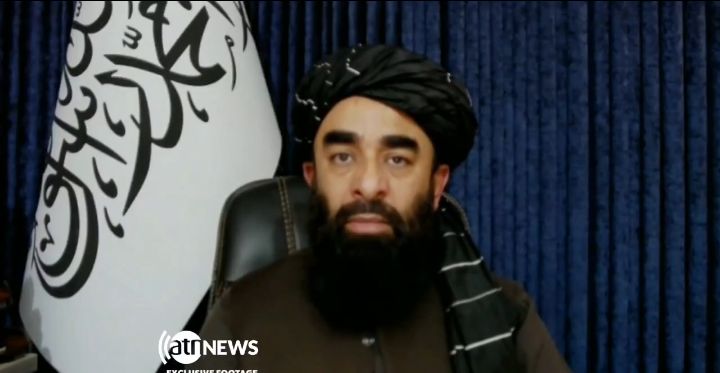
ISLAMABAD: Zabihullah Mujahid, spokesperson for the Islamic Emirate of Afghanistan, has issued a stark warning following deadly Pakistani airstrikes on Afghan territory, declaring that his forces will target only Pakistani military personnel responsible for such actions and not civilians.
In an interview with Ariana News on February 22, 2026, Mujahid emphasized a clear distinction in approach. “We must make it clear that, unlike Pakistan, we do not target civilians; rather, we target the real perpetrators of crimes, who are Pakistani military personnel,” he stated.
The remarks come in the immediate aftermath of Pakistani military operations launched early on Sunday morning. Pakistan’s Ministry of Information and Broadcasting described the strikes as intelligence-based and selective, aimed at seven camps and hideouts belonging to the Tehreek-e-Taliban Pakistan (TTP) and its affiliates, along with an Islamic State-linked group.
Pakistan has accused these militants of orchestrating a surge in attacks inside its borders, including a suicide bombing at a Shia mosque in Islamabad earlier in February that claimed over 30 lives, as well as incidents in Bajaur and Bannu districts.
Officials in Islamabad have repeatedly claimed conclusive evidence linking recent violence to Afghanistan-based TTP leadership and handlers. The TTP, a separate but allied entity to the Afghan Taliban, has reportedly used Afghan soil for planning and coordination since the Taliban regained power in 2021.
Afghan authorities, however, condemned the strikes as a blatant violation of sovereignty. Mujahid reported that the attacks hit civilian areas in Nangarhar and Paktika provinces, killing and wounding dozens, including women and children.
Local Taliban officials in Nangarhar confirmed that one family lost 18 members out of 24 in the strikes, with only four survivors. The Afghan Red Crescent Society reported at least 17 deaths and several missing in affected districts like Behsud.
Pakistan’s military insisted the targets were militant infrastructure tied to cross-border terrorism. Information Minister Attaullah Tarar highlighted that operations followed repeated urges to the Afghan side for verifiable action against groups using its territory against Pakistan.
Tensions along the Durand Line have intensified in recent years. Cross-border clashes escalated notably in October 2025, when Afghan forces reportedly attacked Pakistani posts after earlier incidents, leading to captures and retaliatory actions.
In one development, Afghanistan released three Pakistani soldiers captured during those October clashes, a move Mujahid attributed to goodwill ahead of Ramadan and mediation by a Saudi delegation.
Pakistan has long maintained that the Afghan Taliban has failed to prevent TTP sanctuaries, despite commitments under agreements like the Doha accord not to allow soil to be used against other states.
The Afghan Defense Ministry described the latest airstrikes as criminal acts violating international law and principles of good-neighborliness. It vowed an appropriate and calculated response at a suitable time.
Mujahid’s statement reinforces this position by framing any future Afghan actions as targeted and discriminate. He portrayed Pakistani military circles as the true aggressors responsible for civilian suffering.
Analysts note that such rhetoric aims to portray the Islamic Emirate as adhering to ethical warfare principles while accusing Pakistan of indiscriminate force.
The strikes mark a continuation of Pakistan’s shift toward pre-emptive operations against perceived threats from across the border. In late 2025, similar actions targeted TTP figures, prompting strong condemnations from Kabul.
Civilian casualties in border regions remain a recurring point of contention. Afghan sources consistently report non-combatant deaths, while Pakistan maintains its operations are precise and evidence-driven.
The escalation risks further destabilizing an already volatile frontier. Diplomatic channels have seen limited progress, with Afghanistan summoning Pakistan’s envoy in Kabul to protest the strikes.
Mujahid’s comments signal that the Islamic Emirate views the Pakistani military, rather than civilians, as the legitimate focus of any retaliation. This framing seeks to justify potential future operations while condemning Pakistan’s approach.
Regional observers warn that without de-escalation mechanisms, the cycle of strikes, responses, and accusations could deepen mistrust between the two neighbors.
The Durand Line remains one of the world’s most contested borders, with historical disputes over its legitimacy compounding current security frictions.
As both sides harden positions, the international community faces renewed calls to mediate amid fears of broader instability in South Asia.
Pakistan continues to demand verifiable steps from Kabul to dismantle TTP networks. Afghanistan insists on respect for its sovereignty and cessation of cross-border incursions.
The latest exchange underscores the fragile state of bilateral relations, where military actions and public statements fuel an ongoing security dilemma.