ISLAMABAD: Israeli medics have confirmed that the injured toll from Iranian ballistic missile strike on the southern town of Dimona has risen to 39 as emergency services continue assessments.
The strike targeted Dimona late on Saturday evening local time according to the Israeli army.
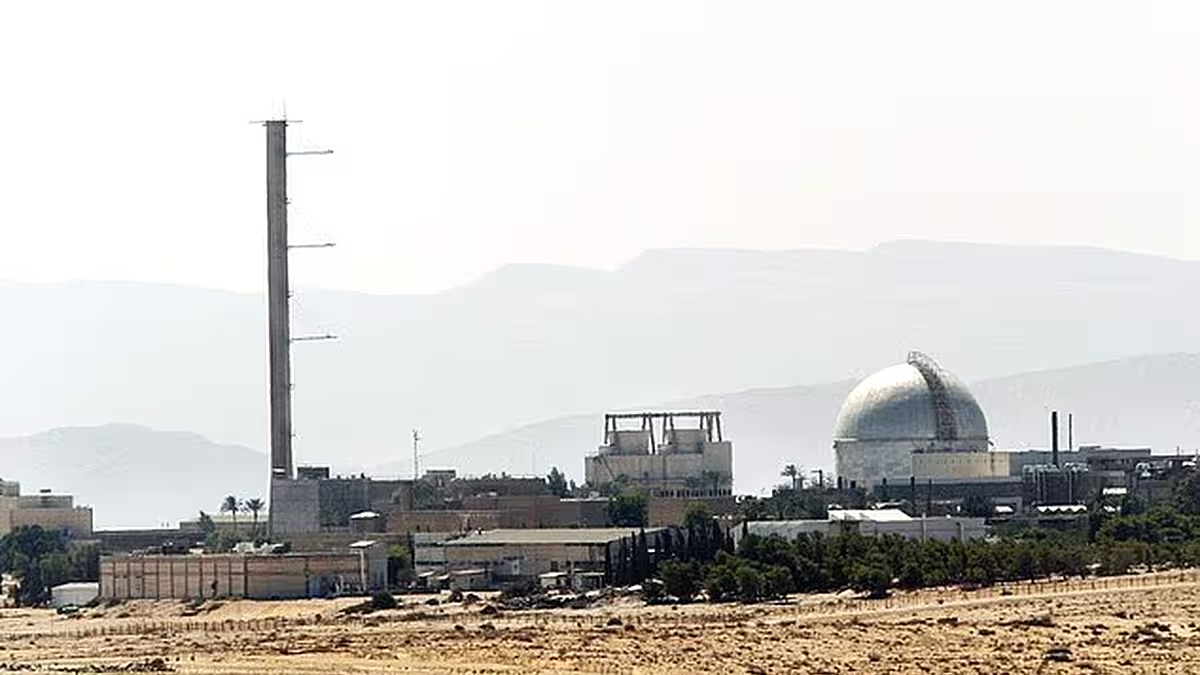
Dimona houses the Shimon Peres Negev Nuclear Research Center widely regarded as central to Israel’s nuclear programme.
Magen David Adom the national emergency medical service reported initial injuries of around 20 before the figure climbed to 39.
Most victims suffered light wounds from shrapnel flying debris or falls while rushing to bomb shelters.
Up to 47 people were transported to Soroka Hospital in nearby Beersheba for treatment.
A three-storey residential building partially collapsed at one impact site contributing directly to the casualties.
The Israeli military stated an Iranian missile struck the town housing the nuclear facility.
The International Atomic Energy Agency confirmed no damage to the Negev nuclear research centre and no abnormal radiation levels.
IAEA Director General Rafael Grossi urged maximum military restraint near nuclear installations while monitoring the situation closely.
Iranian state television described the Dimona attack as a direct response to Israeli strikes on Iran’s Natanz nuclear enrichment facility.
Tehran has framed the operation within an eye-for-an-eye policy aimed at restoring deterrence following recent US-Israeli actions on Iranian sites.
The broader conflict has seen multiple Iranian missile barrages against Israel over the past 24 hours.
Several waves triggered air-raid sirens across the Negev Desert with Israel’s Arrow defence system intercepting many projectiles.
Despite intercepts some missiles penetrated causing civilian harm in Dimona and other areas.
Official tallies place the overall death toll from the war at more than 1 300 in Iran over 1 000 in Lebanon and at least 15 in Israel before this incident.
US forces have stepped up deployments in the region while President Trump weighs options to wind down operations.
Dimona located deep in the Negev Desert about 13 kilometres from the city centre remains one of Israel’s most heavily guarded locations.
The facility established in the late 1950s has long drawn international attention due to its role in Israel’s undeclared nuclear capabilities.
Israel maintains a policy of ambiguity neither confirming nor denying possession of nuclear weapons.
This latest escalation follows explicit Iranian threats issued earlier this month to target Dimona if regime-change efforts against Tehran intensify.
Analysts note the symbolic weight of striking near a nuclear site in the ongoing exchanges.
Residents of Dimona a desert town of roughly 40 000 people reported hearing explosions and seeking immediate shelter.
Emergency crews arrived promptly at multiple impact points to provide aid and clear debris.
No radiation leaks or structural compromise at the nuclear centre have been reported by Israeli or international monitors.
The incident underscores the risks of targeting areas proximate to sensitive nuclear infrastructure.
Global observers including the IAEA continue to call for de-escalation to prevent wider fallout.
The strike forms part of Iran’s retaliatory Operation True Promise series launched in response to attacks on its territory.
Previous Iranian salvos this week injured dozens in northern and central Israel including incidents near Nazareth and Tel Aviv.
Medical teams across Israel remain on high alert amid fears of further barrages.
Diplomatic efforts to contain the conflict have so far yielded limited results as both sides exchange fire.
The rising casualty figures in Dimona highlight the human cost of the intensifying missile exchanges.
Israeli authorities have yet to release full details on damage assessment or long-term implications for the nuclear town.
The event has drawn renewed attention to the strategic vulnerability of nuclear-adjacent civilian populations.