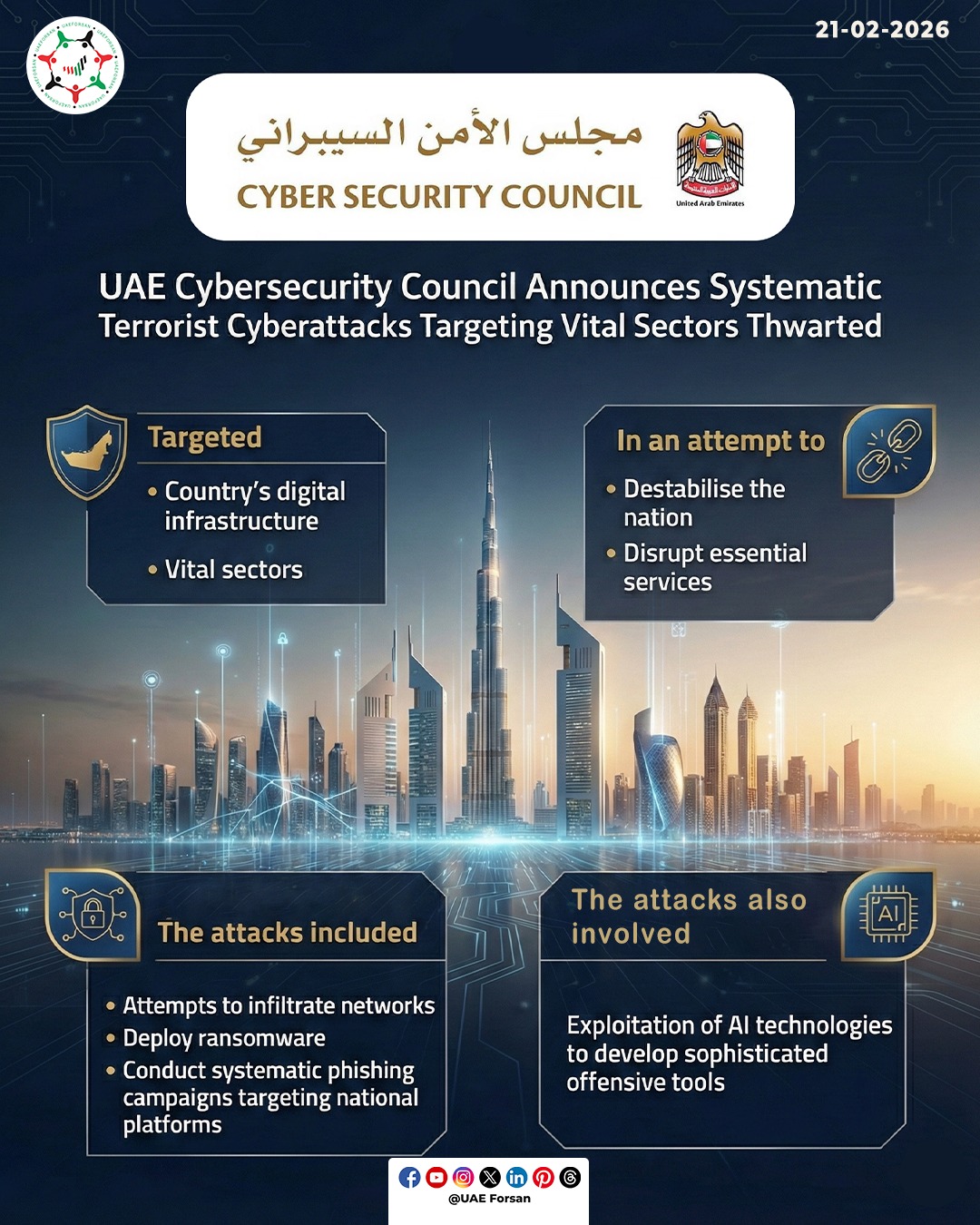
ISLAMABAD: The United Arab Emirates has successfully repelled a series of organised cyberattacks described as having a terrorist nature, targeting the nation’s digital infrastructure and critical vital sectors.
The announcement came from the UAE Cybersecurity Council through the state news agency WAM on Saturday, highlighting the effectiveness of the country’s national cyber defence systems in neutralising these threats before any significant damage occurred.
The attacks sought to destabilise the nation and interrupt essential services, according to official statements. Perpetrators aimed at undermining public confidence and economic stability through coordinated digital assaults.
Details released indicate the incidents involved multiple sophisticated techniques. Attackers attempted to infiltrate secure networks across government and private entities.
Ransomware deployment formed a core component of the strategy, designed to encrypt critical data and demand payments for restoration access. Such tactics have grown increasingly common in global cyber threats.
Systematic phishing campaigns targeted national platforms, deceiving users into revealing credentials or installing malicious software. These efforts exploited human vulnerabilities alongside technical weaknesses.
A notable aspect of the thwarted operations was the integration of artificial intelligence technologies. Adversaries used AI to craft advanced offensive tools, enhancing the precision and adaptability of their attacks.
This development signals a qualitative shift in cyber warfare methods. Terrorist groups and other malicious actors are now harnessing modern technologies to amplify their digital capabilities.
The UAE Cybersecurity Council emphasised that no breaches succeeded in disrupting operations. Essential services, including those in energy, finance, transportation and healthcare, remained fully functional.
Officials pointed to the robustness of layered defence mechanisms. Continuous monitoring, rapid response protocols and advanced detection systems contributed to the successful interception.
Broader context reveals the scale of cyber threats facing the UAE. Since the beginning of 2026, authorities have confirmed 128 cyber threat incidents targeting various entities across the country.
These include ransomware attacks, government system breaches and data leak attempts. Sectors such as government administration, financial services and banking have been among the most affected.
Daily figures underscore the persistent pressure. Between 90,000 and 200,000 breach attempts occur each day, many linked to state-sponsored actors accounting for a significant portion of threats.
The council has repeatedly stressed proactive measures. Investments in cybersecurity infrastructure and international cooperation have strengthened national resilience against evolving dangers.
No specific perpetrators were identified in the announcement. Reports avoided attributing blame to any state or group, focusing instead on the defensive achievements.
Experts observe that AI integration in offensive cyber operations represents an emerging trend worldwide. Machine learning enables attackers to automate reconnaissance, evade detection and personalise phishing at scale.
In response, defensive strategies increasingly incorporate AI-driven countermeasures. The UAE’s approach exemplifies this dual use of technology in the cyber domain.
The council reiterated its unwavering commitment to safeguarding the digital environment. Priorities include protecting individuals, securing personal data and ensuring uninterrupted critical services.
Such incidents highlight the strategic importance of cybersecurity for national security. In a digitally interconnected world, robust defences serve as a cornerstone of sovereignty and stability.
The UAE’s swift neutralisation of these threats reinforces its position as a leader in regional cyber resilience. Ongoing vigilance and innovation remain essential to counter future challenges.
Authorities continue to urge heightened awareness among citizens and organisations. Basic practices like strong passwords, software updates and suspicious link avoidance complement institutional efforts.
This episode serves as a reminder of the dynamic nature of cyber risks. Constant adaptation and resource allocation are necessary to stay ahead of adversaries exploiting technological advancements.
The successful foiling underscores the value of coordinated national strategies. It also demonstrates how proactive governance can mitigate risks in an era of intensifying digital confrontations.