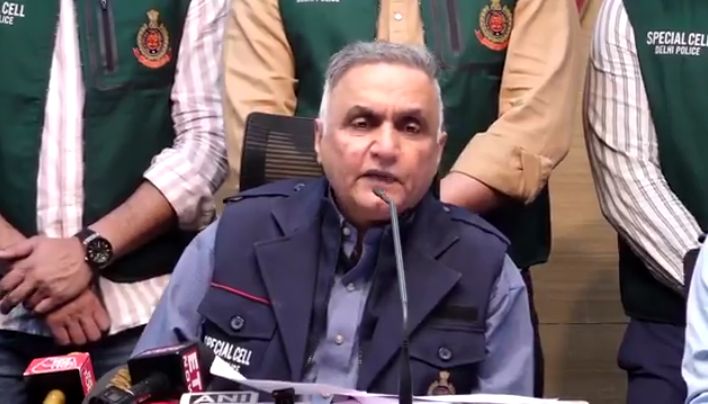
ISLAMABAD: Delhi Police have thwarted a major terror conspiracy by arresting eight suspects, including several Bangladeshi nationals, accused of planning attacks across India under the direction oBangladeshi extremist groups, in a development that underscores escalating cross-border security threats.
The operation, conducted by Delhi Police’s Special Cell, unfolded over the weekend with simultaneous raids in Tamil Nadu and West Bengal, leading to the apprehension of six individuals from Tamil Nadu and two from West Bengal.
Among the arrested, at least six are reported to be Bangladeshi nationals who had entered India illegally and were residing under false identities, using forged Aadhaar cards and other documents to blend into local communities.
Identified suspects include Mizanur Rahman (33), Mohammed Saphet (35), Omar (32), Mohammed Liton (40), Mohammed Jageeth (40), and Mohammed Ujal (29), all apprehended in Tamil Nadu’s Tiruppur district, a textile hub where they purportedly worked in garment factories.
Investigations revealed that the group was actively involved in reconnaissance missions across multiple Indian cities, scouting high-profile targets such as temples in Delhi’s Chandni Chowk area and the historic Red Fort, with plans to execute improvised explosive device (IED) blasts.
Delhi Police sources indicated that the suspects had posted inflammatory content on social media platforms, promoting Pakistan-based terrorist organizations and displaying ‘Free Kashmir’ posters at a Delhi metro station during an international AI summit, actions aimed at inciting unrest.
During the arrests, authorities seized over a dozen mobile phones and 16 SIM cards, which are now under forensic analysis to uncover communication trails with overseas handlers.
Bangladeshi terror outfits, potentially including elements associated with groups like Jamaat-ul-Mujahideen Bangladesh (JMB), are also under scrutiny for their role in radicalizing and recruiting the suspects.
One key handler, identified as Shabbir Ahmad Lone based in Bangladesh, is believed to have maintained contact with senior figures in Lashkar-e-Taiba (LeT), including its founder Hafiz Saeed, facilitating operational directives.
This arrest comes amid heightened intelligence alerts in Delhi, particularly around sensitive sites like the Red Fort, following reports of potential disruptions tied to regional tensions.
The suspects reportedly conducted surveillance in several states, mapping out routes and vulnerabilities in urban centers to maximize impact from their planned attacks.
Indian security agencies have described the bust as a significant breakthrough, preventing what could have been a series of coordinated strikes aimed at destabilizing public order.
The involvement of Bangladeshi nationals highlights ongoing concerns over porous borders, with India accusing Bangladesh of inadequate controls on extremist elements operating from its soil.
Data from India’s National Investigation Agency (NIA) shows a 25 percent rise in cross-border terror modules uncovered in the past two years, often linked to Pakistan-sponsored groups.
In 2025 alone, over 150 individuals were arrested in similar operations, with a notable increase in cases involving illegal immigrants from neighboring countries.
This incident echoes the 2019 Pulwama attack, where LeT operatives, backed by ISI, targeted Indian security forces, killing 40 personnel and straining Indo-Pak relations.
Experts note that the use of social media for propaganda has surged, with over 500 accounts linked to pro-Pakistan narratives dismantled by Indian cyber units in the last year.
The arrested group’s activities included sharing videos and messages glorifying jihadist ideologies, targeting vulnerable youth in southern India for recruitment.
Tiruppur, where most arrests occurred, has seen a influx of migrant workers from Bangladesh, with estimates suggesting over 10,000 undocumented individuals in the region, raising alarms about exploitation by terror networks.
Local police in Tamil Nadu assisted in the operation, providing ground intelligence that led to the swift capture without resistance.
The suspects were produced before a judicial magistrate in Tiruppur before being transported to Delhi by train for further interrogation under anti-terror laws.
Under India’s Unlawful Activities (Prevention) Act, they face charges of conspiracy, waging war against the state, and promoting enmity, with potential sentences ranging from 10 years to life imprisonment.
Bangladesh’s government has yet to respond officially, but past collaborations with India on counter-terrorism, including joint operations against JMB, suggest possible extradition requests for handlers.
Security analysts warn that such modules exploit economic migration routes, with data indicating that 40 percent of recent terror arrests involve foreign nationals posing as laborers.
The Red Fort, a UNESCO World Heritage site and symbol of Indian independence, has been targeted multiple times, including in the 2000 attack by LeT militants that killed three.
Indian Home Ministry reports detail over 300 thwarted plots since 2020, crediting enhanced intelligence sharing among agencies like RAW, IB, and state police.
This bust involved coordination with Tamil Nadu’s Q Branch, specialized in extremism, which tracked the suspects’ movements for weeks.
Forensic teams are examining seized devices for encrypted chats, potentially revealing wider networks extending to West Asia.
Community leaders in Bangladesh have urged caution against stereotyping migrants, emphasizing that most seek legitimate employment amid economic hardships at home.
India’s border security force (BSF) data shows a 15 percent increase in apprehensions along the Indo-Bangladesh border in 2025, with fake documents being a common tactic.
The plot’s focus on Delhi underscores the capital’s vulnerability, hosting over 20 million residents and key government institutions.
Vigilance has been ramped up, with additional CCTV installations and patrols around potential targets.
As interrogations continue, more arrests are anticipated, potentially unraveling deeper ISI involvement in hybrid warfare tactics.
This event serves as a reminder of the persistent terror threat in South Asia, where geopolitical rivalries fuel proxy conflicts.
Regional cooperation, as advocated in SAARC forums, remains crucial, though hampered by trust deficits between India, Pakistan, and Bangladesh.
The arrests highlight the efficacy of India’s multi-agency approach, blending technology and human intelligence to preempt attacks.
Ultimately, while the immediate threat is neutralized, the underlying drivers of radicalization demand sustained diplomatic and socio-economic interventions.