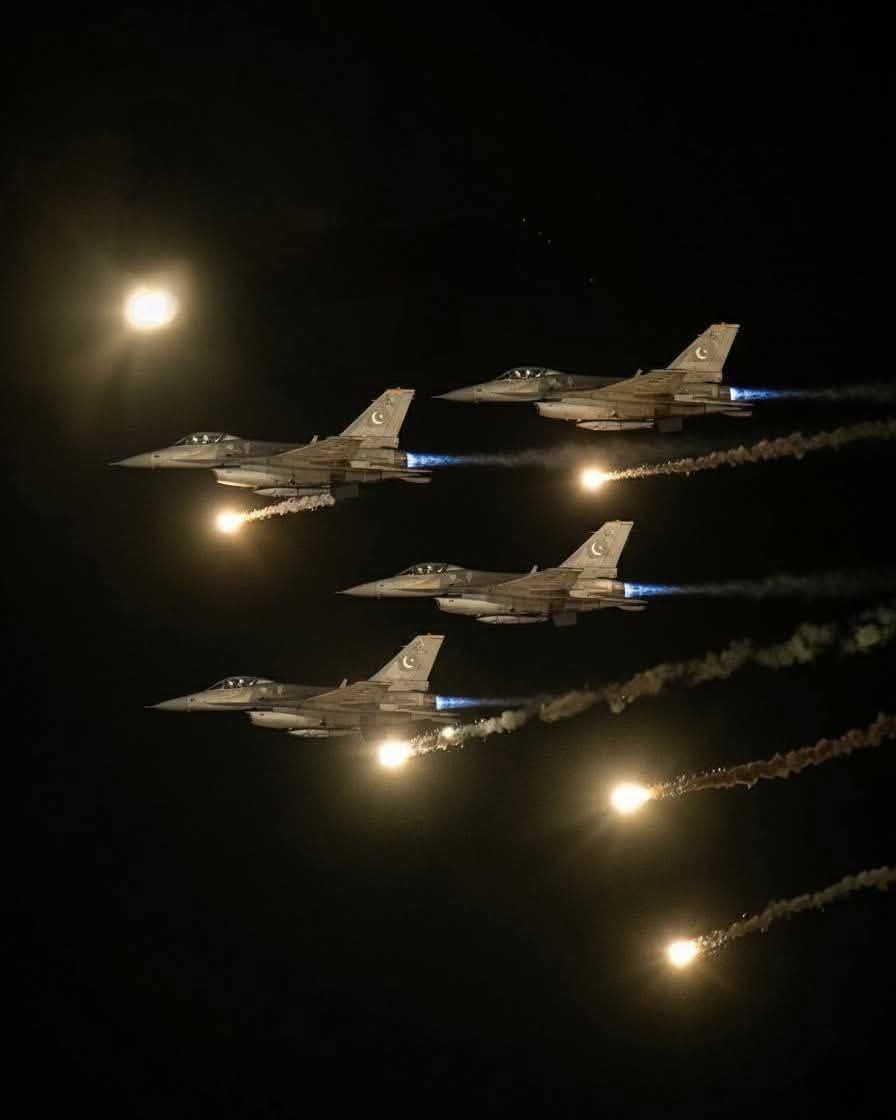
ISLAMABAD: The Afghan Taliban administration has strongly condemned Pakistan’s overnight airstrikes in its eastern provinces as a grave violation of sovereignty and international norms, vowing that a response will be delivered at an appropriate time.
Afghanistan’s Ministry of Defence described the military action carried out during the intervening night of Saturday and Sunday as an unjustified aggression against civilian-populated areas.
The ministry stated that the strikes targeted residential neighbourhoods and a religious seminary in Nangarhar and Paktika provinces, resulting in dozens of deaths and injuries.
Among the casualties were women and children, according to initial reports released by Taliban officials and local sources.
Spokesperson Zabihullah Mujahid accused Pakistan of attempting to divert attention from its own internal security challenges by launching attacks across the border.
He emphasised that the Afghan side holds Islamabad fully responsible for the loss of innocent lives and destruction of civilian property.
The Afghan Red Crescent Society confirmed receiving reports of at least a dozen fatalities in the affected districts, with several individuals still missing under collapsed structures.
In Nangarhar’s Bihsud area, residents reported that multiple homes were completely destroyed, leaving families displaced and searching for survivors.
Pakistan’s military and security officials, however, presented a contrasting account of the operation.
They described the airstrikes as precise, intelligence-driven actions aimed exclusively at seven hideouts belonging to the banned Tehreek-e-Taliban Pakistan (TTP) and elements linked to the Islamic State Khorasan Province (ISKP).
A security source confirmed that more than 80 militants, categorised as Fitna al-Khawarij, were neutralised during the strikes across Nangarhar, Paktika and Khost provinces.
The operation was justified as a direct response to escalating terrorist activities inside Pakistan traced back to safe havens in Afghanistan.
Recent incidents cited include a devastating suicide bombing at a Shia mosque in Islamabad earlier this month that killed over 30 people and wounded more than 160.
Attacks in Bajaur and Bannu districts were also attributed to TTP operatives using Afghan territory for planning and logistics.
Pakistan’s Ministry of Information reiterated that such defensive measures become necessary when diplomatic efforts fail to dismantle cross-border militant infrastructure.
Independent confirmation of casualty claims on both sides remains difficult due to restricted access in the remote border terrain.
The United Nations and various international monitoring bodies have previously documented the TTP’s expanded operational freedom in Afghanistan following the Taliban’s return to power in 2021.
Reports indicate that the group has exploited porous sections of the Durand Line to launch increasingly sophisticated attacks inside Pakistan.
The inclusion of ISKP-linked targets in the latest strikes highlights growing concern over multiple transnational terrorist networks operating from Afghan soil.
ISKP had earlier claimed responsibility for the Islamabad mosque attack, underscoring the overlapping threats faced by both countries.
Despite shared ideological roots, the Afghan Taliban and TTP have maintained a complex relationship marked by occasional tensions but persistent allegations of sanctuary provision.
Pakistan has consistently urged the Kabul administration to take concrete action against TTP sanctuaries, an appeal repeatedly denied by Afghan officials.
This episode marks one of the more significant cross-border military engagements in recent months, raising fears of retaliatory escalation.
Defence analysts observe that previous Pakistani airstrikes have occurred intermittently, yet the current operation’s scale and timing during Ramadan carry added diplomatic sensitivity.
Both governments face intense domestic expectations to project strength and protect national interests.
The civilian casualty allegations circulated by Afghan sources risk inflaming public sentiment and complicating any immediate de-escalation efforts.
Regional security experts caution that tit-for-tat responses could further destabilise the already volatile Durand Line region.
International actors continue to call for restraint, dialogue and renewed counter-terrorism cooperation to address the root causes of cross-border violence.
The latest developments underscore the persistent challenge of securing a 2,600-kilometre porous frontier amid mutual distrust.
Pakistan maintains its actions are strictly defensive and aimed at preserving peace within its borders.
The Afghan side, meanwhile, insists on respect for territorial integrity as a prerequisite for any meaningful bilateral engagement.
As assessments of damage and casualties continue on both sides, the incident has once again brought Pakistan-Afghanistan relations under intense scrutiny.