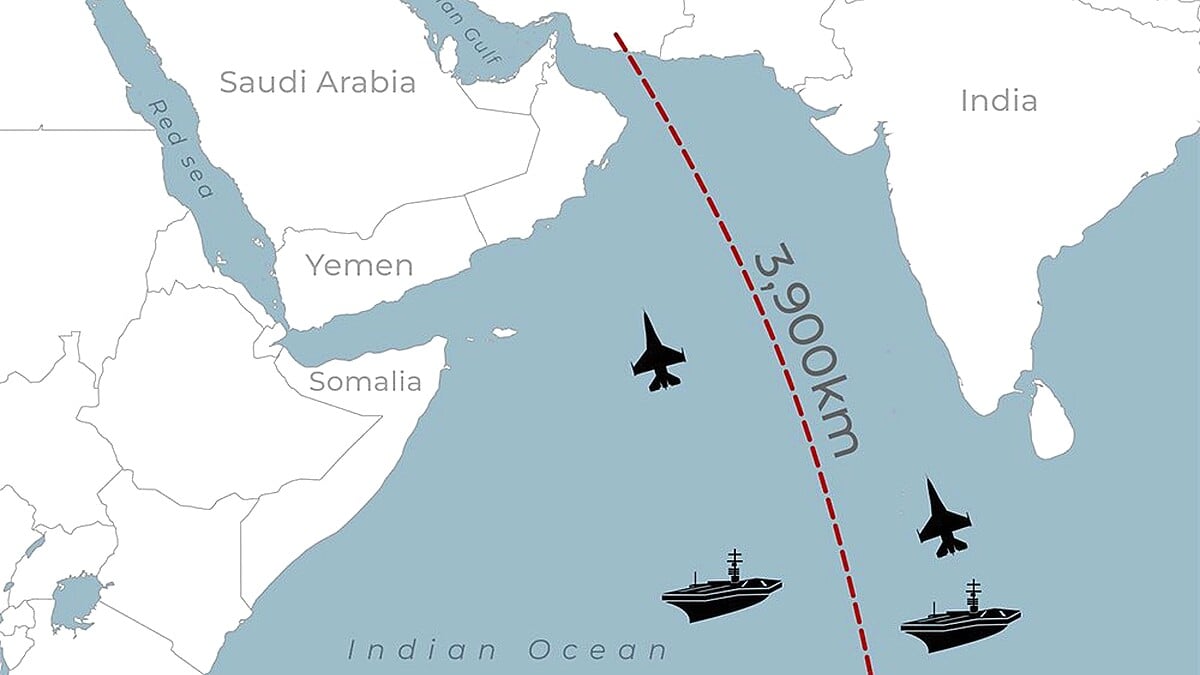
ISLAMABAD: Iran launched two intermediate-range ballistic missiles toward the joint US-UK military base at Diego Garcia in the Indian Ocean, marking a significant escalation in the ongoing regional conflict.
According to multiple US officials cited by the Wall Street Journal, neither missile struck the target. One missile failed during flight, while a US warship deployed an SM-3 interceptor against the second, though it remains unclear if the interception was successful.
The attempted strike occurred amid heightened tensions following joint US and allied operations against Iranian targets. Diego Garcia, a remote atoll in the Chagos Archipelago, serves as a critical hub for American and British military operations in the Indo-Pacific and Middle East regions.
The distance from Iran’s southern coast to Diego Garcia exceeds 3,800 kilometers, with some estimates placing it around 4,000 km. This range far surpasses the 2,000 km limit that Iranian officials, including Foreign Minister Abbas Araghchi, have publicly claimed for their missile arsenal in recent statements.
Experts note that Iran’s missile program has long been constrained by self-imposed range restrictions to avoid provoking major powers. However, systems such as the Sejjil and Khorramshahr series are capable of reaching approximately 2,000 km with standard payloads.
The Khorramshahr family, particularly variants like Khorramshahr-4, could potentially extend further with lighter warheads or optimized configurations. Analysts suggest the Diego Garcia attempt implies Tehran may have tested or deployed capabilities beyond previously acknowledged limits.
The failure of both missiles highlights vulnerabilities in Iran’s long-range strike options. Mid-flight failure of one projectile points to possible technical issues with propulsion, guidance, or re-entry systems under extended range conditions.
The engagement by a US warship using the SM-3 interceptor demonstrates the effectiveness of layered missile defenses deployed in the Indian Ocean. The SM-3, designed for exo-atmospheric intercepts, forms part of the Aegis ballistic missile defense system aboard US Navy vessels.
Diego Garcia hosts bomber squadrons, naval support facilities, and prepositioned assets vital for power projection. Its strategic location allows operations far from regional flashpoints while remaining outside easy reach of most conventional threats.
The incident follows Iran’s repeated warnings against the use of British territories in support of US actions. Tehran has described access to bases like Diego Garcia as participation in aggression against Iran.
Recent developments include US criticism of delayed UK approvals for base usage in regional strikes. President Trump has referenced potential reliance on Diego Garcia and RAF Fairford for operations if diplomatic efforts fail.
The attempted attack expands the geographic scope of the conflict beyond the Middle East and Gulf. It signals Iran’s intent to target distant assets supporting adversary operations.
Iranian state media, including Mehr news agency, confirmed the launch of ballistic missiles but provided limited details on outcomes. Official statements emphasized defensive posture while asserting capability to respond proportionally.
Military observers view the strike as a demonstration of reach rather than a precision operation. The absence of confirmed hits limits immediate operational impact but raises questions about future deterrence dynamics.
The event underscores advancements in Iran’s ballistic missile technology despite international sanctions and export controls. Solid-fuel systems like Sejjil offer quicker launch readiness compared to liquid-fueled predecessors.
Broader implications include potential strain on US-UK military cooperation in the region. The UK’s role in permitting base access has drawn Iranian ire, blurring lines between defensive and offensive postures.
Regional stability remains fragile as parties assess responses. No immediate casualties or damage were reported from the incident, but it contributes to an atmosphere of heightened alert across maritime domains.
Analysts anticipate increased surveillance and defensive deployments around key facilities. The failed strike may prompt refinements in Iranian missile designs for greater reliability over extended distances.
The episode illustrates the evolving nature of asymmetric warfare in the era of precision-guided munitions and advanced defenses. While the missiles did not reach their mark, the attempt alone carries symbolic and strategic weight.
International reactions focused on de-escalation calls, though specifics from major capitals remained measured in initial hours. The incident adds another layer to the complex interplay of military posturing and diplomatic maneuvering in the region.