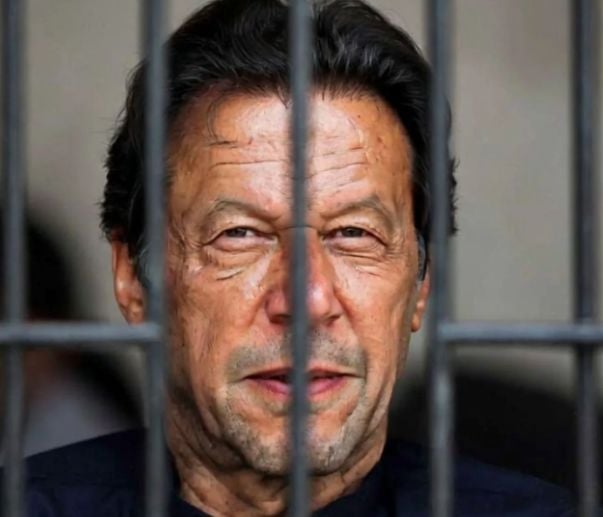
ISLAMABAD: Parliamentary Affairs Minister Tariq Fazal Chaudhry announced on Friday that incarcerated Pakistan Tehreek-e-Insaf founder Imran Khan will be taken to a hospital twice in the coming days for ongoing medical treatment.
The minister specified that Imran Khan must receive an injection on February 25 as part of his prescribed regimen.
This development follows recent concerns over the former prime minister’s eye condition, diagnosed as central retinal vein occlusion in his right eye.
Imran Khan first reported blurred vision several months ago while held at Adiala Jail in Rawalpindi.
Medical intervention began after formal complaints in mid-January, leading to a procedure at the Pakistan Institute of Medical Sciences on January 24.
The initial treatment addressed a blood clot impairing vision, with reports indicating partial vision loss prior to intervention.
Government sources have stated that the first injection was administered on January 25.
The upcoming February 25 injection marks the second in a series of three planned treatments.
A third injection is scheduled exactly one month later, around March 25.
These procedures will occur at leading facilities in Islamabad or Rawalpindi, ensuring access to specialised ophthalmology care.
Minister Chaudhry emphasised that arrangements are in place for the scheduled injection on February 25.
He extended an invitation for relevant parties to witness the process, stating there is no secrecy involved.
The minister assured that Imran Khan would receive the best possible medical facilities throughout the treatment.
This announcement comes amid heightened scrutiny of the former premier’s health since his incarceration began over two years ago.
A Supreme Court directive earlier this month prompted the formation of a medical board to assess his condition.
The board oversaw examinations at Adiala Jail, including a detailed eye check-up by a team of specialists.
Official reports following the jail examination claimed noticeable improvement in eyesight.
Vision in the affected right eye reportedly progressed from severely limited levels toward better acuity.
However, Imran Khan’s family and party have contested these assessments.
They argue that independent verification requires access for personal physicians and relatives.
PTI representatives described certain examinations as unacceptable without family or chosen doctors present.
Concerns escalated after a lawyer’s visit reported significant vision impairment, estimating only 15 percent remaining in the right eye at one stage.
The lawyer highlighted potential delays in initial care as a contributing factor.
Imran Khan’s personal physician has noted inability to fully confirm or refute official claims due to restricted access.
Family members, including sisters and sons, have voiced worries about prolonged solitary confinement and medical protocols in custody.
Protests occurred outside Adiala Jail demanding transparency and adequate care.
The government maintains that all necessary steps are being taken on humanitarian and legal grounds.
Ministers have repeatedly stated no negligence in providing treatment.
Imran Khan was allowed telephone contact with his sons following court orders.
This facility aimed to address family concerns during the health evaluation period.
The ongoing treatment plan reflects a structured approach to managing the diagnosed condition.
Central retinal vein occlusion requires timely injections to reduce swelling and preserve vision.
Medical experts recommend anti-VEGF injections at regular intervals for such cases.
The government’s decision to facilitate hospital transfers aligns with specialist recommendations.
Facilities like Shifa International Hospital have been mentioned in discussions as potential venues.
Minister Chaudhry clarified that hospital visits are limited to administering the required injections.
No extended hospitalisation is planned beyond these procedures.
The minister reiterated commitment to following medical advice strictly.
This series of updates underscores the intersection of health issues and political circumstances in Pakistan.
Imran Khan remains a central figure in national discourse despite detention.
His PTI continues to mobilise support around demands for fair trials and better prison conditions.
The February 25 injection represents a key milestone in the current treatment phase.
Observers anticipate further details on the third injection and overall progress.
Health developments for high-profile detainees often draw international attention.
Rights groups have monitored the situation closely in recent weeks.
The government’s transparency measures, including invitations for oversight, seek to address criticisms.
As the treatment advances, focus remains on ensuring Imran Khan’s well-being under established protocols.