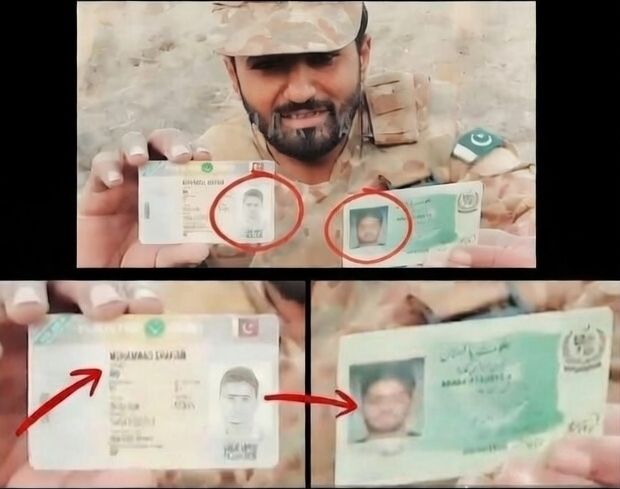
ISLAMABAD: The Baloch Liberation Army (BLA) recently released a video purporting to show captured Pakistani soldiers pleading for recognition and help from authorities. The footage, disseminated through the group’s media arm Hakkal, features men in uniforms displaying what they claim are official military service cards and national identity documents. They appeal directly to the Pakistan Army, questioning denials of their status and highlighting personal hardships, such as one detainee mentioning his disabled father and role as family provider.
This release forms part of the BLA’s ongoing information operation amid its self-proclaimed “Operation Herof 2.0,” a campaign of intensified insurgent activities in Balochistan since mid-2025. The group has used such videos to challenge official statements from Pakistani authorities, who have consistently denied any serving personnel missing or in militant custody. The video’s timing aligns with a declared deadline for a proposed prisoner exchange, adding pressure through emotional appeals.
However, close examination of the material reveals significant internal contradictions that cast doubt on its authenticity and purpose. In the same video, the same individual appears with differing identity details. At one point, a person presents identification linked to one origin and background, while later segments show altered or inconsistent cards for what seems to be the identical figure. These shifts include variations in names, ranks, service numbers, or regional affiliations, such as claims of hailing from different districts like Buner or Peshawar for the same detainee.
Such discrepancies point to hasty editing or fabrication. If the captives were genuine soldiers with legitimate documentation, fundamental details like personal history, recruitment records, and issued cards would remain consistent across frames. The presence of multiple conflicting narratives within one production suggests an attempt to amplify emotional impact rather than present verifiable evidence.
Independent analyses circulating in security circles and fact-checking platforms have highlighted additional red flags. Some observers note repeated facial patterns, duplicated frames, and timeline inconsistencies in ranks that defy standard military promotion pathways. These elements align with characteristics of staged or manipulated content, designed more for viral dissemination than factual reporting.
The BLA’s reliance on dramatic visuals and pleas fits a broader pattern in its information warfare. The group has increasingly turned to media outputs to compensate for operational setbacks. Recent military operations in Balochistan have reportedly inflicted heavy losses on insurgent elements, with claims of over 200 BLA fighters neutralized in targeted actions. In this context, propaganda videos serve to project strength, attract attention, and sow confusion rather than achieve strategic gains.
This approach reflects a desperation born of limited resources and eroding influence. The BLA’s narrative often prioritizes theatrical elements over substantive evidence. Emotional storytelling, including family hardships and accusations of abandonment, aims to evoke sympathy and provoke public outrage. Yet when core claims collapse under scrutiny—such as contradictory identities in the same clip—the effort backfires, exposing the group’s intellectual bankruptcy.
Experts on insurgent communications note that effective propaganda requires internal coherence to maintain credibility. The BLA’s latest output fails this test, as the video itself becomes the strongest counter-evidence against its assertions. By presenting one person under two conflicting personas, the material inadvertently demonstrates a willingness to sacrifice factual integrity for attention.
The incident underscores the challenges in Balochistan’s complex security landscape. Separatist groups like the BLA operate amid longstanding grievances over resource distribution, political marginalization, and development deficits. However, tactics reliant on misinformation erode potential support and reinforce perceptions of the group as an “attention seeker” lacking robust argumentation or authentic testimony.
Pakistani authorities have dismissed similar releases as fabricated, often citing digital manipulation or recycled elements. While independent verification remains difficult in remote areas, the visible contradictions in this case provide ample grounds for skepticism. The video’s internal flaws highlight how propaganda, when poorly executed, can undermine rather than advance a cause.
As the insurgency persists, the focus shifts to whether such operations genuinely advance separatist goals or merely prolong conflict through spectacle. The BLA’s video, intended to pressure Islamabad, instead spotlights its own vulnerabilities. In an era of rapid scrutiny via social media and fact-checking, coherence and evidence remain essential for any narrative to endure.
This episode serves as a reminder that in information warfare, the medium can indict the message. The BLA’s attempt to dramatize captivity has, through its own inconsistencies, reinforced doubts about its claims and methods. The path forward in Balochistan demands addressing root causes rather than relying on contested visuals that fail basic consistency tests.