



ISLAMABAD:
An aerial assault by Yemen’s Houthi militia has struck a prominent skyscraper in Saudi Arabia’s capital, Riyadh, causing damage to the building that houses the Public Investment Fund (PIF). This incident underscores the escalating costs for the Kingdom amidst its renewed conflict with the Iran-backed Houthi militia.
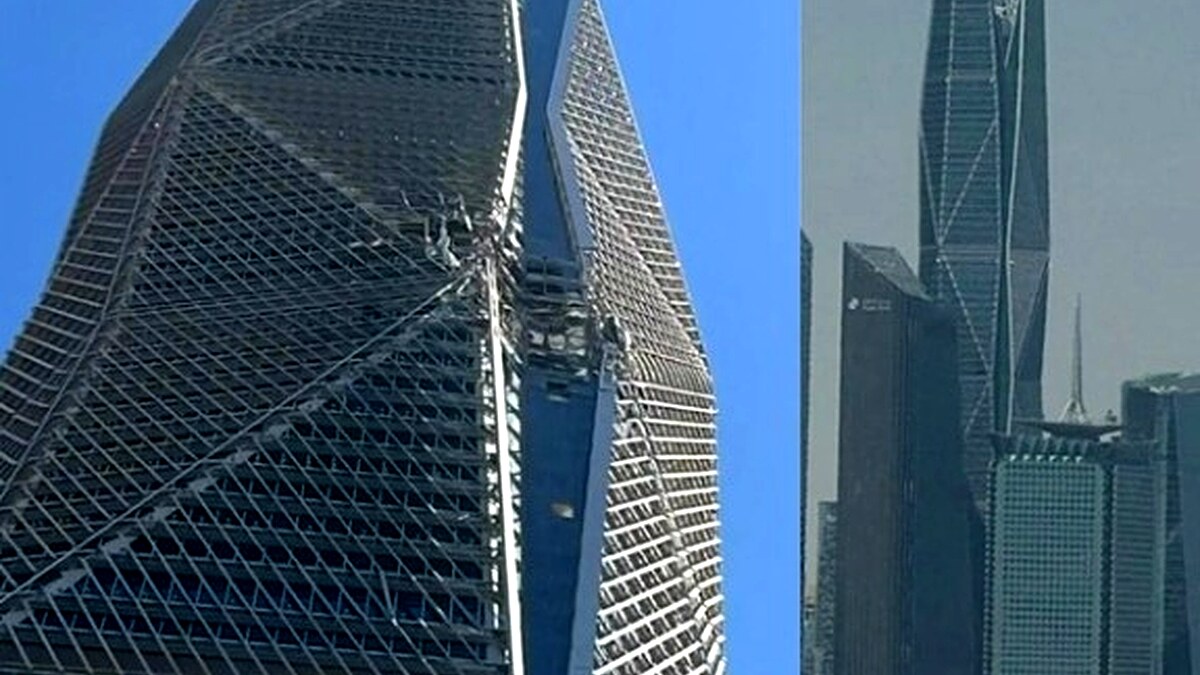
A reporter observed visible damage to the 80-story Public Investment Fund Tower, including scorch marks and shattered windows across several floors. Residents of Riyadh reported hearing a significant explosion early Thursday morning.
Saudi authorities initially reported an attempted Houthi missile attack, attributing damage in the city to “falling shrapnel,” a common outcome of missile or drone interceptions. Later, the Saudi civil defense authority officially confirmed that a Houthi attack had indeed damaged the PIF tower and adjacent structures. Fortunately, no injuries were reported. The authority strongly condemned the attack on a civilian area as a “flagrant violation of international law.”
Yahya Saree, a Houthi military spokesman, claimed responsibility for two attacks on the financial district that day. The Houthis also asserted their responsibility for an earlier strike this month that damaged a tower belonging to Saudi Aramco, the state oil company. Houthi officials state their attacks are a direct response to Saudi airstrikes within Yemen.
The Public Investment Fund, with assets totaling approximately $900 billion, serves as the driving force behind Crown Prince Mohammed bin Salman’s ambitious plans to transform the Saudi economy and reduce its reliance on oil. The fund manages significant global investments, including stakes in major American companies like Uber and SpaceX, alongside extensive domestic ventures in artificial intelligence, manufacturing, sports, and entertainment. The PIF and its subsidiaries occupy a substantial portion of the financial district’s real estate, making damage to its headquarters a symbolic victory for the Houthis.
The attack occurred before the start of the workday, and no casualties were reported. Many employees in the financial district have been working remotely in recent weeks due to the persistent Houthi attacks.
Saudi Arabia and the Houthis, who control significant parts of northern Yemen, have engaged in a cycle of escalating attacks for weeks, targeting energy facilities and airports. Analysts predict the conflict is likely to persist for months.
The war in Yemen has had devastating consequences, exacerbating an already severe humanitarian crisis. The World Health Organization reports that over 2,200 people have died and nearly 350,000 have been displaced in recent months.
The conflict between Saudi Arabia and the Houthis has been ongoing in various forms since 2015. A fragile truce established in 2022 began to falter in July, coinciding with broader regional tensions. A full-scale war reignited last month when the Yemeni government launched a new military campaign against the Houthis, supported by Saudi warplanes. However, this campaign has yielded limited progress, and analysts suggest the balance of power in Yemen continues to shift in favor of the Houthis.
Recent developments include the withdrawal of Saudi-backed forces from the Red Sea coast and a significant leadership change in Saudi operations in Yemen, with General Fayyad al-Ruwaili replacing General Fahd al-Salman as the overseer of operations.
For Saudi Arabia, the ongoing conflict poses a significant threat to Crown Prince Mohammed’s vision of transforming the country into a global business and tourism hub. A major attack on Riyadh’s airport last month resulted in numerous casualties and forced flight cancellations, disrupting high-profile events. The recent near-daily Houthi attacks have also disrupted daily life in the capital.
The damaged tower, the tallest skyscraper in Riyadh, stands as a prominent landmark in the financial district, which is also home to numerous banks, multinational corporations, and luxury residences.