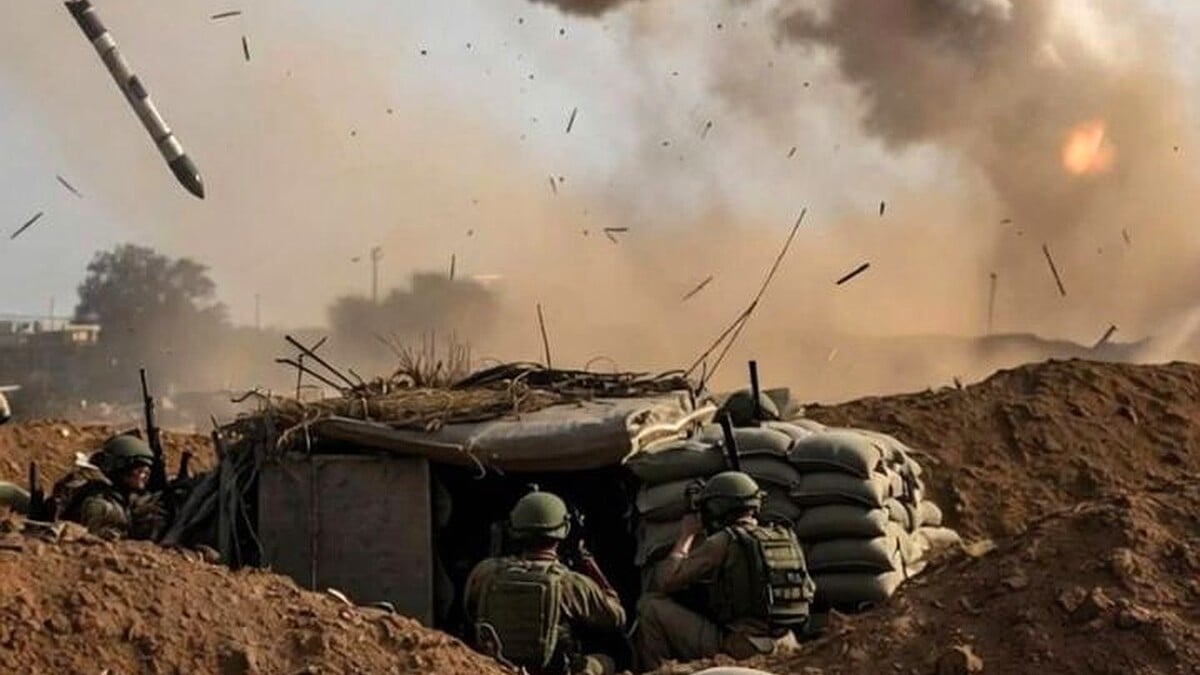
ISLAMABAD: Several soldiers from the Israel Defense Forces have refused to report to their assigned posts, citing inadequate protection against rocket and missile fire despite repeated requests to superiors.
According to a detailed report aired by Israel’s public broadcaster KAN on Wednesday, the soldiers raised concerns for over a month about the absence of bunkers at their outposts. Superiors dismissed the pleas or attributed delays to logistical hurdles, including claims that access roads were impassable.
One soldier described the situation as gross negligence, stating that when sirens sound, troops simply don helmets and pray. Another questioned whether the military could intercept threats from afar yet fail to install basic shelters locally.
The incident occurs amid Operation Roaring Lion, a joint Israel-United States campaign launched on February 28, 2026, targeting Iranian military assets and proxies. Since then, more than 780 missiles and rockets have been fired at Israeli territory from Iran and Hezbollah in Lebanon.
Official tallies indicate 17 fatalities and over 3,900 injuries from these barrages. Iranian strikes peaked early in the operation, with 55 barrages recorded in a single day on March 1.
Hezbollah’s involvement has compounded pressures on northern bases, where rocket fire has repeatedly struck military installations near Beit Shemesh and border areas. Volunteer troops argue that civilian Home Front Command guidelines demand protected spaces, yet soldiers face unprotected positions.
Delays in bunker delivery have persisted despite promises from command. One unit was told shelters were en route only for the plan to be canceled over infrastructure issues. Troops highlight the contradiction with Israel’s advanced interception systems, such as Iron Dome and David’s Sling.
The Israel Defense Forces responded by affirming a comprehensive protection plan is advancing based on operational assessments. Additional solutions have been deployed at bases during fighting, and all personnel receive training for prolonged stays in the most secure available locations.
This refusal is not isolated. In 2025 alone, IDF soldiers filed 6,621 formal complaints against the military for mistreatment, nearly matching the 6,777 recorded the previous year. Over half were deemed justified, with 18 percent leading to corrections.
Breakdown shows 3,134 complaints from mandatory service soldiers, 1,269 from reservists, and 965 from career officers. Career officers saw a 40 percent rise in filings, often over pay but also safety lapses.
Examples include a commander assaulting a soldier in Lebanon by cutting clothing during improper gear checks, resulting in court-martial. Another case involved a reprimand triggering suicidal ideation, met with a commander’s callous response before higher intervention.
These figures, released by IDF Ombudswoman Brig.-Gen. (res.) Racheli Tevet Wiesel, reflect systemic strains after years of conflict. Reservists frequently cite administrative errors in documentation and compensation amid extended call-ups.
Civilian complaints in northern Israel mirror military grievances, with Arab towns near the Lebanon border lacking public shelters despite habitual Hezbollah rocket volleys. Experts note that logistical bottlenecks in bunker provision undermine overall preparedness.
Broader implications extend to troop morale and operational readiness. Persistent threats from Iranian ballistic missiles and Hezbollah short-range rockets test the limits of ground defenses even as aerial systems perform effectively.
Analysts observe that volunteer refusals signal deeper accountability gaps in military logistics. As the Middle East conflict stretches into its second month under Operation Roaring Lion, such incidents could erode cohesion if unaddressed.
Israeli officials maintain forces remain prepared for prolonged engagements. Yet the KAN revelations expose vulnerabilities in base hardening that adversaries may exploit.
The episode underscores how rocket and missile barrages continue to challenge not only interception capabilities but also the physical security of frontline personnel. With no immediate resolution reported, further refusals remain a risk.
Regional observers view this as indicative of the human cost of multi-front warfare. Protection shortfalls, once minor, now amplify dissent within a force stretched across defensive and offensive roles.
Data from the past weeks show Iran’s launch rates declining sharply after initial salvos, yet sporadic barrages persist. Hezbollah attacks on IDF positions in southern Lebanon and northern Israel add daily pressure.
The refusal highlights a critical mismatch between strategic reach and tactical safety. Troops question priorities when distant strikes succeed but local shelters lag.
Military sources emphasize ongoing deployments of portable solutions. Training protocols stress seeking the most protected spots available during alerts.
Still, the soldiers’ actions reflect frustration over perceived negligence. Their stand may prompt accelerated infrastructure fixes across bases.
As Operation Roaring Lion evolves, sustaining soldier confidence becomes paramount. The KAN report serves as a public warning on readiness gaps amid escalating threats.
This development arrives at a pivotal juncture for Israeli security. Prolonged exposure without adequate cover risks wider morale erosion and potential operational impacts.