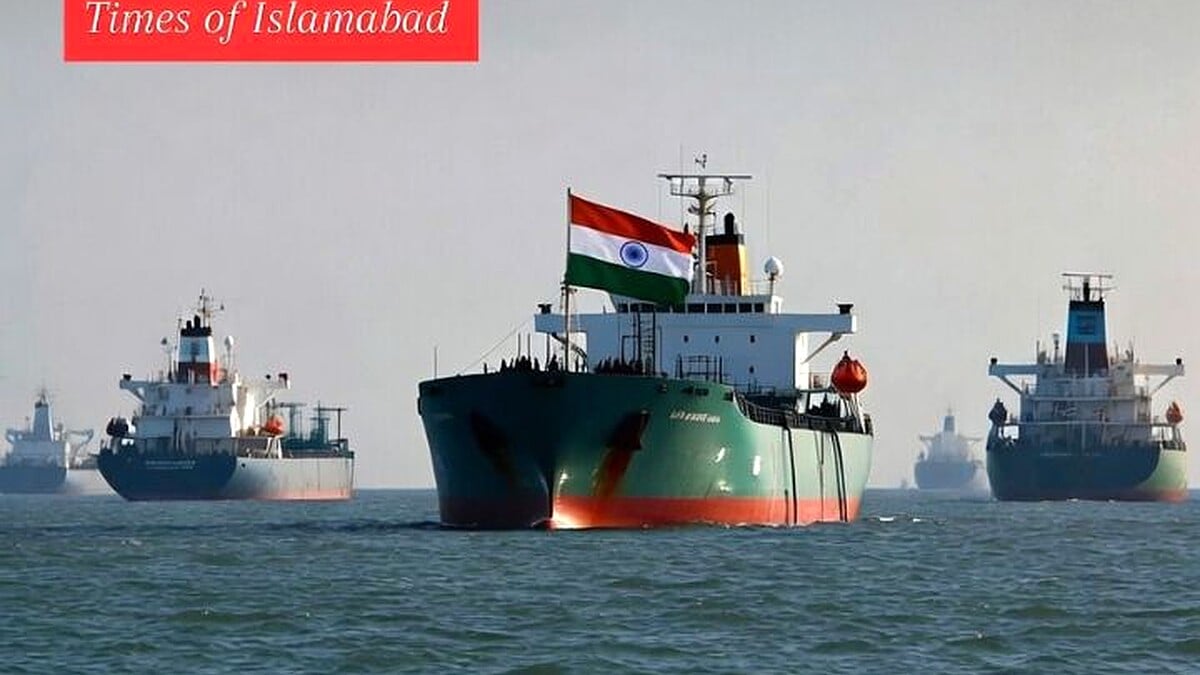
ISLAMABAD: Amid escalating regional conflict, Iran has not granted unrestricted passage to Indian oil tankers through the Strait of Hormuz, maintaining tight controls that have left most shipping disrupted and contradicting assertions of full access for Indian-flagged vessels.
The Strait of Hormuz remains largely closed to routine commercial traffic following Iran’s effective blockade in response to military actions by the United States and Israel. Maritime data shows a sharp decline in transits, with only a handful of vessels cleared since early March 2026, primarily those receiving case-by-case Iranian approval.
Indian government sources initially reported that Iran had agreed to allow Indian-flagged tankers safe passage after diplomatic engagements, including conversations between External Affairs Minister S. Jaishankar and his Iranian counterpart. Two liquefied petroleum gas carriers, Shivalik and Nanda Devi, operated by the state-owned Shipping Corporation of India, successfully transited the strait around March 13-14, carrying essential LPG supplies for Indian households.
However, Iranian officials have consistently denied any formal or special agreement granting broad access to Indian vessels. Sources close to Tehran told international news agencies that no blanket permission exists, and any passages represent limited exceptions rather than policy changes. Iran’s ambassador to India acknowledged that some ships were allowed through but refrained from specifying numbers or confirming a dedicated corridor for India.
The broader context involves Iran’s stated policy of restricting vessels linked to the United States, Israel, and their allies while scrutinizing others. Traffic through the strait has plummeted, with reports indicating near-standstill conditions for most ships. Attacks on vessels and threats have compounded the crisis, forcing global energy markets into volatility as one-fifth of world oil and gas flows through this narrow passage.
For India, the implications remain severe. Approximately 40 percent of the country’s crude oil imports transit the Strait of Hormuz under normal circumstances, equating to roughly 2.5 million barrels per day. With over 22 Indian-flagged vessels and more than 600 seafarers still in or near the Gulf, efforts focus on securing individual clearances through ongoing diplomacy.
Indian authorities have dismissed reports linking safe passage to the release of three seized tankers allegedly connected to Iran. Government sources described such claims as baseless, emphasizing no quid pro quo discussions occurred. The seized vessels were detained in February for alleged identity concealment and violations related to ship-to-ship transfers.
Despite selective successes, the majority of Indian shipping faces uncertainty. The Indian Navy has escorted some transits, but broader disruptions persist due to Iran’s approval process for vessels seeking to navigate the strait. Officials stress that each request is evaluated individually, with no guaranteed outcome.
Energy security concerns have prompted India to accelerate sourcing from alternative suppliers across dozens of countries. However, Gulf crude remains competitively priced and logistically efficient, underscoring the strategic importance of reliable Hormuz access.
Iranian statements highlight that the strait is open except for hostile-linked shipping, but practical implementation has resulted in widespread restrictions. This selective approach has allowed limited non-aligned traffic, including some Indian and Pakistani vessels, while blocking others.
Diplomatic channels between New Delhi and Tehran continue, with hopes that further talks could ease constraints. External Affairs Minister Jaishankar has described the process as incremental, noting no blanket arrangement exists and emphasizing bilateral relations as key to resolving issues.
The situation exposes vulnerabilities in global energy chokepoints. As conflict persists, sustained access for importers like India depends on de-escalation and negotiated exemptions. While a few passages demonstrate diplomatic progress, the overall reality aligns with claims that Iran has not permitted unrestricted Indian oil tanker movements through the Strait of Hormuz.
Experts warn that prolonged restrictions could exacerbate supply shortages and price surges worldwide. For now, the selective and limited nature of allowances refutes notions of open passage, reinforcing the need for continued vigilance in maritime security.