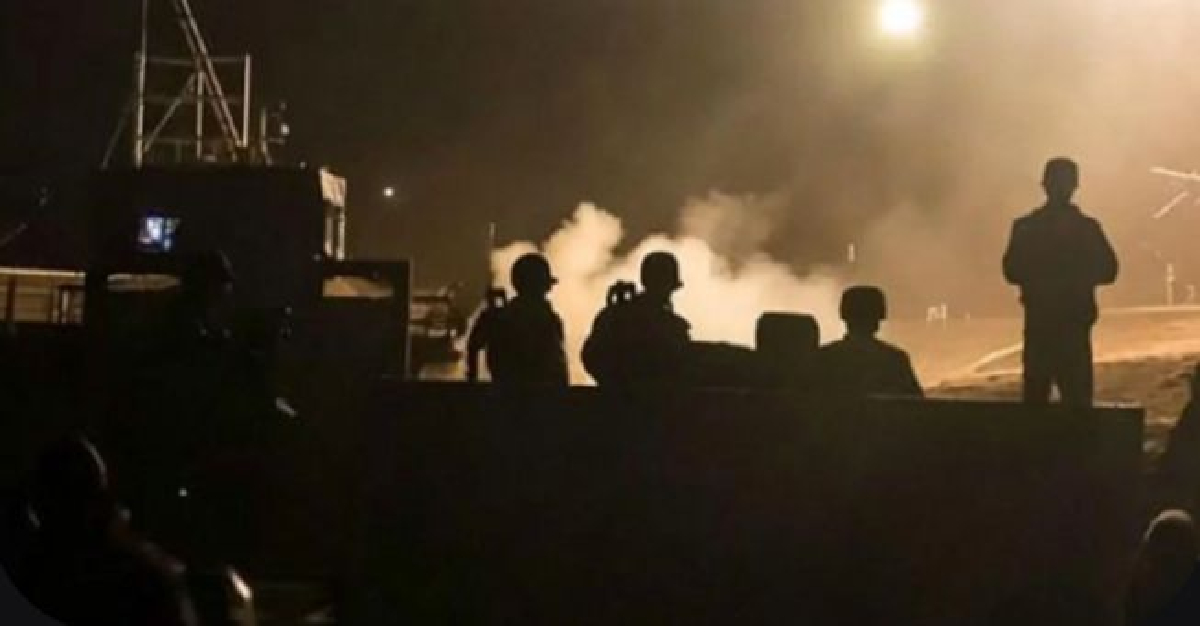
ISLAMABAD: Clashes erupted between affiliates of the Islamic State and the Tehrik-e-Taliban Pakistan in the remote area of Tor Simt, Central Orakzai district, Khyber Pakhtunkhwa province, resulting in at least three fatalities from both sides, according to local officials and sources.
The incident highlights the persistent volatility in Pakistan’s former tribal areas, where rival militant factions continue to vie for influence and resources long after major military operations.
Tor Simt, a sparsely populated and rugged locality in Central Orakzai, has historically served as a contested zone for various armed groups seeking control over smuggling routes and ideological dominance.
Local sources described the confrontation as a sudden exchange of fire between fighters loyal to the Islamic State, often referred to as Daesh in the region, and those aligned with Tehrik-e-Taliban Pakistan factions.
The deaths, confirmed by officials on condition of anonymity due to security concerns, underscore the fragmented nature of militancy in Khyber Pakhtunkhwa’s tribal belt.
Orakzai district, once a stronghold for Tehrik-e-Taliban Pakistan during the peak of insurgency in the late 2000s, has witnessed recurring internal militant rivalries.
The emergence of Islamic State affiliates in Pakistani tribal districts dates back to around 2014-2015, when defections from Tehrik-e-Taliban Pakistan and other groups led to the formation of Islamic State Khorasan Province cells.
These cells have periodically clashed with Tehrik-e-Taliban Pakistan over territorial control, recruitment, and ideological differences, particularly in areas near the Afghanistan border.
While major clashes between Islamic State Khorasan Province and the Afghan Taliban dominate headlines in Afghanistan, similar low-level frictions spill over into Pakistan’s bordering regions.
In Orakzai, such encounters remain limited in scale but reflect broader competition among jihadist networks exploiting governance vacuums.
Security analysts note that the Pakistani military’s Zarb-e-Azb and subsequent operations significantly weakened Tehrik-e-Taliban Pakistan presence in Orakzai by the mid-2010s.
However, the group’s resurgence since 2021, fueled by sanctuaries across the border, has revived local dynamics, including competition with emerging Islamic State elements.
The Tor Simt incident occurs amid heightened militant activity in Khyber Pakhtunkhwa, where Tehrik-e-Taliban Pakistan attacks on security forces have surged in recent years.
Data from independent monitoring indicates a rise in overall violence in the province, though intra-militant clashes like this one often go underreported compared to attacks on state targets.
Local officials emphasized that the area remains difficult to access, with limited state presence, contributing to the persistence of armed groups.
The three confirmed deaths, split between the two sides, suggest a brief but intense skirmish rather than a prolonged battle.
No immediate claims of responsibility surfaced from either faction, a common pattern in localized militant disputes.
This event adds to the complex security landscape in former Federally Administered Tribal Areas, now integrated into Khyber Pakhtunkhwa.
Experts point out that ideological divergences—Tehrik-e-Taliban Pakistan’s focus on Pakistani state overthrow versus Islamic State’s global caliphate vision—fuel such rivalries.
Resource competition, including control over extortion networks and cross-border trade, further exacerbates tensions.
The Pakistani government has consistently prioritized counterterrorism in the region through intelligence-based operations and border fencing.
Despite these measures, pockets of instability persist, allowing militant groups to regroup and occasionally confront one another.
The Tor Simt clashes serve as a reminder that internal militant divisions do not necessarily translate into reduced threats to civilian or state security.
In many cases, defeated factions in intra-group fighting shift tactics toward high-profile attacks elsewhere.
Local communities in Central Orakzai continue to bear the brunt of such instability, with displacement and economic disruption remaining common.
Authorities have yet to release an official statement on the incident, though preliminary reports indicate no civilian casualties.
The development coincides with ongoing regional pressures, including cross-border tensions linked to militant sanctuaries.
Monitoring groups have documented similar sporadic clashes in other tribal districts, though specific details on Tor Simt remain scarce due to remoteness.
This episode underscores the need for sustained security measures and reconciliation efforts to prevent escalation.
As Pakistan navigates evolving threats, incidents like these highlight the enduring challenge of militant fragmentation in its northwestern frontier.