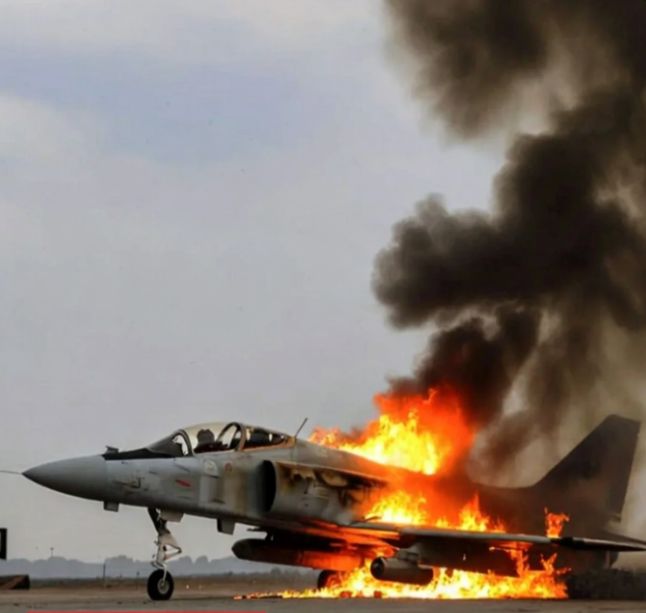
ISLAMABAD: An Iranian Air Force F-4 Phantom fighter jet crashed during a nighttime training mission in Hamadan province, resulting in the death of one pilot while the other survived.
The incident occurred late on February 19, 2026, when the aircraft, departing from Shahid Nojeh Air Base, went down amid routine exercises.
Iranian state media, including IRIB and the air force’s public relations office, confirmed the crash, describing it as a training flight accident with no indication of external interference.
The deceased pilot has been identified as Brigadier General Mehdi Firouzmand (also reported as Mehdi Firoozmand), an experienced instructor in the combat crew training squadron.
Reports indicate Firouzmand ejected from the aircraft but succumbed to injuries later, while the second pilot, occupying the rear seat, survived and received medical treatment.
The F-4 Phantom II, a two-seat multirole fighter originally designed in the United States, remains a key component of Iran’s aging air fleet despite its vintage origins.
Acquired in large numbers before the 1979 Islamic Revolution, Iran received over 225 F-4 variants, including D, E, and RF reconnaissance models, making it one of the largest operators historically.
As of recent assessments in 2025 and into 2026, the Islamic Republic of Iran Air Force maintains approximately 60 to 63 F-4s in service, though operational readiness varies due to longstanding sanctions.
These restrictions have severely limited access to original spare parts, forcing Iranian engineers to rely on reverse-engineering and domestic modifications to sustain the fleet.
The Phantom’s continued operation underscores Iran’s resourcefulness in maintaining pre-revolution American hardware amid prolonged isolation from Western suppliers.
Historically, the F-4 has seen extensive use in Iranian service, notably during the Iran-Iraq War of the 1980s, where it conducted strikes including attacks on Iraqi airfields and the Osirak reactor site.
In more recent years, F-4s have supported operations against ISIS targets and maritime patrols in the Persian Gulf.
However, the platform’s age—now exceeding five decades since production—contributes to higher risks in training and operational missions.
Aviation safety records show multiple F-4 incidents in Iran over the years, often attributed to technical failures, maintenance challenges, or pilot error in demanding conditions.
Nighttime flights add complexity, requiring precise instrumentation and heightened vigilance, particularly for an aircraft lacking modern avionics upgrades found in contemporary fighters.
The latest crash highlights ongoing concerns about fleet sustainability, as Iran balances legacy systems against regional security demands.
Experts note that while the F-4 retains utility in ground attack and reconnaissance roles, its radar and weapon systems fall short against advanced adversaries.
Iran has pursued upgrades, including integration of indigenous missiles and improved electronics, yet core airframe limitations persist.
The loss of an experienced instructor like Firouzmand represents a setback for training programs essential to maintaining pilot proficiency.
Iranian authorities have launched a formal investigation to determine the precise cause, with preliminary indications pointing toward a technical malfunction.
No hostile action has been suggested in official statements, distinguishing this from combat-related losses.
The incident occurs against a backdrop of heightened regional tensions, though it appears unrelated to external conflicts.
Observers point out that such accidents expose vulnerabilities in Iran’s air power posture, reliant on a mix of aging U.S.-origin jets like the F-4, F-14 Tomcat, and F-5 Tiger II.
Efforts to modernize through acquisitions from Russia, such as confirmed orders for Su-35 fighters, aim to address these gaps, but integration timelines remain uncertain.
For now, the F-4 continues as a symbol of resilience and constraint in Iran’s military aviation.
The tragedy serves as a reminder of the inherent dangers in military aviation, especially with heritage platforms operating under resource constraints.
Tributes to Brigadier General Firouzmand have appeared in state-affiliated media, honoring his service and sacrifice during peacetime duties.
As investigations proceed, the Iranian Air Force will likely review training protocols and maintenance procedures to prevent recurrence.
This event underscores the broader challenges faced by forces operating vintage equipment in a rapidly evolving security environment.